
Industrial equipment configured for your processUnited Kingdom · Europe · North America · South America

Industrial catalogue

Industrial and process equipment

Equipment for agriculture, irrigation, fertigation, postharvest handling and storage, as well as mixing, extraction, reaction, separation, thermal control, sterilisation, washing and other industrial operations. Each system is configured for the product, capacity and operating conditions.

84 equipment families available for configuration.

Reactors

12 equipment families
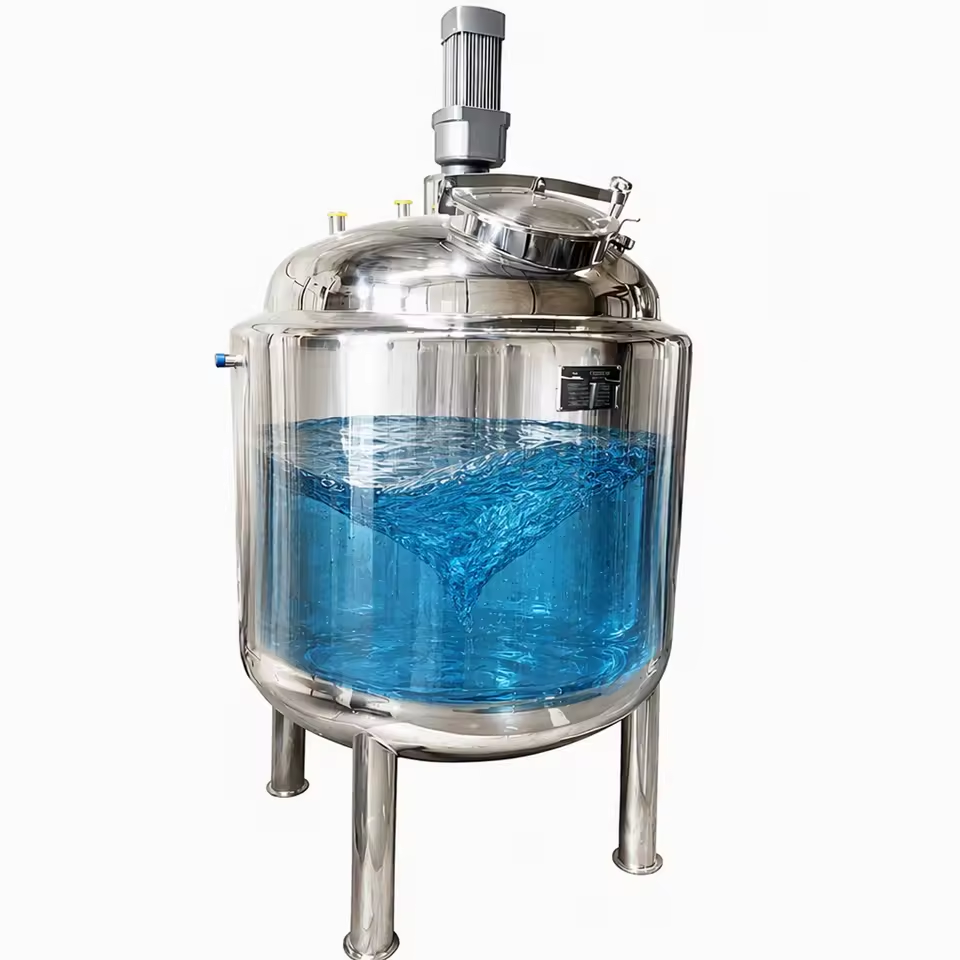
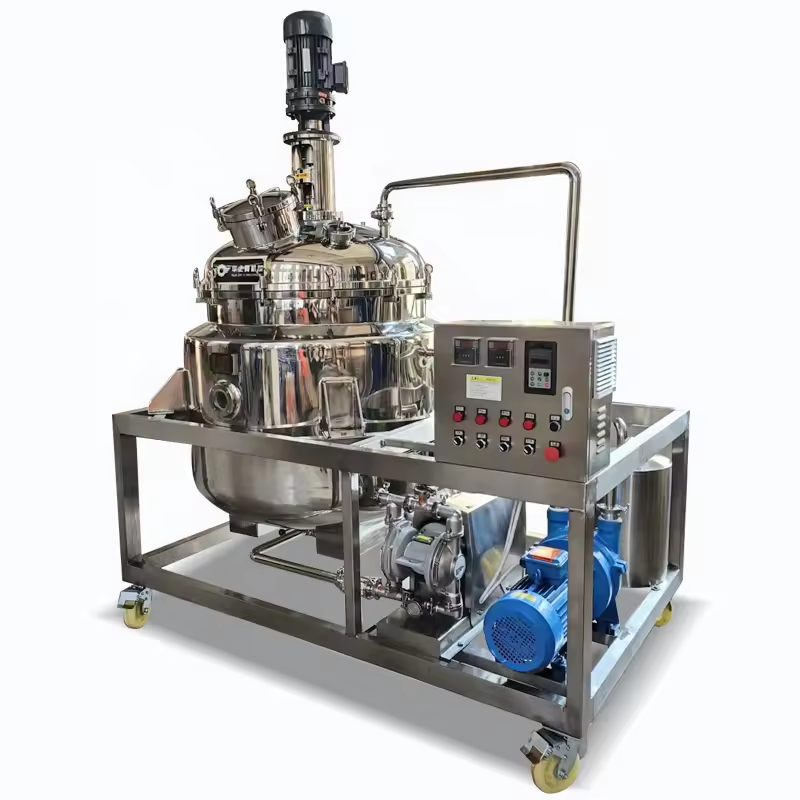
Liquid soap and shampoo mixing reactor

Liquid mixing reactors

Liquid soap and shampoo mixing reactor

100, 200, 500 and 1000 L nominal volumes; project-specific configuration

Stainless steel mixing tank for batch preparation of liquids, including compatible liquid soap and shampoo formulations. The paddles move the vessel contents to combine liquid or readily incorporated ingredients, helping distribute the components throughout the mixture. Selection takes account of viscosity, the method and order of addition, and foaming tendency, since suitable agitation depends on the formulation. The range offers nominal volumes of 100, 200, 500 and 1000 L. Working volume and agitator configuration are selected for the product, together with product-contact materials, the drive and the final electrical supply for each project.

View equipment →
600 L three-layer stainless steel fermenter

Mash fermentation

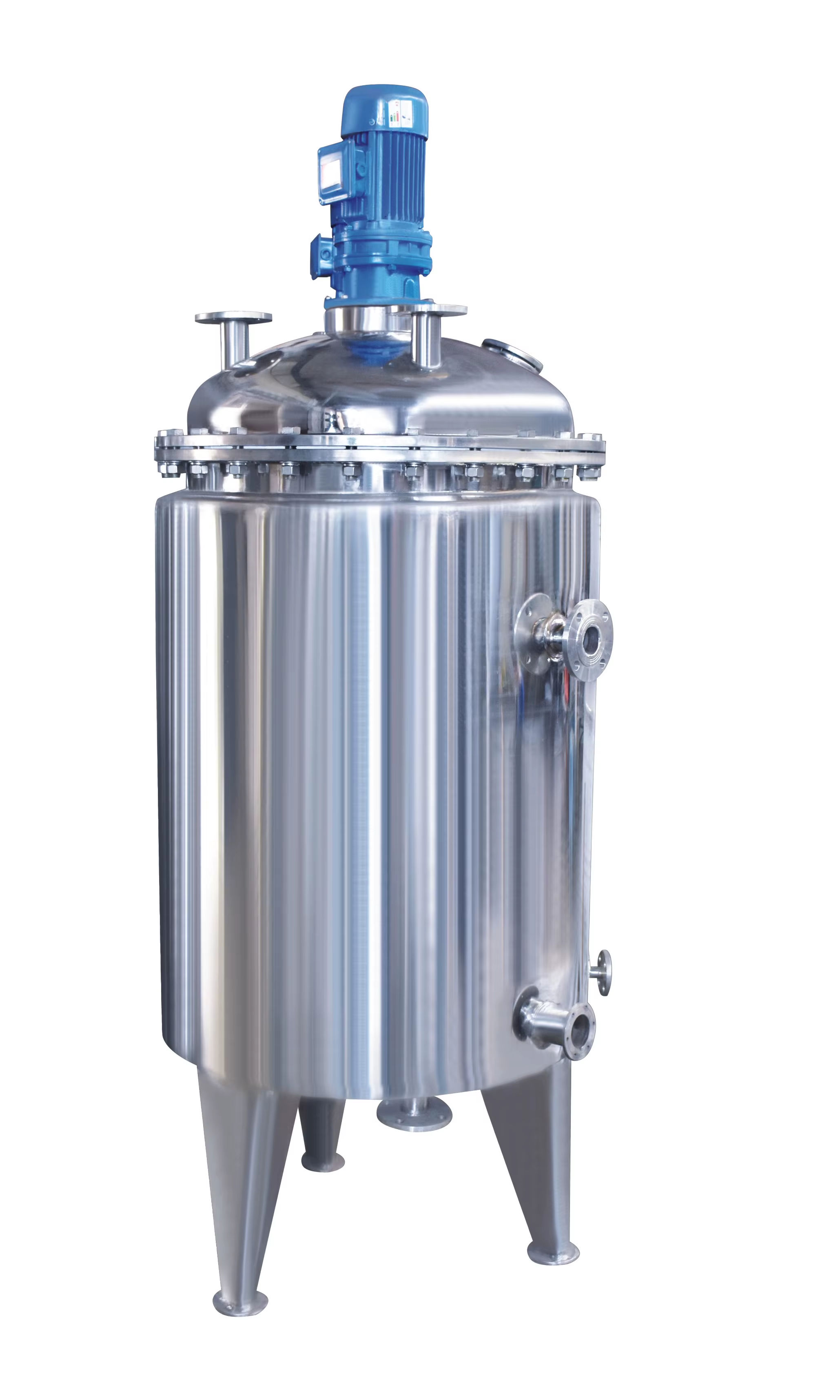
600 L three-layer stainless steel fermenter

600 L nominal volume; working volume and configuration defined per project

Fermenter for the fermentation stage of prepared grain mash in beverage processes such as whisky and vodka production. During this stage, yeast converts fermentable sugars into alcohol and carbon dioxide; the mash remains in the vessel under conditions defined for the process. The equipment has three-layer stainless steel construction, with SUS304 or 316L options selected for the product. The stated 600 L is nominal volume, while working volume and fermentation headspace are defined for each project. Operating temperature, gas management, connections and accessories are specified for the installation and the intended fermentation process.

View equipment →
Triple-shaft high-shear jacketed reactor

Mixing and emulsification reactors

Triple-shaft high-shear jacketed reactor

Project-specific configuration; capacity and agitation system to be defined

Reactor for preparing mixtures and emulsions in operations that benefit from combining product circulation with localised high-shear mixing. The triple-shaft configuration brings together a bulk agitator and two high-shear emulsifiers: the agitator helps move material through the mixing zones, while the emulsifiers promote component dispersion and agglomerate reduction. The jacket allows a heat-transfer fluid to circulate for heating or cooling the contents. Product-contact materials in 304 or 316L stainless steel are selected for the product. Working volume, drives, speeds and thermal operating conditions are defined for each project, taking account of the intended mixing operation and installation.

View equipment →
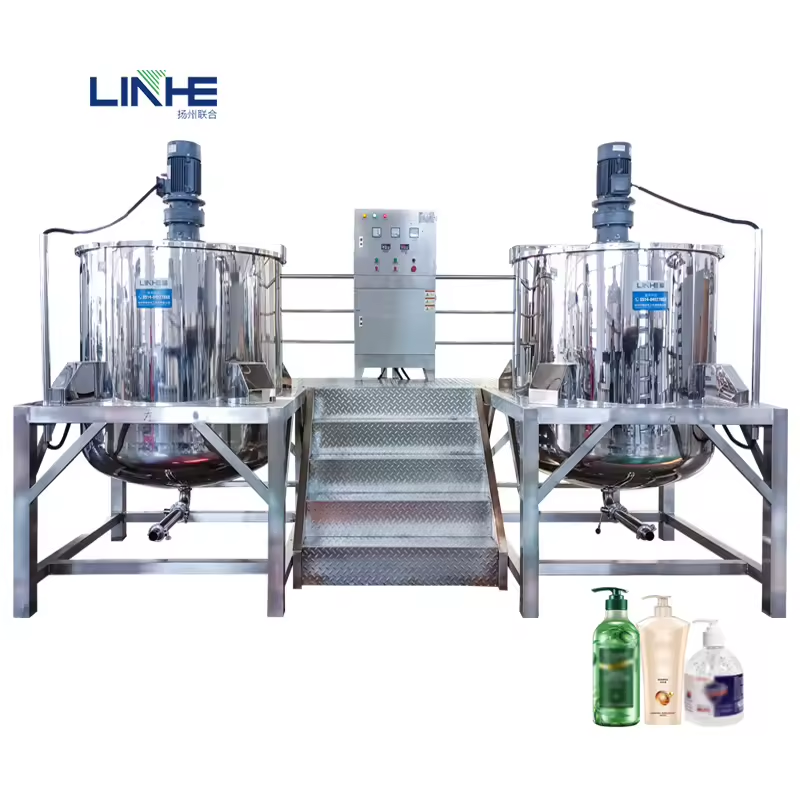
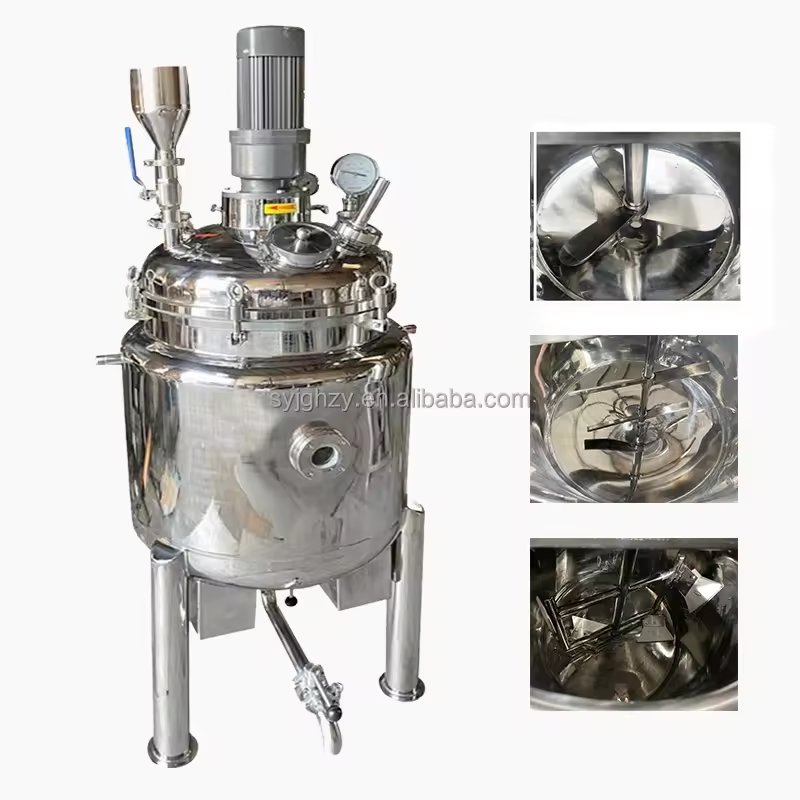
500 L stainless steel reactor with three-blade agitator

Mixing and process reactors

500 L stainless steel reactor with three-blade agitator

500 L nominal volume; working volume, agitation and heating defined per project

Stainless steel tank/reactor for preparing and mixing liquids used in chemical and cosmetic processes, such as detergents and shampoos. A top-mounted agitator moves the contents and helps incorporate the components. The reference configuration offers a three-blade agitator; its geometry and accessories are selected for the product. The stated 500 L is the vessel’s nominal volume, rather than its working volume. Heating can be specified as electric, steam or heat-transfer-fluid heating, as alternative configurations. The stainless steel grade, operating conditions and cleaning requirements are also selected for each project, together with the working volume and equipment configuration.

View equipment →
Stainless steel mixing reactor with working capacities from 50 to 5000 L

Mixing and process reactors

Stainless steel mixing reactor with working capacities from 50 to 5000 L

10 reference working capacities: 50–5000 L; project-specific configuration

Stainless steel mixing reactor/tank for preparing and blending chemicals and liquid formulations, including liquid fertilisers where the composition is compatible. The agitator moves the product to incorporate components and distribute the mixture through the vessel. Its geometry is selected for viscosity and the operation, with anchor, turbine or scraping options and high-shear mixing when specified. In jacketed versions, a thermal circuit allows heating or cooling to suit the process. The range offers reference working capacities from 50 to 5000 L, with materials, agitation, heating and connections defined for each project and its intended formulation.

View equipment →
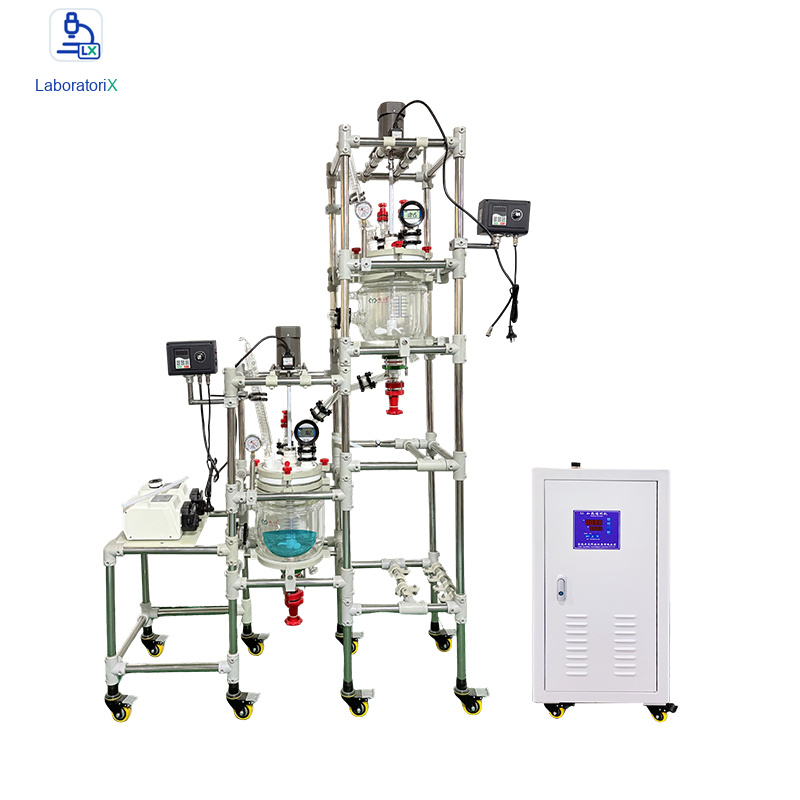
Combined reaction systems from 10 to 200 L

Pilot systems

Combined reaction systems from 10 to 200 L

Custom modular configurations

Modular assemblies for arranging several development or pilot-production operations into a coordinated installation. A configuration can combine reagent feeding, stirred reaction with thermal control, condensation, separation and collection, connected in the required process sequence. Sizing considers product transfers, heating and cooling needs and interfaces between modules, alongside individual vessels. Useful when preparing a product requires multiple stages, with materials, instrumentation and operating methods defined from the application.

View equipment →
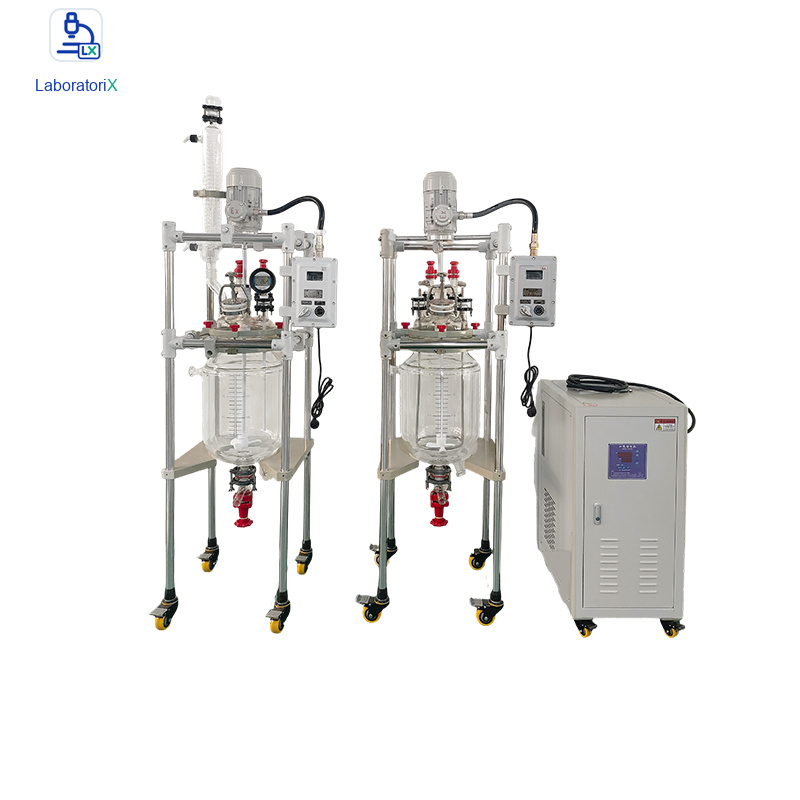
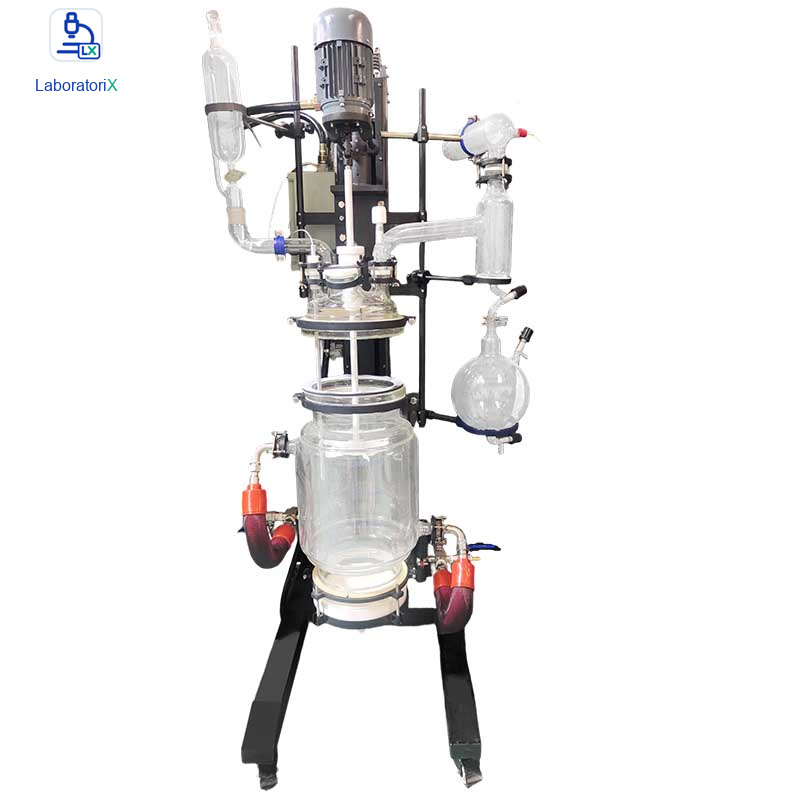
Jacketed glass reactors from 10 to 200 L

Process reactors

Jacketed glass reactors from 10 to 200 L

YMGR-10EX a YMGR-200EX

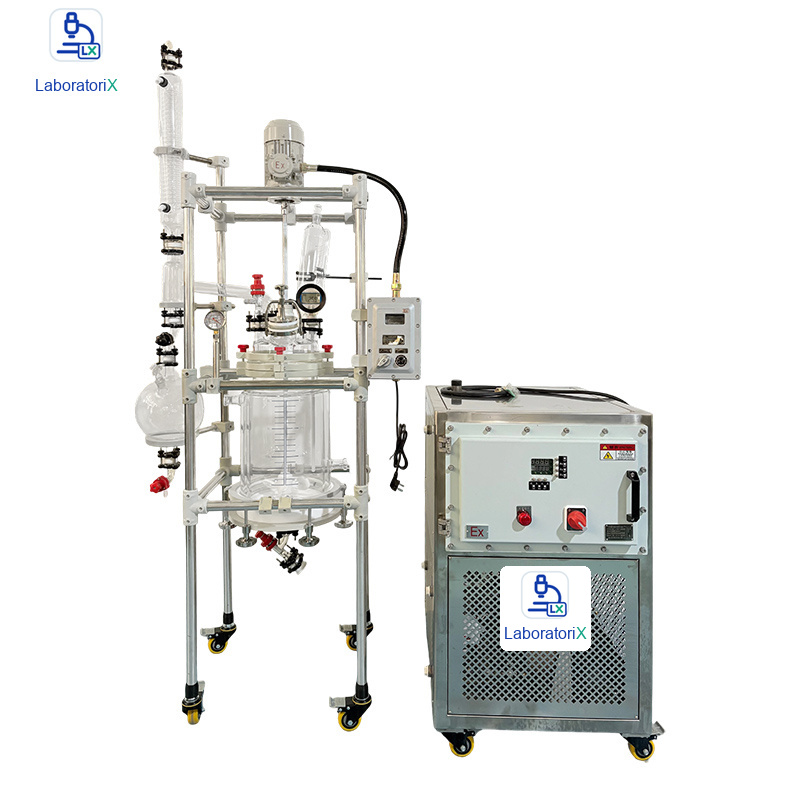
Reactors for synthesis, crystallization, extraction and mixing requiring agitation and temperature management. Reagents remain inside the glass vessel while fluid circulates through the outer jacket to supply or remove heat without mixing with the product. Agitation promotes contact between components, and transparency allows observation of mixing behavior and solid formation. Useful for process development and pilot production, with agitator, thermal fluid, connections, condensation and pressure conditions selected for the reagents and intended operation.

View equipment →
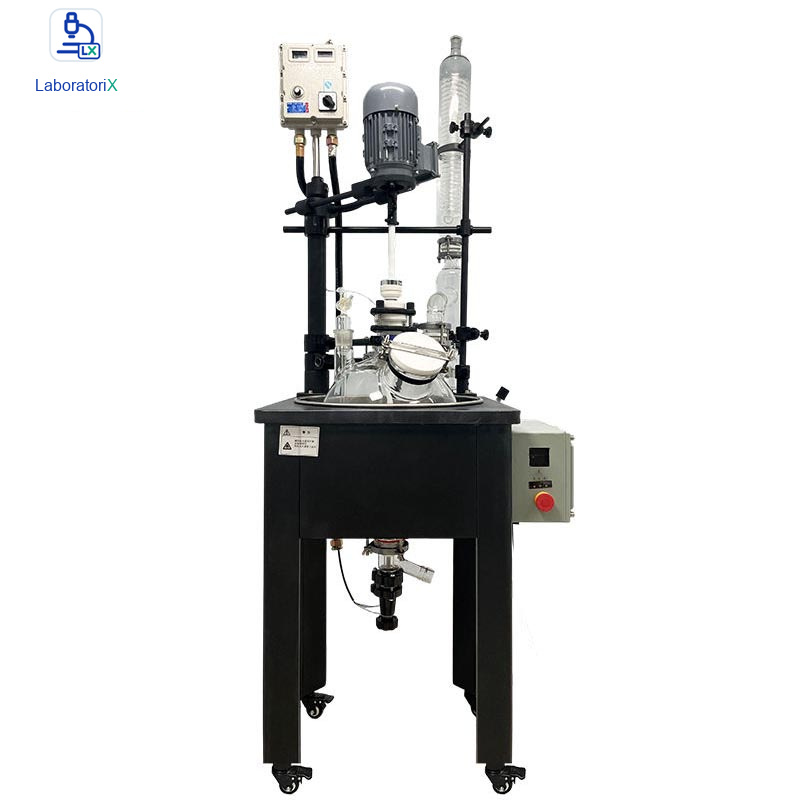
Lifting jacketed glass reactors, 10 and 20 L

Process reactors

Lifting jacketed glass reactors, 10 and 20 L

YMLGR-10EX / YMLGR-20EX

Jacketed reactors for synthesis and process development with agitation and temperature management. Product remains inside the glass vessel while thermal fluid circulates through the jacket to heat or cool the mixture without direct contact with reagents. The lifting mechanism eases opening and access for cleaning, inspection or component changes. Useful for pilot campaigns involving product changes, with agitator, seals, thermal circuits and connections selected for the conditions of each process.

View equipment →
Spherical glass reactors

Process reactors

Spherical glass reactors

YMSGR-20EX / YMSGR-30 / YMSGR-50EX / YMSGR-100EX / YMSGR-200EX

Reactors for synthesis, crystallization and other chemical transformations requiring reagent mixing and observation of the process. Agitation moves the contents of the spherical vessel, while the selected thermal system supplies or removes heat to establish reaction conditions. The glass allows observation of the liquid, solid formation and mixing behavior. Suitable for process development and pilot work, with stirrer geometry, heating, connections and material compatibility selected for the product and operation.

View equipment →
Stainless-steel reactors

Process reactors

Stainless-steel reactors

Project-specific configurations

Reactors for mixing reagents and performing chemical transformations in development, pilot production or small batches. A metal vessel contains the product and agitation promotes contact between components; in jacketed configurations, circulating service fluid supplies or removes heat. Steel grade and other contact materials depend on compatibility with reagents and cleaning procedures. Agitator, connections, instrumentation and allowable pressure and temperature conditions are defined for the reaction and operating method.

View equipment →
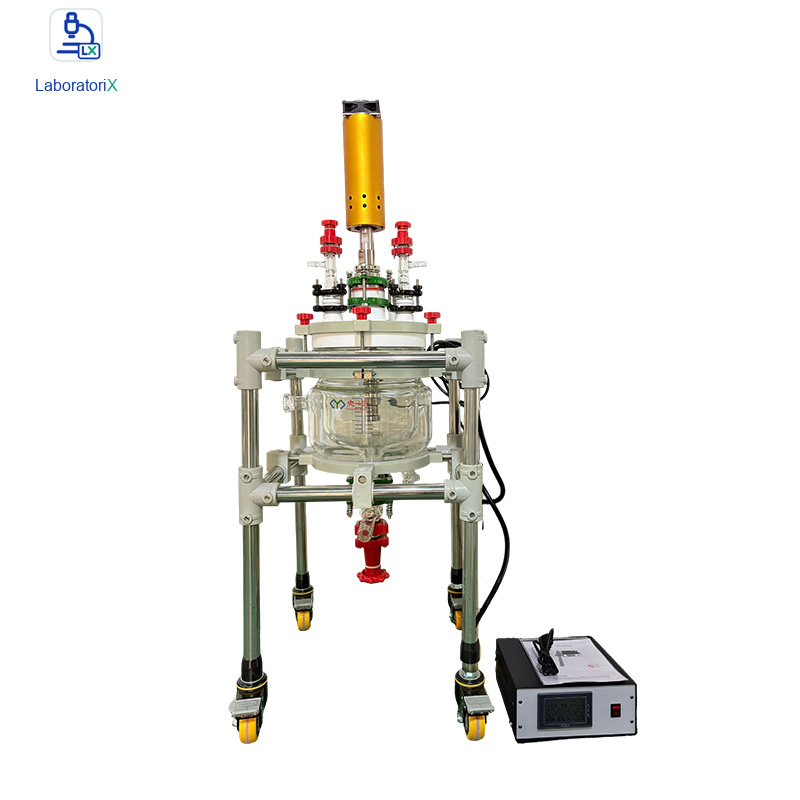
Ultrasonic glass reactors

Process reactors

Ultrasonic glass reactors

YMUGR-50EX

Reactors combining stirring, thermal control and ultrasonic energy to investigate extraction, dispersion, emulsification and reactions in heterogeneous mixtures. A probe transmits ultrasound into the liquid, producing cavitation and local movement that can improve phase contact and particle breakup. The jacket manages heat during treatment, while the glass allows observation. Intended for development and pilot trials, with applied power, treatment time, agitation and temperature adjusted and assessed for each formulation.

View equipment →
300 L vacuum reactor with wall scraper

Vacuum and mixing reactors

300 L vacuum reactor with wall scraper

300 L nominal volume; agitation, vacuum and thermal control defined per project

Stainless steel reactor for mixing liquids and viscous formulations in compatible chemical and cosmetic applications. The agitator moves the contents, while the scraper renews the product layer next to the vessel wall and helps incorporate that material into the mixture. The jacket transfers heat through a thermal circuit sized for heating or cooling the contents. The vacuum function allows operation at reduced pressure, with the evacuation system, sealing and operating limits defined for the process. The stated 300 L is nominal volume; working volume, product-contact materials, drive and thermal conditions are confirmed for the selected configuration.

View equipment →

Separation

3 equipment families
Glass filtration reactors

Filtration and reaction

Glass filtration reactors

YMGF-20 / YMGF-50

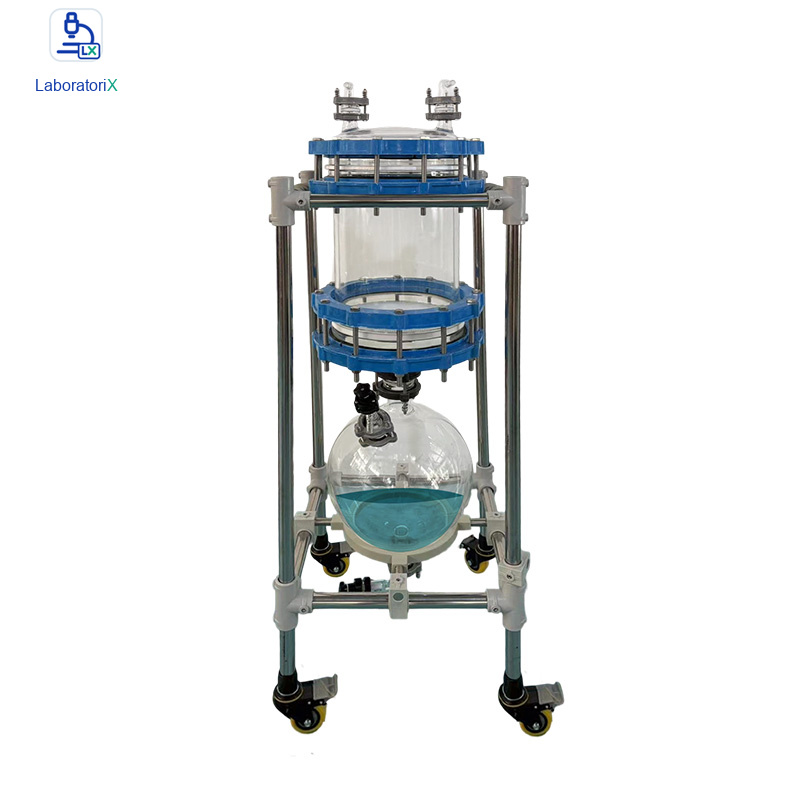
Equipment for carrying out a reaction or crystallization and subsequently separating solids from liquid in the same vessel. During filtration, liquid passes through the filtering element for collection, while particles compatible with its retention grade remain inside. Glass allows observation of mixing, solid formation and filtrate flow. Useful for product development and intermediate purification, with filter selection, agitation, washing and discharge conditions determined by the particles, solvent and intended operation.

View equipment →
Solid phase glass reactors from 20 to 100 L

Filtration and reaction

Solid phase glass reactors from 20 to 100 L

YMGFR-20EX / 50EX / 100EX

Reactors with a filtering bottom for operations where a solid participates in the reaction or must remain in the vessel while liquid is replaced. Agitation promotes contact between solids and reagents; filtration removes the liquid phase and allows wash liquid to be added without transferring the entire contents to another machine. Glass permits observation of the suspension. Useful for solid-phase synthesis, crystallization and intermediate purification, with filter, contact materials, agitation and washing sequence selected for the product.

View equipment →
Glass chromatography columns for pilot scale

Separation and purification

Glass chromatography columns for pilot scale

Configurable diameter and height

Columns for separating and purifying components of a dissolved mixture by passing solution through a stationary-phase bed. Compounds interact differently with the bed and flowing solvent, leaving at different times so fractions can be collected. The glass body allows observation of packing and flow. Useful for compound isolation and purification development, with adsorbent, solvents, bed height and flow selected according to feed composition and the required separation.

View equipment →

Distillation

3 equipment families
Glass distillation reactors from 10 to 200 L

Distillation and evaporation

Glass distillation reactors from 10 to 200 L

YMDR — sistemas modulares

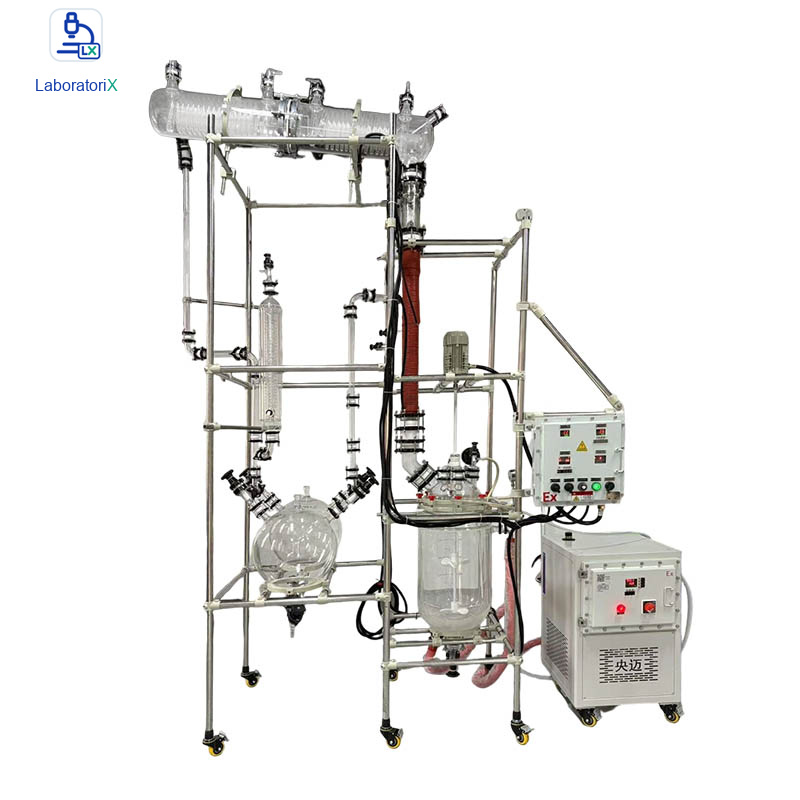
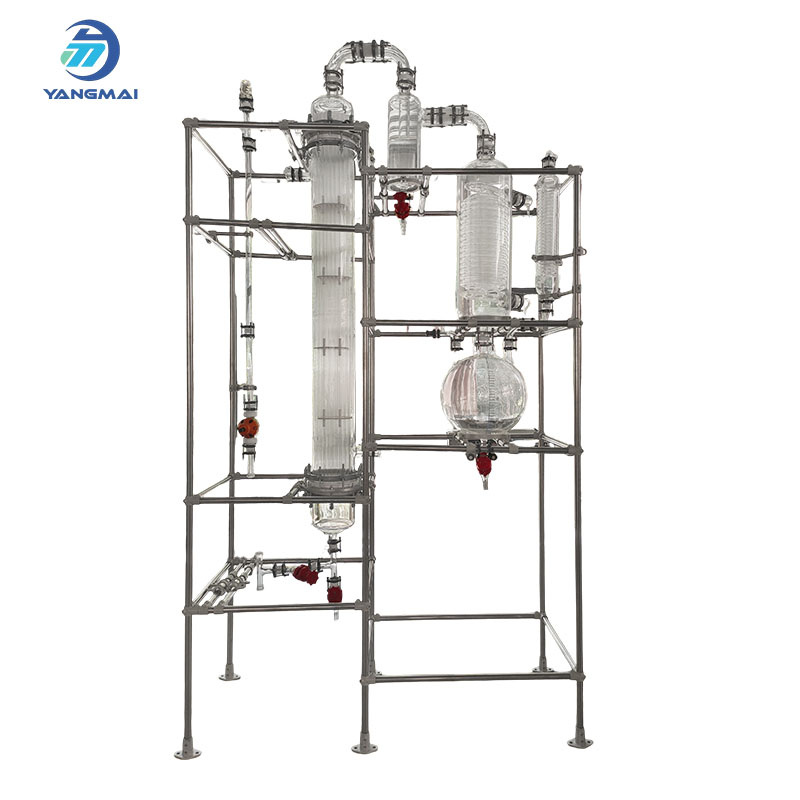
Systems for separating components of a liquid mixture by differences in volatility, recovering solvents or concentrating a product. Heating generates vapor, which enters the separation section and is cooled in a condenser for collection as distillate. In a fractional configuration, vapor-liquid contact in the column improves separation. Glass allows the stages to be observed. Column type, packing, reflux, condensation and pressure conditions are selected according to feed composition and the process objective.

View equipment →
Rotary evaporators from 10 to 50 L

Distillation and evaporation

Rotary evaporators from 10 to 50 L

YMRE-10 / 20 / 50

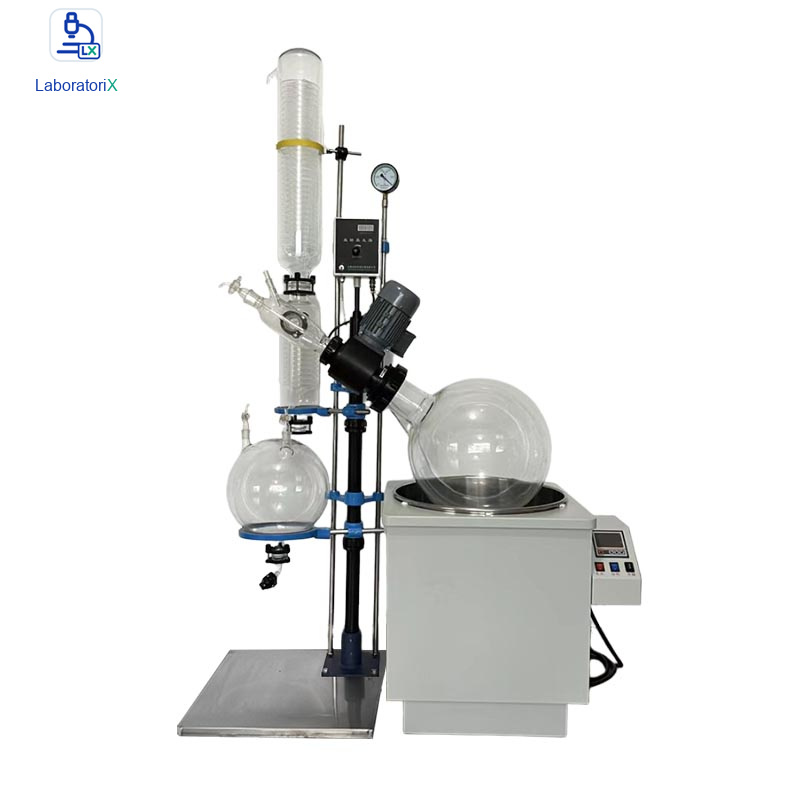
Equipment for removing solvent from a solution and collecting it separately, leaving a more concentrated product in the evaporation flask. Rotation spreads liquid over the flask wall and renews the exposed surface; a bath supplies heat, while vacuum allows evaporation below the atmospheric boiling temperature. Vapor is cooled in the condenser and collected in a receiver. Useful for extraction and process development, with bath temperature, rotation, vacuum and condensation capacity adjusted to the solvent and product sensitivity.

View equipment →
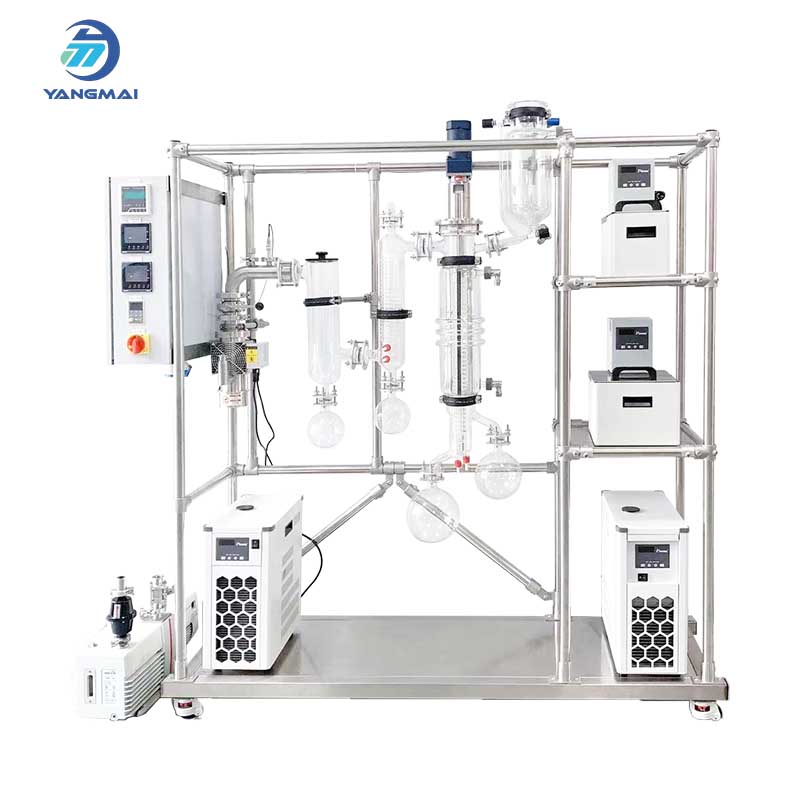
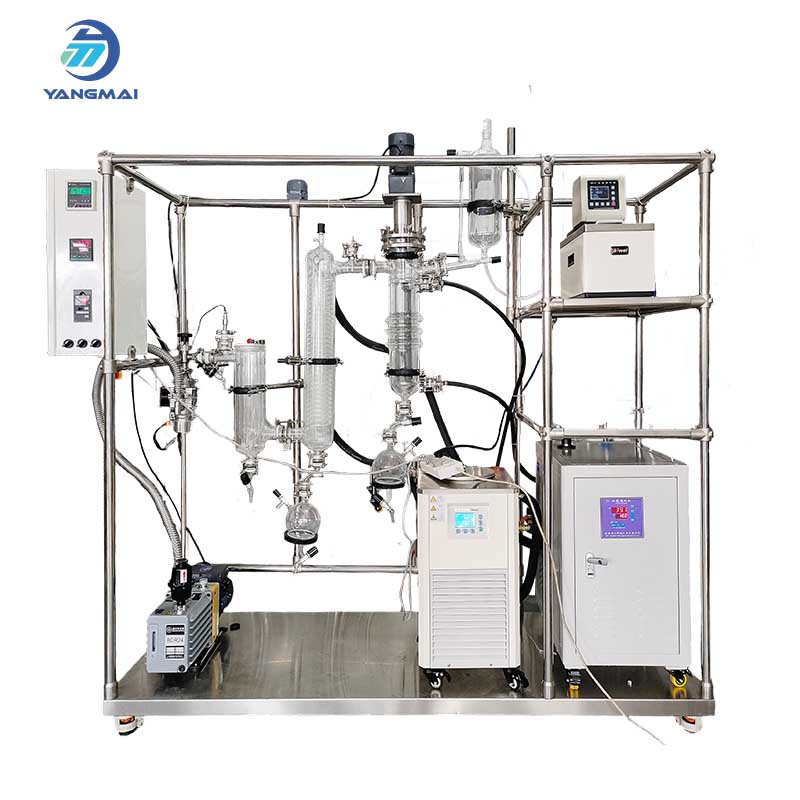
Short-path molecular distillation systems

Distillation and evaporation

Short-path molecular distillation systems

YMSPD-80 / 100 / 150 / 200 — areas of 0.15 / 0.25 / 0.30 / 0.35 m²

Systems for separating and purifying low-volatility or heat-sensitive components, such as fractions of oils and extracts. Product forms a film on a heated surface, and evaporating components travel a short distance to an internal condenser under high vacuum. Distillate and residue are collected separately so product distribution between fractions can be assessed. The short path and limited thermal exposure are relevant to these applications; composition, viscosity and the separation objective guide trials and configuration.

View equipment →

Thermal control

6 equipment families
Glass coil heat exchangers

Heat transfer

Glass coil heat exchangers

Series or parallel configurations

Heat exchangers for condensing vapor or heating and cooling liquid streams through a glass surface. One stream flows through the coil and the other around it, transferring heat without mixing the fluids. During condensation, vapor loses heat and becomes liquid for collection or return to the process. Transparency allows observation. Useful for solvent recovery and pilot installations, with exchange area, connections, service fluid and chemical compatibility selected for thermal load and operating conditions.

View equipment →
Glass shell and tube exchangers from 3 to 25 m²

Heat transfer

Glass shell and tube exchangers from 3 to 25 m²

Vertical and horizontal versions

Heat exchangers transferring energy between two process streams or between product and a service fluid. One stream passes inside a tube bundle and the other through the shell space, separated by tube walls. Depending on temperature conditions and duty, they can condense vapor, cool liquids or provide heating. Glass permits internal observation. Useful in chemical and solvent-recovery installations, with area, orientation, seals and connections selected for compatibility, thermal load and pressure drop.

View equipment →
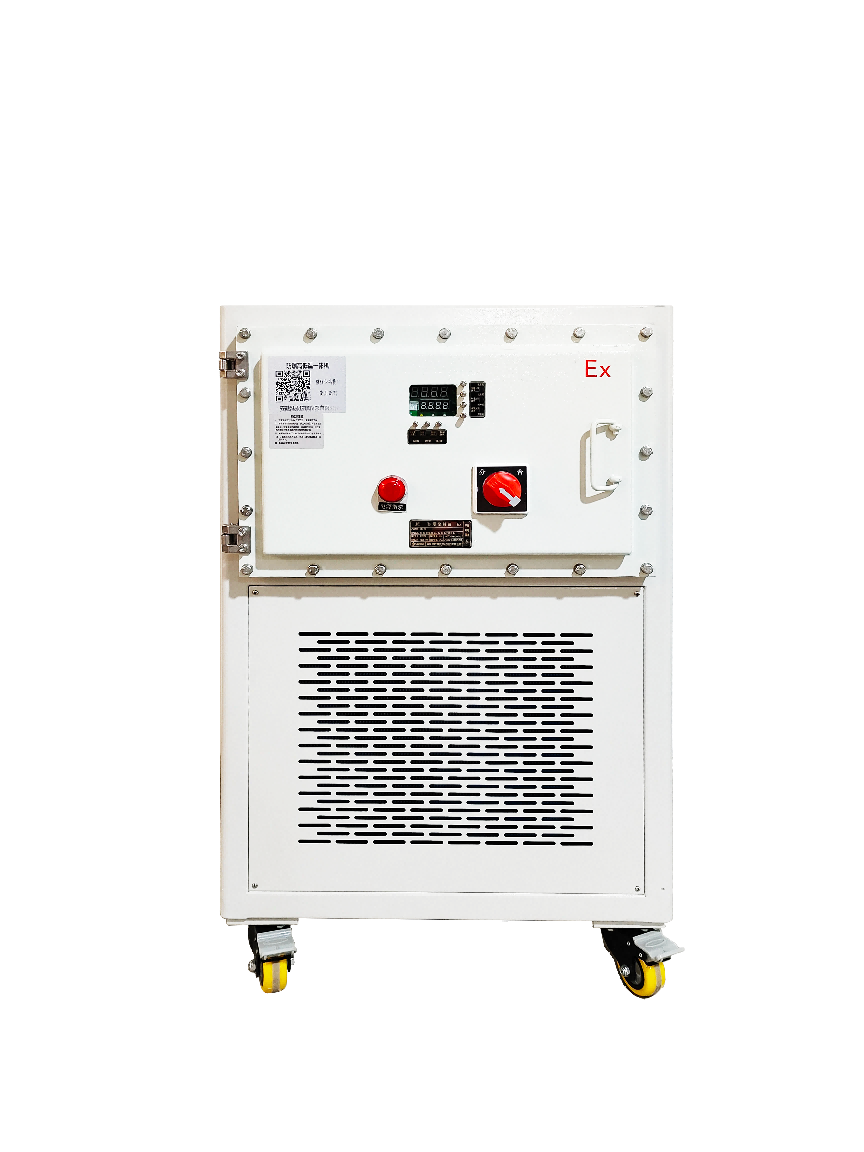
Heating and cooling circulators

Thermal control

Heating and cooling circulators

YMGD-20EX / YMGD-50EX / YMGD-100EX / YMGD-150EX / YMGD-200EX

Units supplying heating and cooling to reactors, jacketed vessels and other equipment requiring thermal management. A pump circulates thermal fluid between the unit and process equipment; the system adds or removes heat to bring temperature toward the selected setpoint. The circulating fluid transfers energy through a heat-exchange surface without mixing with the product. Useful for synthesis, crystallization and pilot trials, with selection based on thermal load, target temperature, fluid and circuit flow resistance.

View equipment →
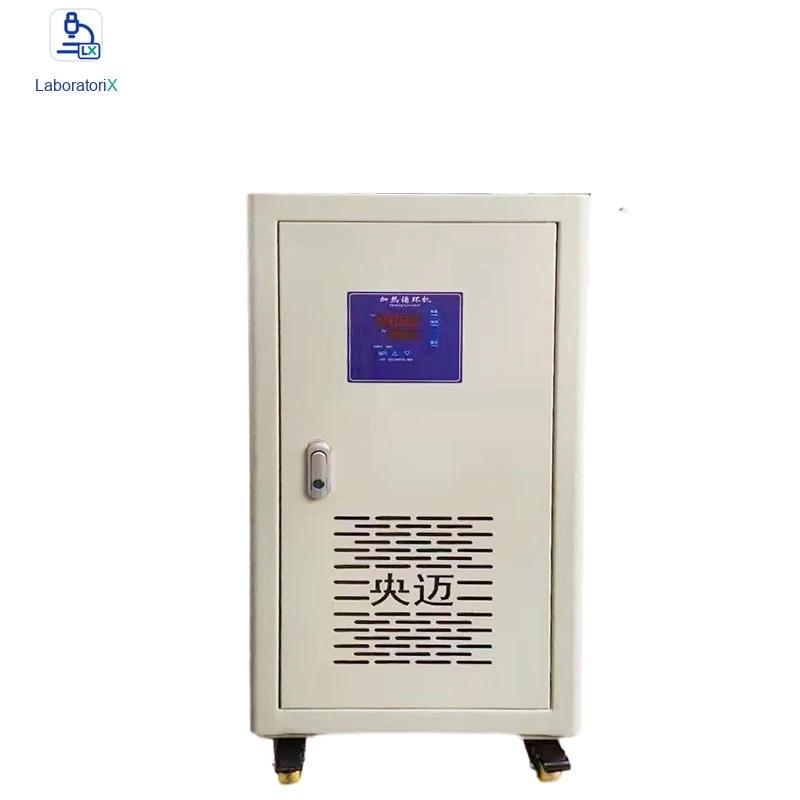
Heating circulators

Thermal control

Heating circulators

YMG-20 / YMG-50 / YMG-100 / YMG-150 / YMG-200

Units that heat and circulate a thermal fluid to supply energy to reactors, evaporators or jacketed vessels. A pump maintains flow through the external equipment, while temperature control adjusts heating to the required setpoint. Heat passes through the jacket or another exchange surface, keeping thermal fluid separate from the product. Useful for operations needing sustained heating, such as synthesis and evaporation, with selection based on temperature, thermal load, fluid and the circuit’s hydraulic characteristics.

View equipment →
Precision temperature circulators with PLC

Thermal control

Precision temperature circulators with PLC

YMJGD-5EX / YMJGD-20EX / YMJGD-50EX / YMJGD-100EX / YMJGD-150EX / YMJGD-200EX

Circulating heating and cooling systems for processes requiring close observation and adjustment of temperature over time. Thermal fluid passes through the equipment circuit, while a controller compares the measured temperature with the setpoint and manages heat transfer. The control configuration can use fluid or product temperature, depending on the selected instrumentation. Useful for developing reaction conditions and repeated trials, with thermal load, sensors, communication interfaces and required process data defined for the application.

View equipment →
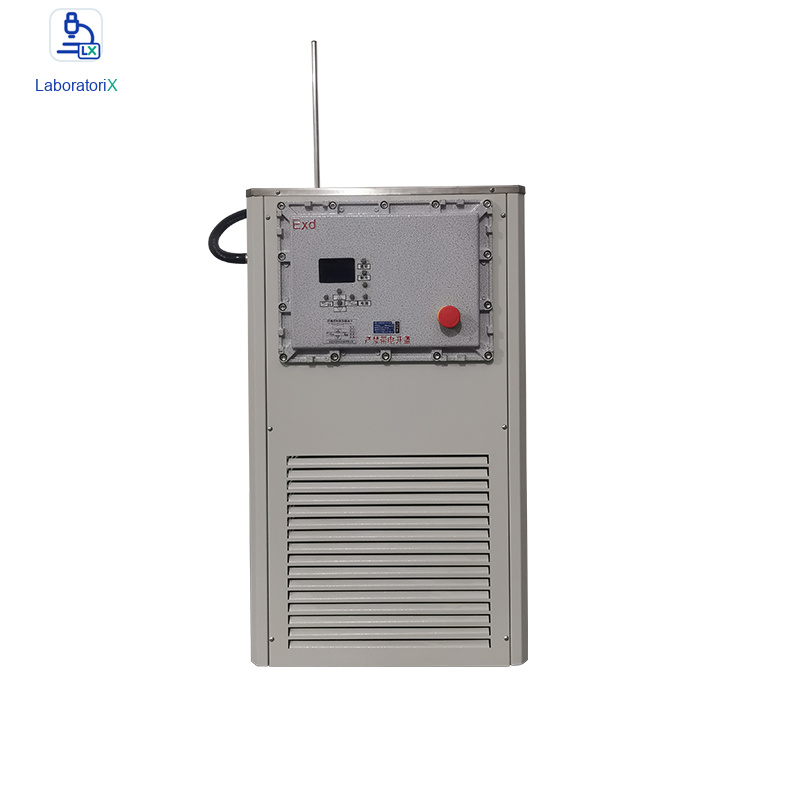
Process recirculating chillers

Thermal control

Process recirculating chillers

YMD-10/20 / YMD-50 / YMD-100 / YMD-150 / YMD-200

Refrigeration units for removing heat from reactors, condensers and equipment requiring a cooled circulating fluid. The refrigeration system chills this fluid and a pump carries it to the point of use, where it absorbs heat before returning to the unit. This circulation supports vapor condensation, reaction control and low-temperature trials. Selection considers actual operating temperature, cooling capacity required at those conditions, a compatible fluid and pressure losses through the external circuit.

View equipment →
Evaporation

3 equipment families
Falling film evaporators from 10 to 120 L/h

Industrial evaporation

Falling film evaporators from 10 to 120 L/h

Evaporation areas from 1 to 20 m²

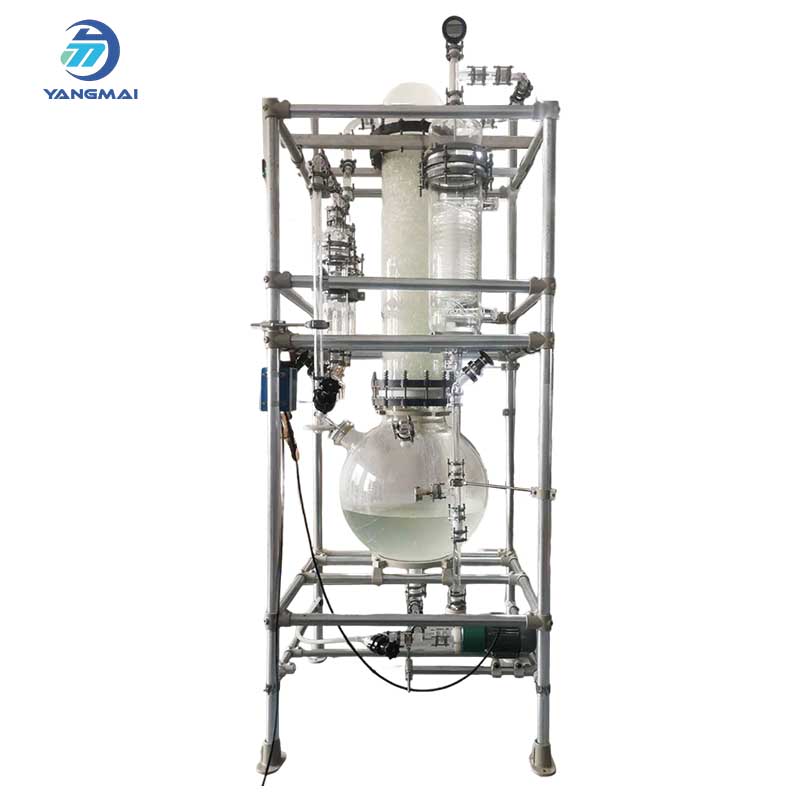
Systems for concentrating solutions and recovering volatile material through continuous evaporation. Liquid is distributed at the top of heated tubes and runs down their walls as a thin film; solvent partly evaporates while concentrated product moves to separation and collection. The film limits liquid held in the heating zone, useful for materials sensitive to thermal exposure time. Glass allows flow observation. Suitability depends on feed, viscosity, film formation and heating, vacuum and condensation conditions.

View equipment →
Glass scraped film evaporators

Industrial evaporation

Glass scraped film evaporators

YMSFE-60 a YMSFE-230

Evaporators for concentrating liquids and separating volatile components from a less volatile fraction, including viscous products or materials sensitive to prolonged heating. Feed enters a heated surface where rotating wipers spread and renew it as a thin film. Under vacuum, volatile material evaporates for condensation while liquid residue is collected separately. Glass allows film and flow observation. Selection considers viscosity, solids, deposit formation, volatility and heat sensitivity when defining feed, temperature, vacuum and rotor motion.

View equipment →
Vacuum circulation evaporation systems

Industrial evaporation

Vacuum circulation evaporation systems

Modular process units

Systems concentrating solutions by circulating product through a heating section and separating generated vapor from liquid. Vacuum allows evaporation below the atmospheric boiling temperature. Vapor passes to condensation and collection, while concentrate remains in circulation or is discharged according to the process. Circulation can be natural or pump-driven, depending on configuration. Useful for concentration and solvent recovery, with viscosity, solids, fouling tendency and feed conditions considered when defining heating, circulation and separation.

View equipment →
Gas treatment

2 equipment families
Gas absorption systems from 10 to 200 L

Gas treatment

Gas absorption systems from 10 to 200 L

YMEA-10 a YMEA-200

Systems treating process gas streams by contacting them with a wash liquid selected for the compounds to be captured. The tower and packing promote a gas-liquid interface, allowing soluble components to transfer into solution; where required, a reagent can neutralize absorbed compounds. Recirculation maintains contact and a reservoir holds the washing solution. Useful in chemical operations and pilot installations, with selection based on gas composition, flow rate, solubility and management of the resulting liquid.

View equipment →
Hydrochloric acid absorption systems

Gas treatment

Hydrochloric acid absorption systems

Towers and skids configured for the flow rate

Systems for capturing hydrogen chloride from a gas stream by transferring it into water or a suitable absorption solution. Gas-liquid contact reduces HCl in the gas and, depending on the design, produces an acidic solution or sends the liquid for neutralization. Absorption releases heat, so thermal balance forms part of sizing. Useful for chemical process off-gases, with composition, flow, target concentration, materials and cooling requirements determining tower and recirculation configuration.

View equipment →
Components

2 equipment families
Glass piping, valves and process components

Containers and components

Glass piping, valves and process components

Modular connection and support system

Components connecting equipment and forming liquid or vapor paths in a glass process installation. Pipes, bends, tees and reducers define routes and branches; valves open, close, drain or regulate flow according to their function. Column sections and accessories complete reaction and separation assemblies. Useful for installing, extending or maintaining pilot systems, with dimensions, gaskets, supports and contact materials selected for chemical compatibility, pressure, temperature and equipment arrangement.

View equipment →
Glass process vessels

Containers and components

Glass process vessels

Cylindrical and spherical, project-specific

Vessels for receiving, feeding, collecting or temporarily holding liquids between stages of a process installation. Connections arrange inlets, outlets and instrumentation points for the vessel’s role, while glass allows observation of level and contents. In jacketed versions, thermal fluid can heat or cool product through the wall. Useful as feed or collection reservoirs in pilot systems, with geometry, working volume, materials, discharge and pressure and temperature conditions selected for the application.

View equipment →
Sterilisation

2 equipment families
Horizontal autoclaves from 150 to 400 L

Industrial sterilization

Horizontal autoclaves from 150 to 400 L

BKQ-H150 / H200 / H300 / H400

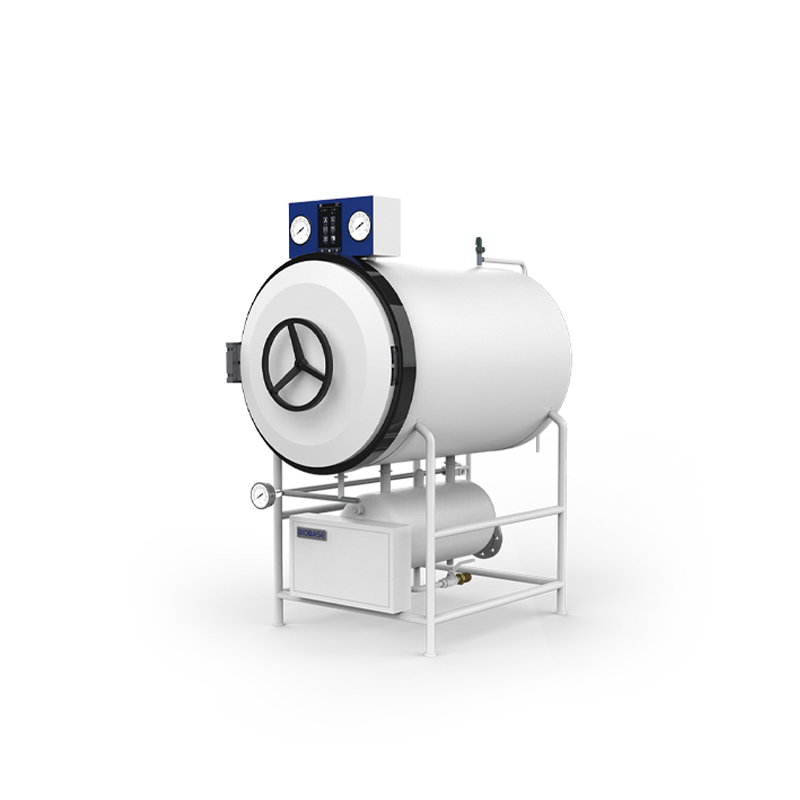
Autoclaves for steam sterilization of heat- and moisture-compatible materials in laboratories, healthcare facilities and production operations. The generator supplies saturated steam to the horizontal chamber, transferring heat to the load during a cycle with controlled temperature and exposure time. Automatic control sequences the selected program so defined processing conditions can be repeated for each material. Chamber and cycle selection account for load volume, packaging and arrangement, allowing steam to reach the surfaces being treated while matching the equipment to the working process.

View equipment →
Large capacity horizontal autoclaves of 450 and 650 L

Industrial sterilization

Large capacity horizontal autoclaves of 450 and 650 L

BKQ-Z450H / BKQ-Z650H

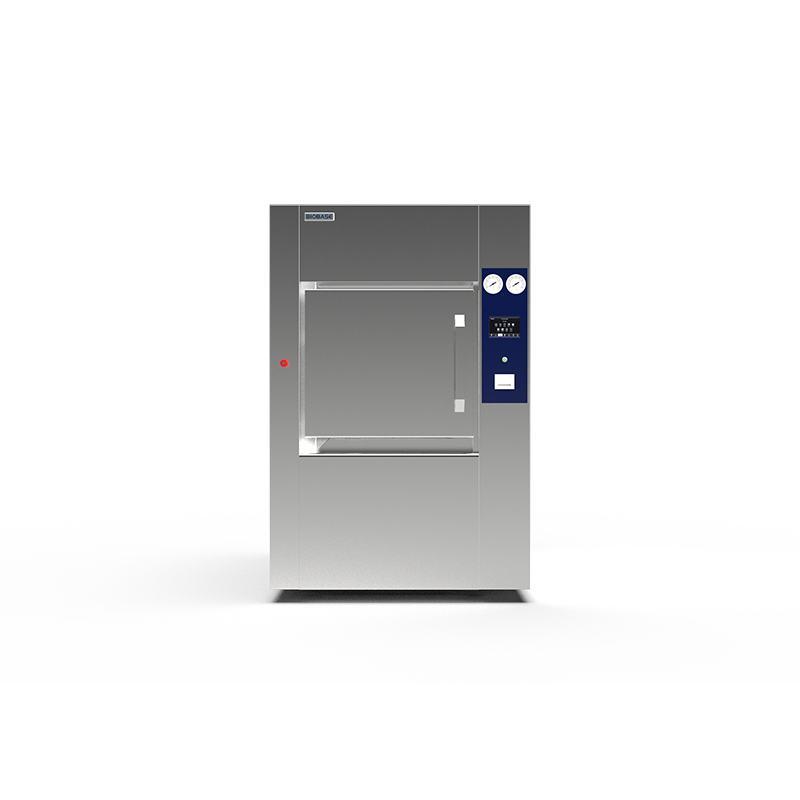
Large-capacity autoclaves for steam sterilization of compatible loads in facilities that process materials regularly. Pre-vacuum removes air from the chamber and helps saturated steam reach the load, followed by exposure to the programmed conditions, exhaust and vacuum drying. Two interlocked doors allow loading and unloading to be organized on opposite sides of the equipment. The control system monitors and records cycle parameters. Configuration is selected according to the materials, packaging, batch quantity and arrangement of the working areas.

View equipment →
Cleanrooms

2 equipment families
Air showers and pass boxes for clean rooms

Clean rooms

Air showers and pass boxes for clean rooms

Configurable air showers and pass boxes

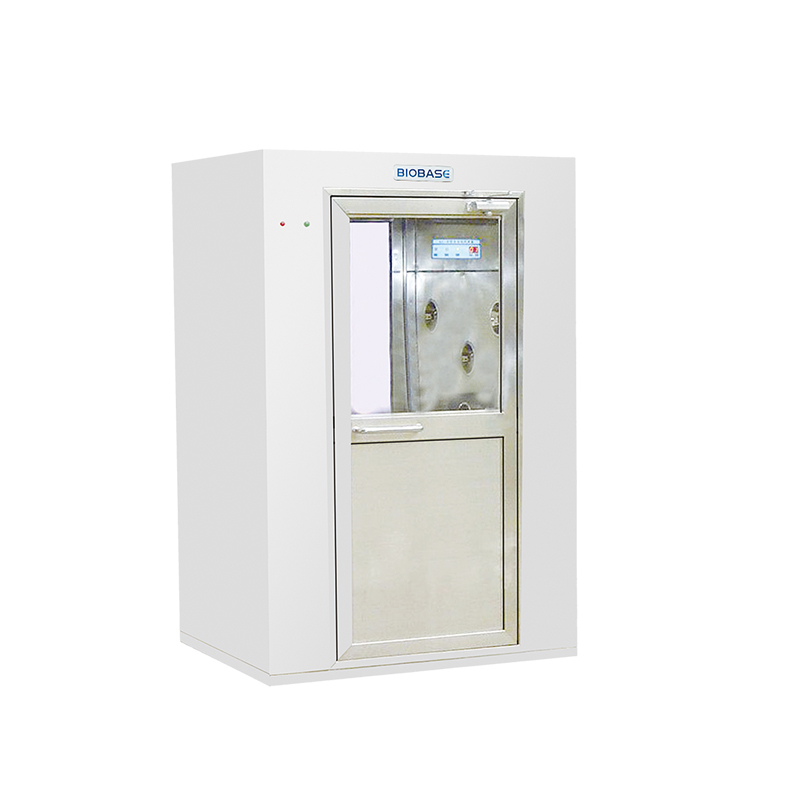
Equipment for organizing personnel entry and material transfer between areas with different cleanliness conditions. An air shower directs filtered air over clothing and exposed surfaces to dislodge particles before entry. A pass box transfers objects without opening a room access door; its interlock prevents both transfer doors from opening simultaneously. Selection depends on personnel and material routes, object dimensions and the classification of the adjacent areas, integrating the equipment into the facility’s particle-control procedure.

View equipment →
ISO 5 downflow cabins

Clean rooms

ISO 5 downflow cabins

BKCB-1500 / 2000 / 3000 / 5000

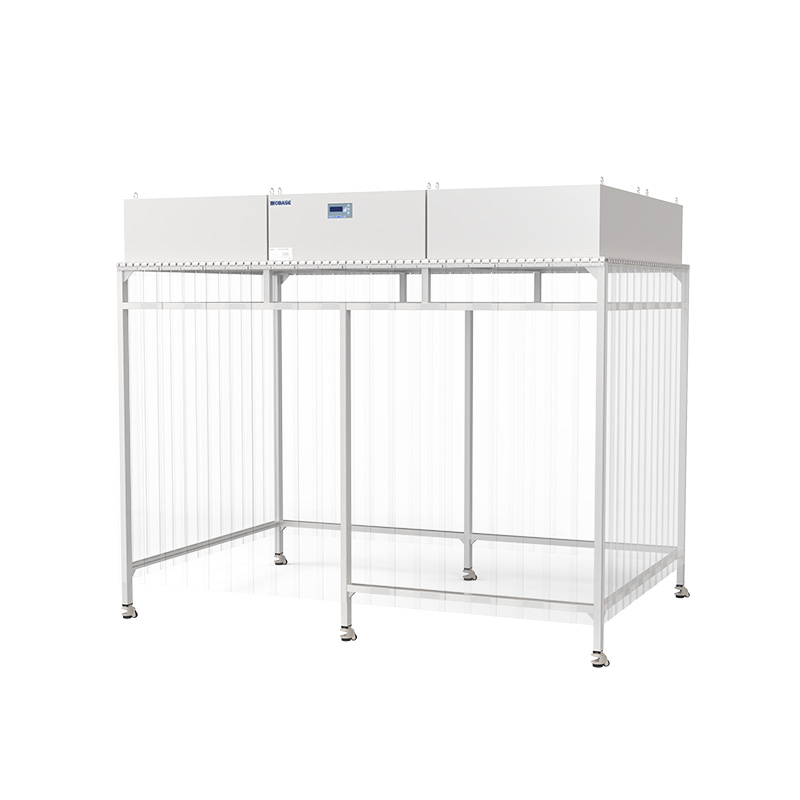
Modular booths that establish a working zone with a reduced airborne particle concentration for localized preparation, handling or filling operations. Fan units move air through HEPA filters and distribute it downwards across the working area, carrying particles away from the zone covered by the airflow. The structure allows the usable area to be adapted to the equipment and operation. Sizing considers the process footprint, openings, operator positions and airflow obstructions, with the cleanliness classification verified under the actual installation and operating conditions.

View equipment →
Washing

2 equipment families
330 L automatic bottle washers

Automated washing

330 L automatic bottle washers

BK-CW330 / BK-CW330Z

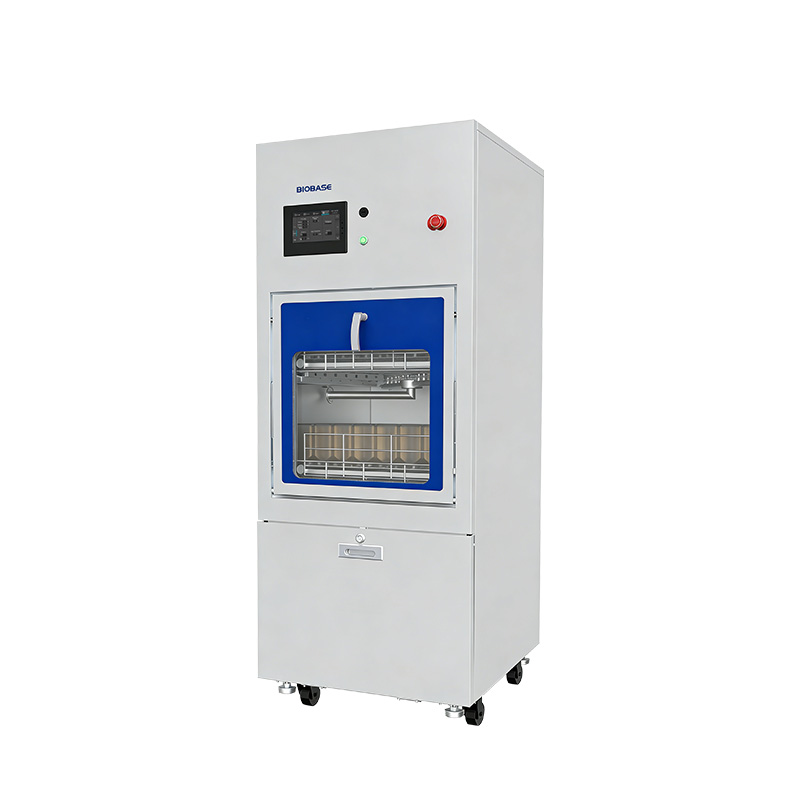
Washers that prepare vivarium drinking bottles for reuse through automatic washing and rinsing cycles. A pump circulates the washing water and supplies the spray over the bottles to loosen residues; rinsing then carries away the released soil and washing residues. Programmable control coordinates the stages and operating parameters. Loading supports and bottle arrangement are selected for the shape, capacity and material of the bottles, allowing water access and drainage throughout the different stages of the cycle.

View equipment →
1500 L automatic cage washers

Automated washing

1500 L automatic cage washers

BKCW-1500 / BKCW-1500Z

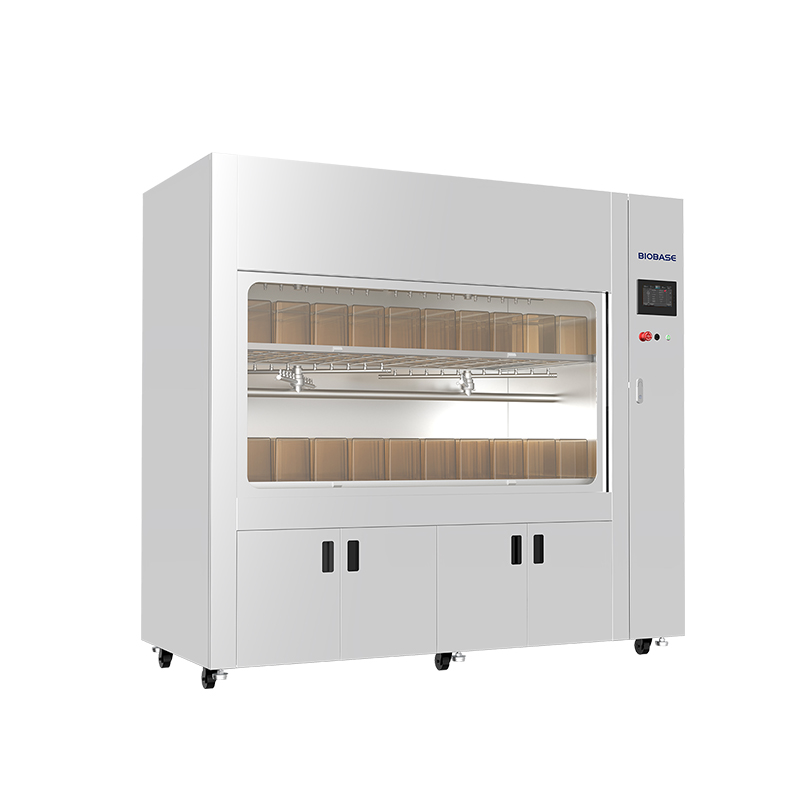
Washers for batch cleaning of animal cages and vivarium accessories, reducing handling during repetitive washing operations. Heated water sprayed over the load helps loosen and carry away residues, followed by rinsing and, depending on the selected configuration, thermal drying. The program controls times and temperatures to repeat the treatment sequence. Rack selection, item orientation and cycle settings depend on the dimensions, materials and soiling of the load, allowing water to reach the surfaces and drain during operation.

View equipment →
Waste treatment

3 equipment families
Autoclave with shredder for medical waste

Waste treatment

Autoclave with shredder for medical waste

BK-PS50

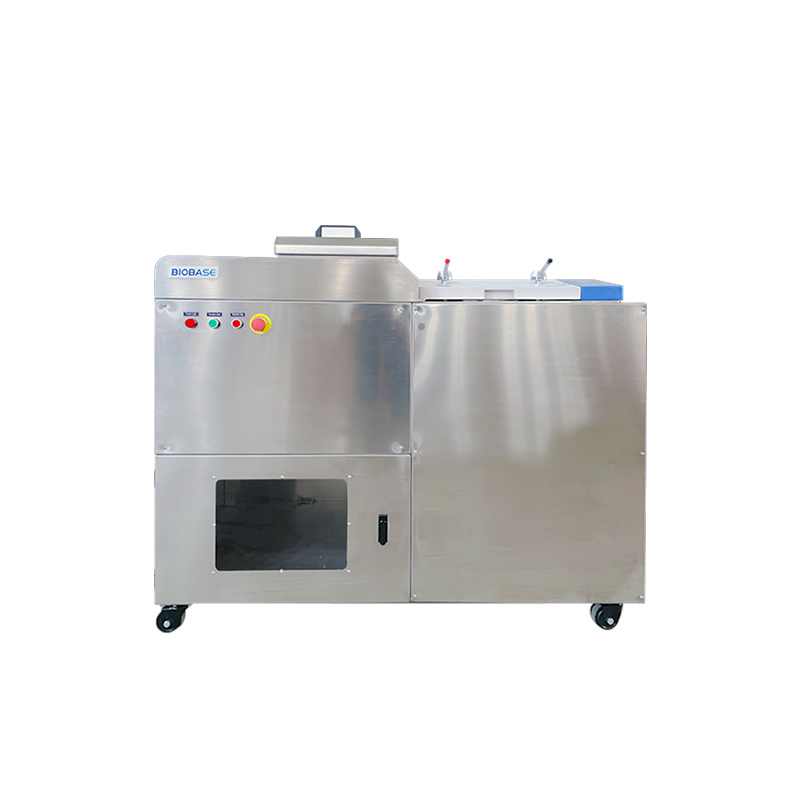
A unit for treating compatible medical waste by combining steam sterilization with mechanical size reduction. The autoclave section subjects the load to a controlled thermal cycle, while the shredder uses blades to fragment the waste and reduce the space it occupies. Integrating these functions helps organize treatment where waste is generated locally. Cycle selection and feeding conditions depend on the composition, shape and quantity of material, with subsequent handling of the treated waste determined by the facility’s procedure.

View equipment →
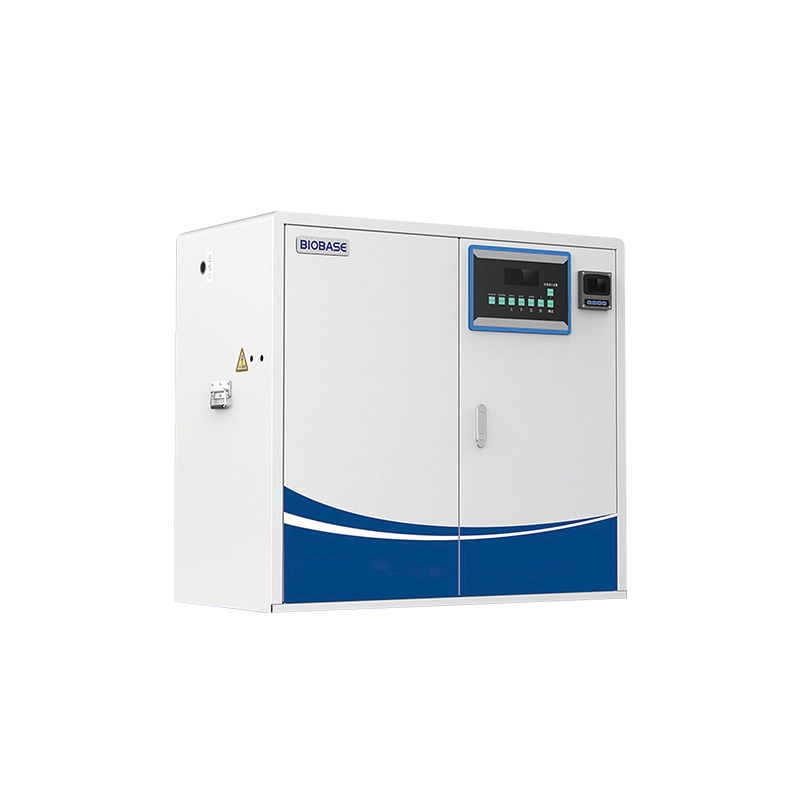
Laboratory wastewater treatment system up to 200 L/day

Wastewater treatment

Laboratory wastewater treatment system up to 200 L/day

BK-SFS200

A system that treats laboratory wastewater through a controlled sequence of chemical treatment and separation operations. Reagent dosing adjusts pH and promotes neutralization and precipitation. Oxidation, ozone disinfection and ultraviolet treatment complement these stages, while multistage filtration retains solids. The controller monitors liquid levels and reagent availability to coordinate operation. Characterizing the wastewater, including its composition, contaminant loading and generated volume, establishes the treatment conditions and provides the basis for checking whether the resulting water is suitable for its intended destination.

View equipment →
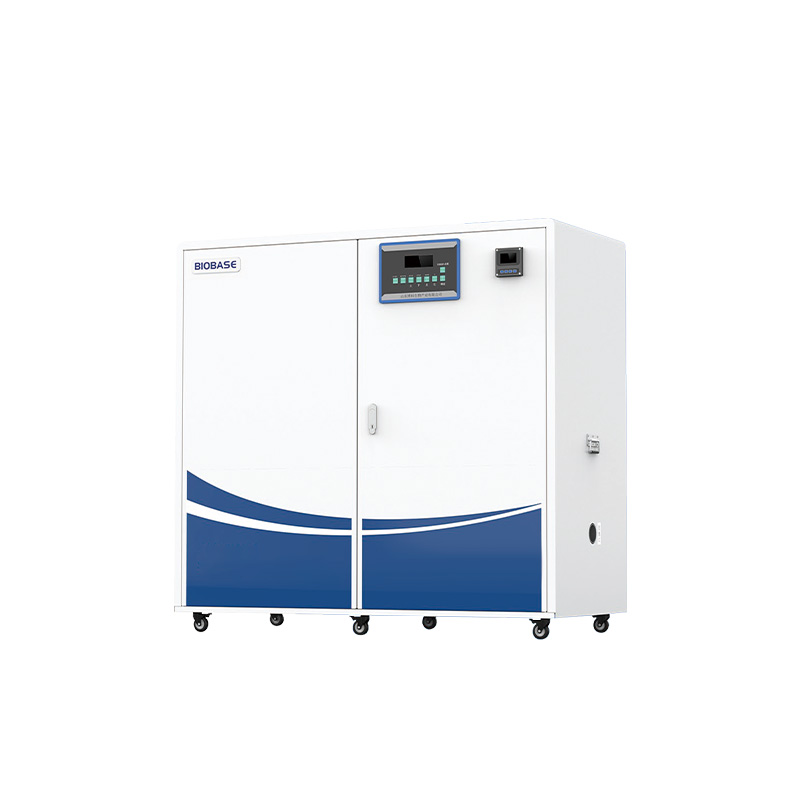
Laboratory wastewater treatment system up to 500 L/day

Wastewater treatment

Laboratory wastewater treatment system up to 500 L/day

BK-SFS500

A laboratory wastewater treatment system combining pH adjustment, precipitation, oxidation, disinfection and filtration to address different parts of the pollutant load. Reagent dosing is coordinated with liquid-level monitoring, while aeration and microelectrolysis complement the treatment stages in the reference configuration. Water passes through successive operations before collection or onward transfer. Process selection and operating conditions are based on wastewater analysis, daily volume and the relevant contaminants, allowing treatment results to be assessed against the requirements of the intended destination.

View equipment →
Ice production

2 equipment families
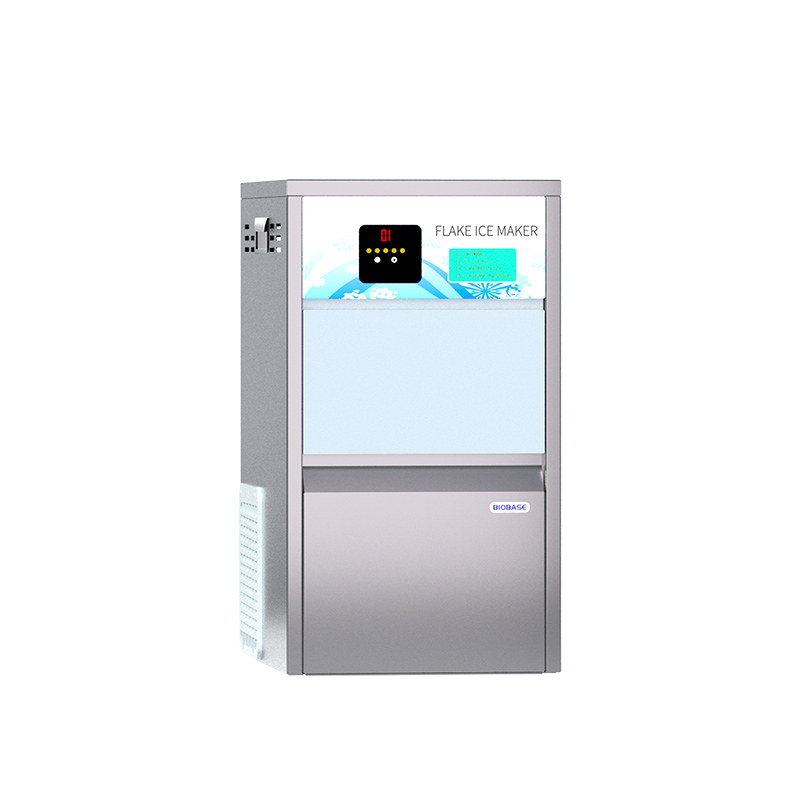
200 and 300 kg/day flake ice machines

Ice production

200 and 300 kg/day flake ice machines

BK-IMS200 / BK-IMS300A

Machines that produce small ice flakes or particles for cooling products, preserving samples and supporting process operations. The refrigeration circuit removes heat from water in the evaporator, forming ice that a cutting mechanism detaches and transfers to storage. Its particulate form makes the ice easy to distribute around containers or products requiring cooling. Selection considers daily consumption and peak demand, storage capacity, water and ambient temperatures, and the installation’s water supply, ventilation and drainage conditions.

View equipment →
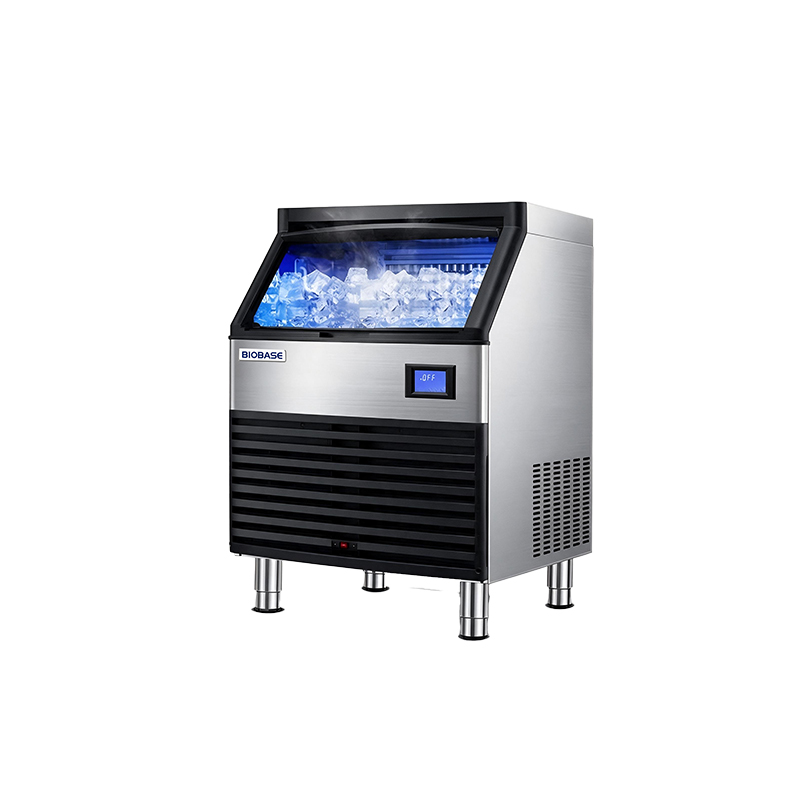
Cube ice machines from 150 to 800 kg/day

Ice production

Cube ice machines from 150 to 800 kg/day

CIM-150 / 200 / 300 / 800

Machines for producing and storing cube ice where a regular supply is needed for drinks, preservation and other cooling operations. The refrigeration circuit freezes water on the ice-forming surfaces, alternating between freezing and releasing the cubes into the storage bin. Automatic control manages water intake and monitors production and storage level. Capacity is selected for daily consumption, peak demand and the reserve required, while also accounting for ambient temperature, the available water supply and dissipation of heat from the condenser.

View equipment →
Filling

1 equipment family
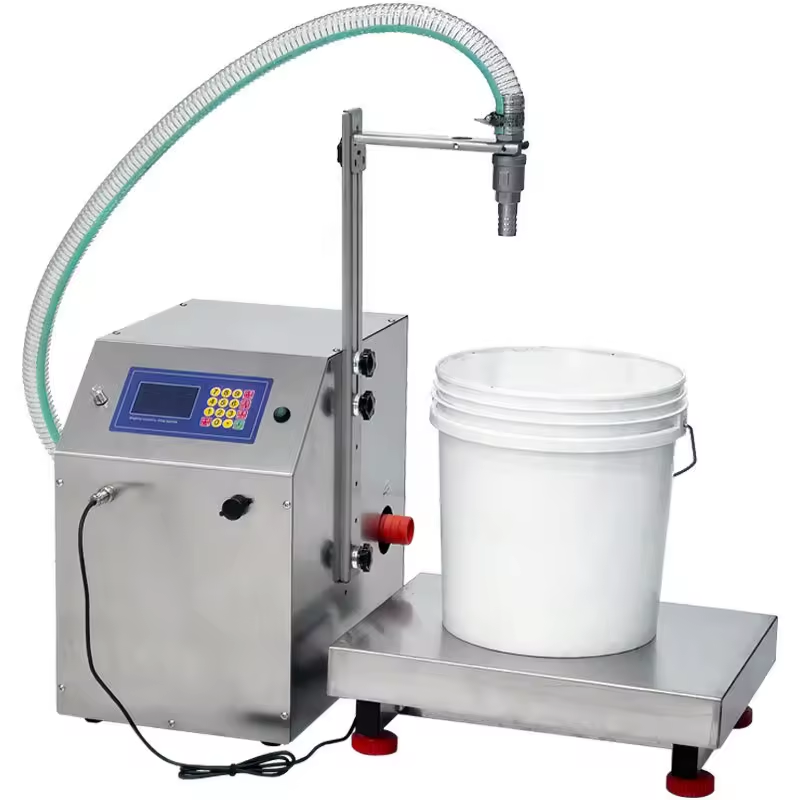
Gravimetric liquid filling machine

Industrial filling

Gravimetric liquid filling machine

L72 — automatic 1-nozzle configuration

Equipment that doses liquids into containers by measuring the weight of the product being added. The container is placed on the weighing platform, a pump delivers liquid to the nozzle and the controller uses the scale signal to end dosing at the set mass. This principle allows repeated fills without relying solely on pump running time. Operating conditions are selected for product viscosity, foaming tendency, container size and compatibility of wetted materials, adapting the filling process to the required quantity.

View equipment →

Hydroponics

1 equipment family
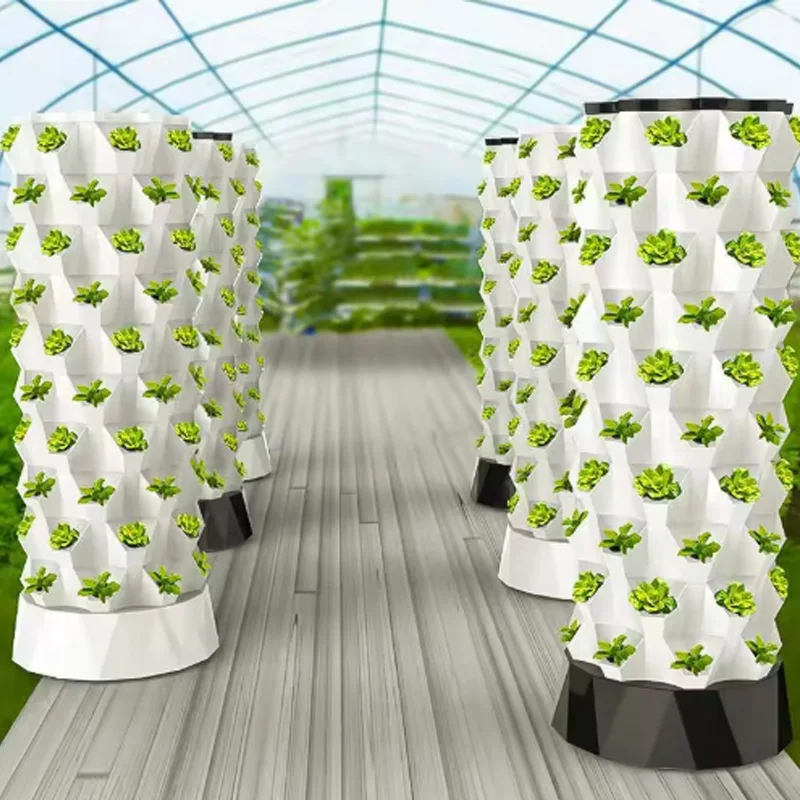
Vertical hydroponic growing tower for 48 to 80 plants

Vertical hydroponics

Vertical hydroponic growing tower for 48 to 80 plants

6 / 8 / 10 levels — 48 / 64 / 80 positions

A soil-free growing system that arranges planting positions in vertical tiers to make use of the available floor area. A pump circulates nutrient solution to the tower, where it passes through the root zone and returns to the reservoir for recirculation. Plants are supported in the growing openings and receive water and nutrients through this circuit. Configuration is selected for the crop, root and canopy development, lighting and environmental conditions, allowing production of leafy greens, herbs or other compatible crops to be organized vertically.

View equipment →

Industrial filtration

10 equipment families
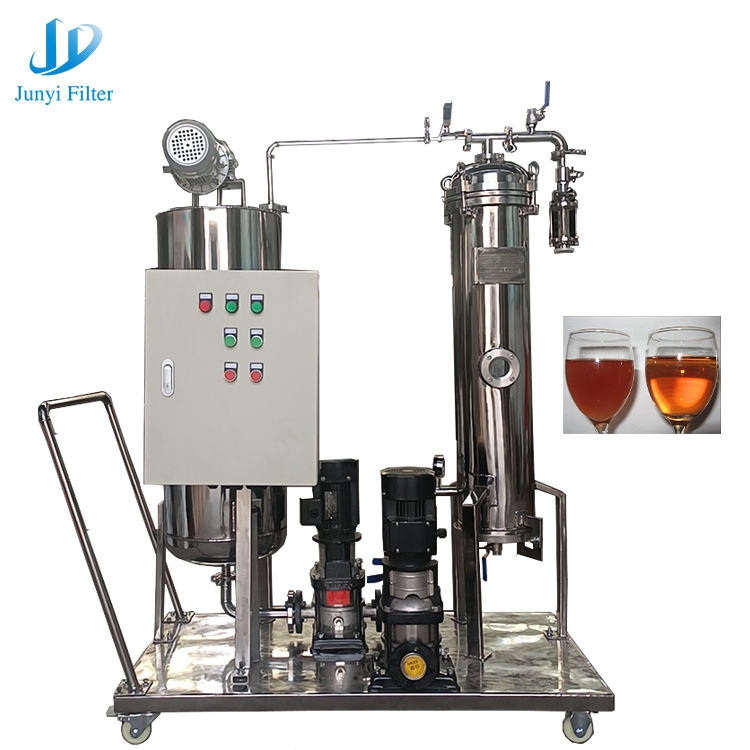
Diatomaceous-earth filter for beverages

Beverage filtration

Diatomaceous-earth filter for beverages

JYSF

Clarifies beverages and other compatible liquids by removing suspended particles that cause haze. Diatomaceous earth acts as a filter aid, forming a porous layer on the filter supports. Liquid passes through this layer while solids are retained. The filtrate is collected separately and accumulated material is removed during cleaning. Filter-aid grade, dosage and cycle are selected for the product, solids loading and required clarity. Filtration must be specified separately from any process used to provide microbiological preservation.

View equipment →
Compact filter press from 1 to 40 m²

Industrial filtration

Compact filter press from 1 to 40 m²

XAMQ/ BAMQ Series

Recovers solids or clarifies liquid by batch pressure filtration. The suspension is pumped into the plate assembly, where the filter medium retains particles to form a cake and the filtrate is collected separately. Once filtration is complete, the assembly opens for solids discharge and preparation of the next batch. Chamber plates or a plate-and-frame arrangement, together with the filter cloth and filtration area, are selected according to the product, batch volume and required liquid clarity.

View equipment →
Continuous self-cleaning industrial filter

Industrial filtration

Continuous self-cleaning industrial filter

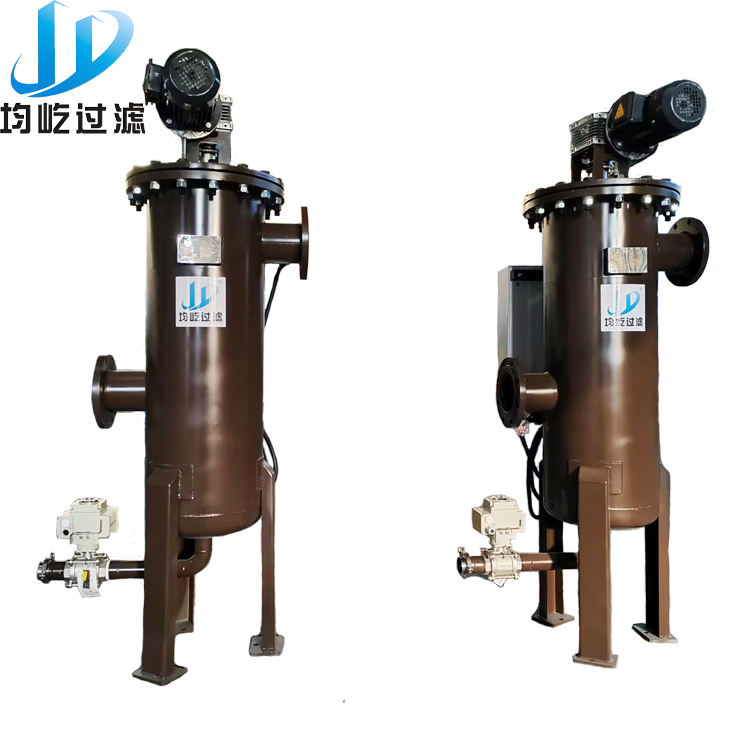
JYSCF-350-CS

Retains particles in industrial water before it reaches downstream equipment or process stages. Water passes through a filter element that collects solids. A brush or scraper removes deposits from its surface, and a discharge valve releases the concentrated debris. This mechanical cleaning arrangement allows filtration to continue during operation within the system’s specified conditions. Retention grade, cleaning cycle and materials must be selected for the particles present, water composition, operating pressure and required flow.

View equipment →
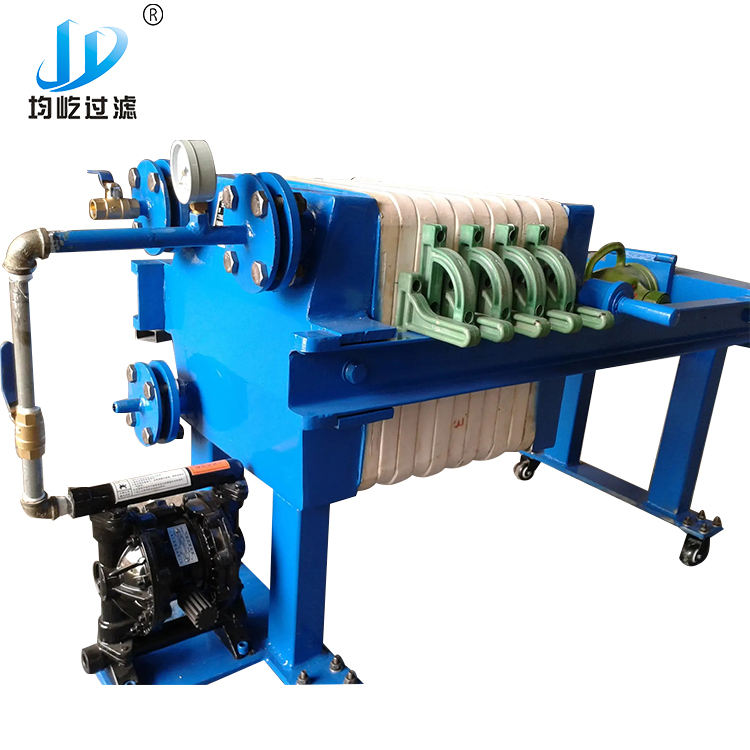
Plate and chamber filter press

Industrial filtration

Plate and chamber filter press

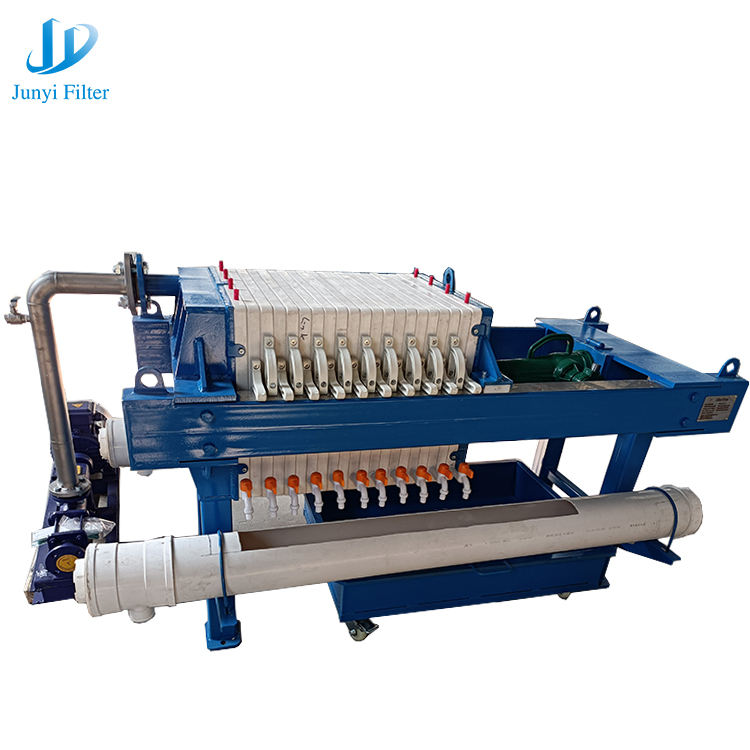
Configuration specified for the process

Separates solids from a suspension to produce a cake containing less liquid, making sludge easier to collect and handle. A pump feeds the chambers between closed plates. Liquid passes through the filter cloths and leaves as filtrate, while solids accumulate inside the chambers. At the end of the cycle, the plates open for cake removal. Operation is arranged in filtration and discharge cycles. Filter cloth, feed pump and cycle selection depend on the solids concentration, particle size and filtration characteristics of the material.

View equipment →
Multi-deck linear vibrating screen

Industrial screening

Multi-deck linear vibrating screen

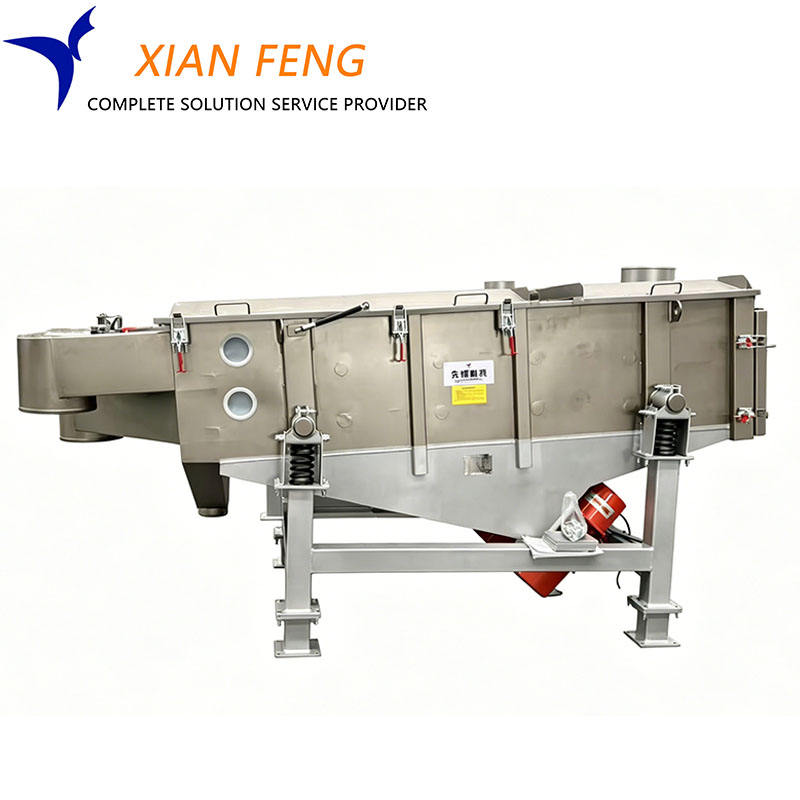
XFZ Series — various dimensions

Continuously grades bulk material into several size fractions, for example to separate fines, an on-size product and oversize particles. Linear vibration conveys material along the screens. Each deck retains one fraction and allows smaller particles to reach the next deck, with the resulting fractions directed to separate outlets. The number of decks, mesh apertures and feed arrangement are selected according to the required size cuts, throughput, moisture content and flow characteristics of the product.

View equipment →
Stainless-steel circular vibrating screen

Industrial screening

Stainless-steel circular vibrating screen

XF-1000 series · deck configuration specified in the quotation

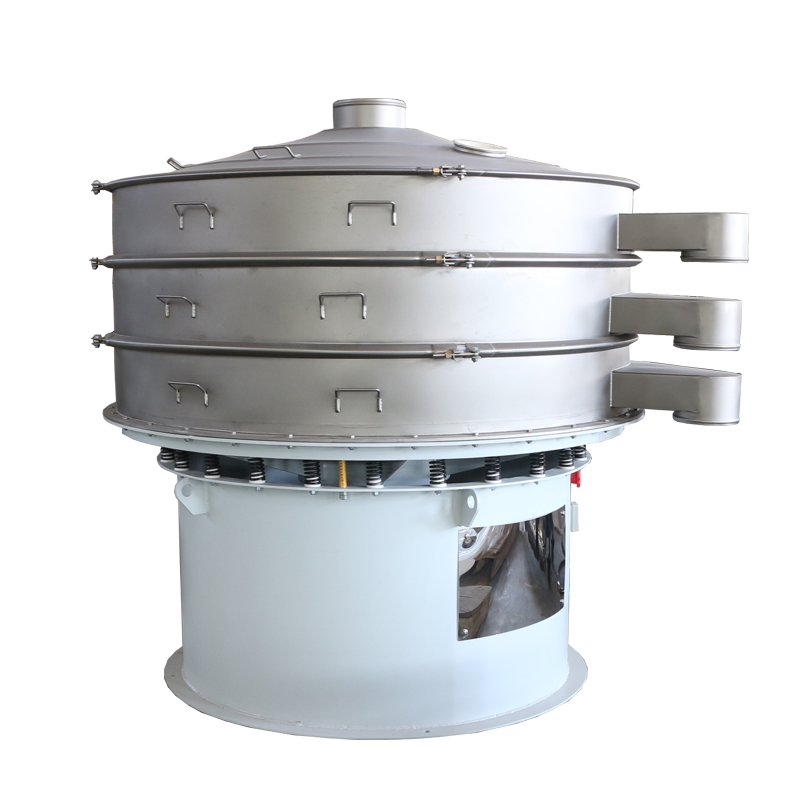
Separates powders and granules by particle size to remove oversize material or obtain a required size fraction. Vibration spreads and moves the product across a circular mesh. Particles smaller than its openings pass through, while larger material travels to a separate outlet. It can be incorporated into raw-material preparation or product screening stages. Mesh aperture, feed arrangement and vibration settings are selected for the particle size distribution, moisture content and flow behaviour of the material.

View equipment →
Ultrasonic vibrating screen for fine powders

Industrial screening

Ultrasonic vibrating screen for fine powders

XFC-800 / XFC-1000 / XFC-1500

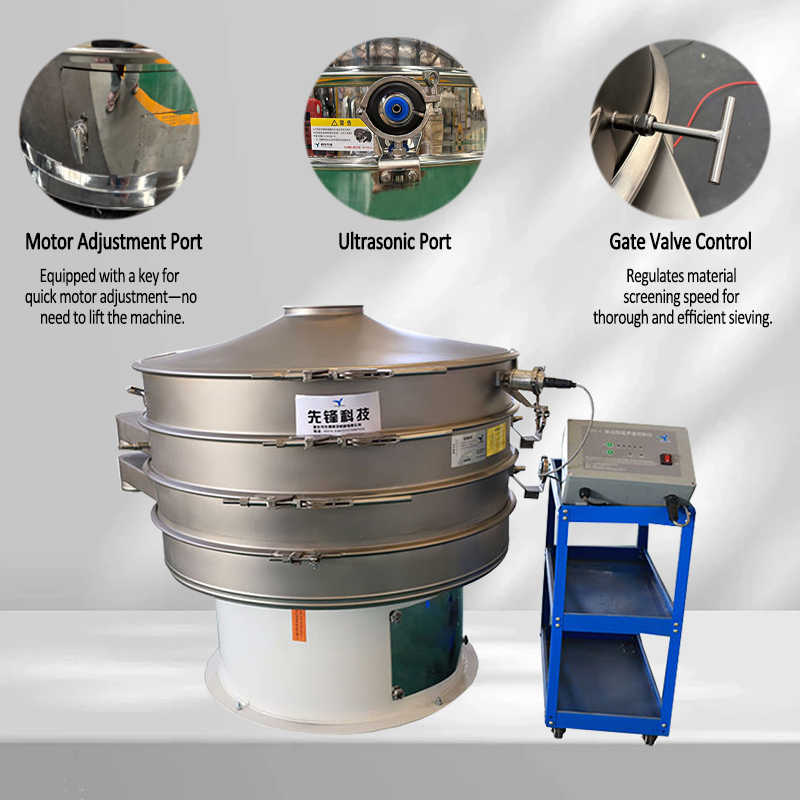
Classifies fine powders that tend to adhere to the mesh or block its openings during screening. The unit combines the sieve’s vibratory movement with ultrasonic vibration applied to the mesh, helping to keep apertures open while particles are separated by size. Passing and retained material are collected through separate outlets. It is an option for powders that are difficult to screen. Mesh selection and operating settings should be confirmed using the actual powder, accounting for particle size, moisture and agglomeration tendency.

View equipment →
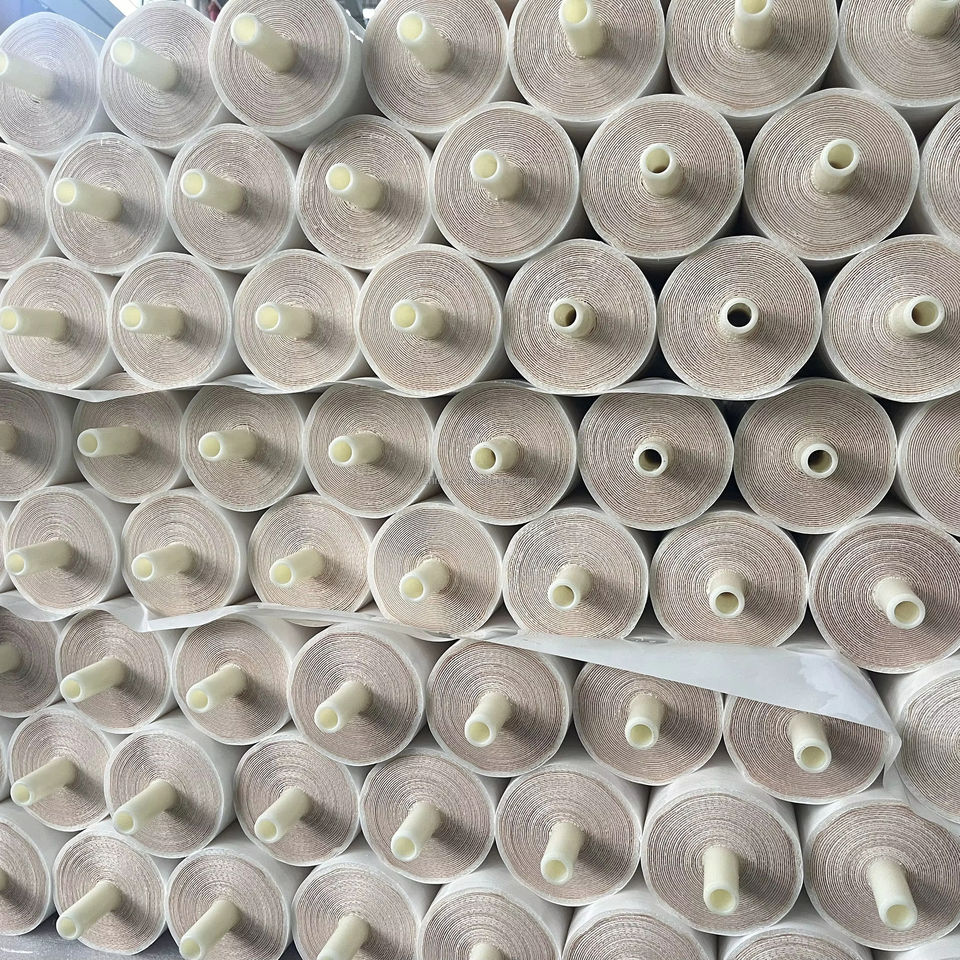
4×40 hollow-fibre ultrafiltration module

Membrane filtration

4×40 hollow-fibre ultrafiltration module

MR-UF-4040

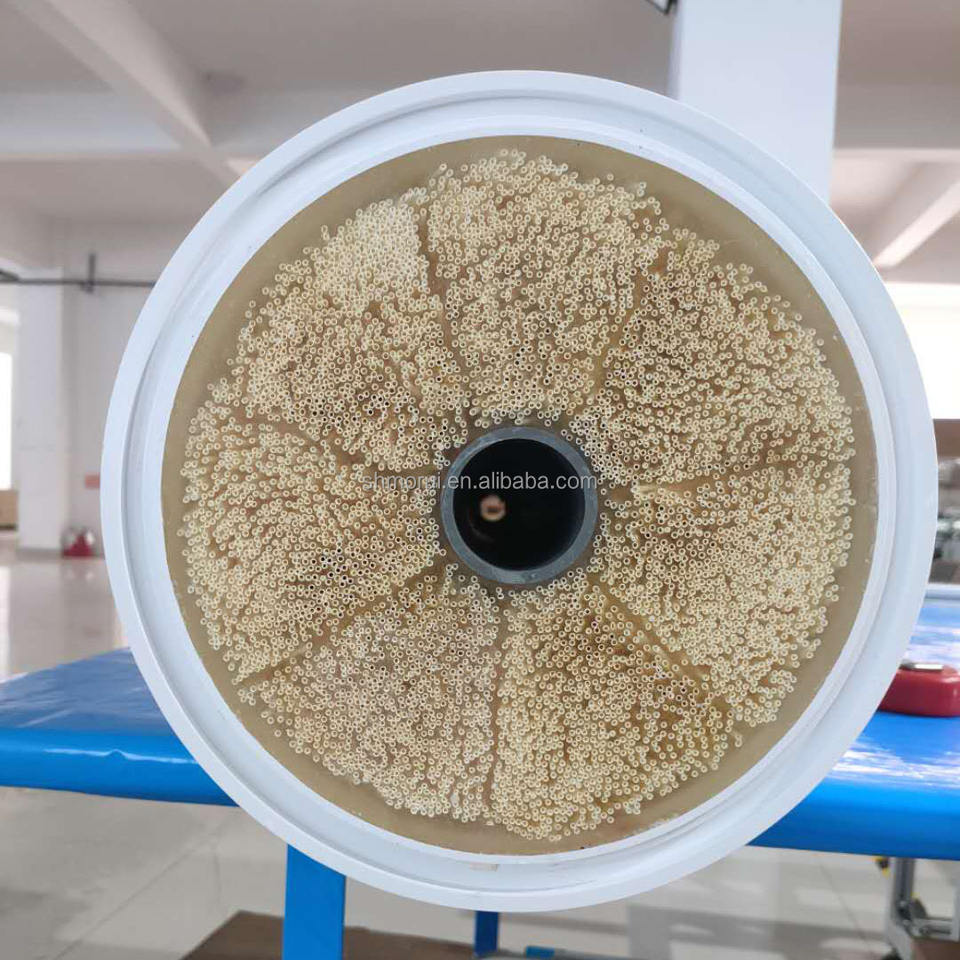
A component for integration into a water ultrafiltration plant, intended to reduce suspended particles and turbidity before use or further treatment. Feedwater enters the hollow fibres and passes through their porous walls from the inside out, while retained components remain on the feed side. The module requires a suitable feed, control and cleaning circuit. Selection must account for water quality, materials and the cleaning regime. This technology does not replace reverse osmosis for dissolved-salt removal.

View equipment →
Crossflow ultrafiltration membrane

Membrane filtration

Crossflow ultrafiltration membrane

Element configured for the system

A membrane element integrated into an ultrafiltration system to separate particles, colloids and larger components from water. In crossflow operation, feed travels parallel to the membrane surface while part of the water passes through as permeate. Retained components leave in the concentrate stream, and circulation helps limit surface build-up. The element requires compatible pumping, pressure control and cleaning arrangements. Sizing depends on water composition, the required retention and operating conditions. It is not a desalination process.

View equipment →
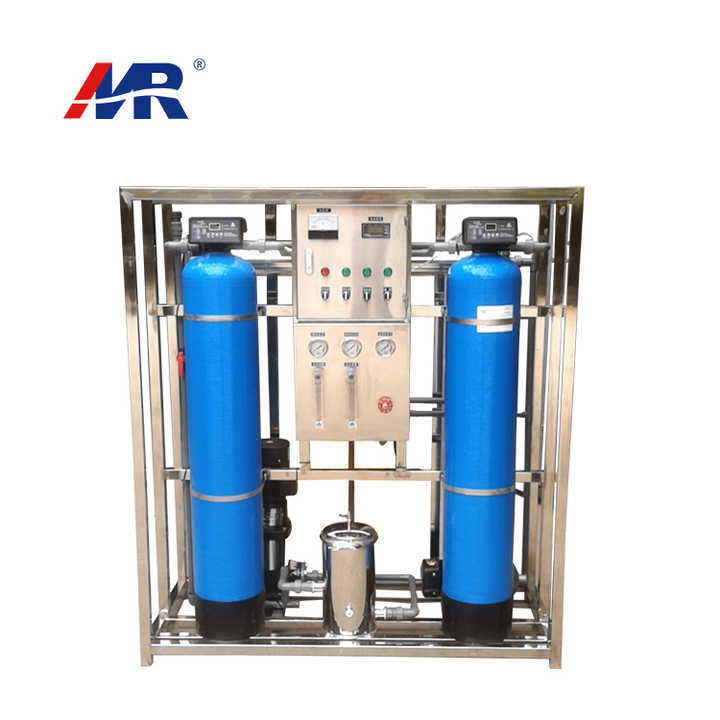
Reverse osmosis system

Membrane filtration

Reverse osmosis system

Configuration sized for the feedwater

Produces water with a lower dissolved-salt content for processes requiring controlled water quality. Following pretreatment, a pump pressurizes the feedwater so that part of it passes through the reverse-osmosis membrane. This creates two streams: a lower-salt permeate and a concentrate carrying the rejected components. Pretreatment helps protect the membrane. Feedwater quality, operating pressure, temperature and the required recovery determine system sizing and the water quality that can be achieved.

View equipment →

Industrial centrifugation

8 equipment families
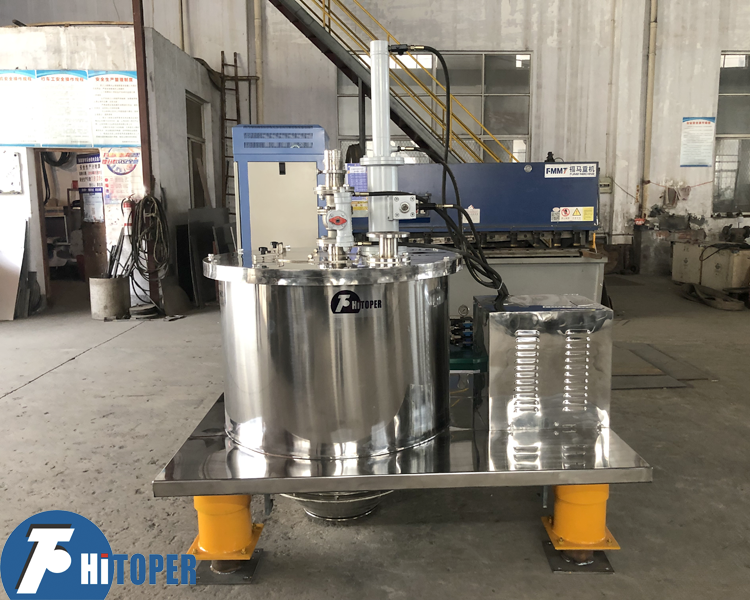
Basket centrifuge with scraper discharge

Industrial centrifugation

Basket centrifuge with scraper discharge

PGZ800

Separates solids from a suspension in feeding, centrifugal filtration and discharge cycles. The spinning basket forces liquid through the filter cloth and perforations while solids form a cake inside. If required by the process, the cake can be washed before final dewatering. Speed is then reduced so that the scraper can detach the solids and direct them through the bottom outlet. Filter cloth and cycle selection depend on particle size, cake permeability and the characteristics of the liquid.

View equipment →
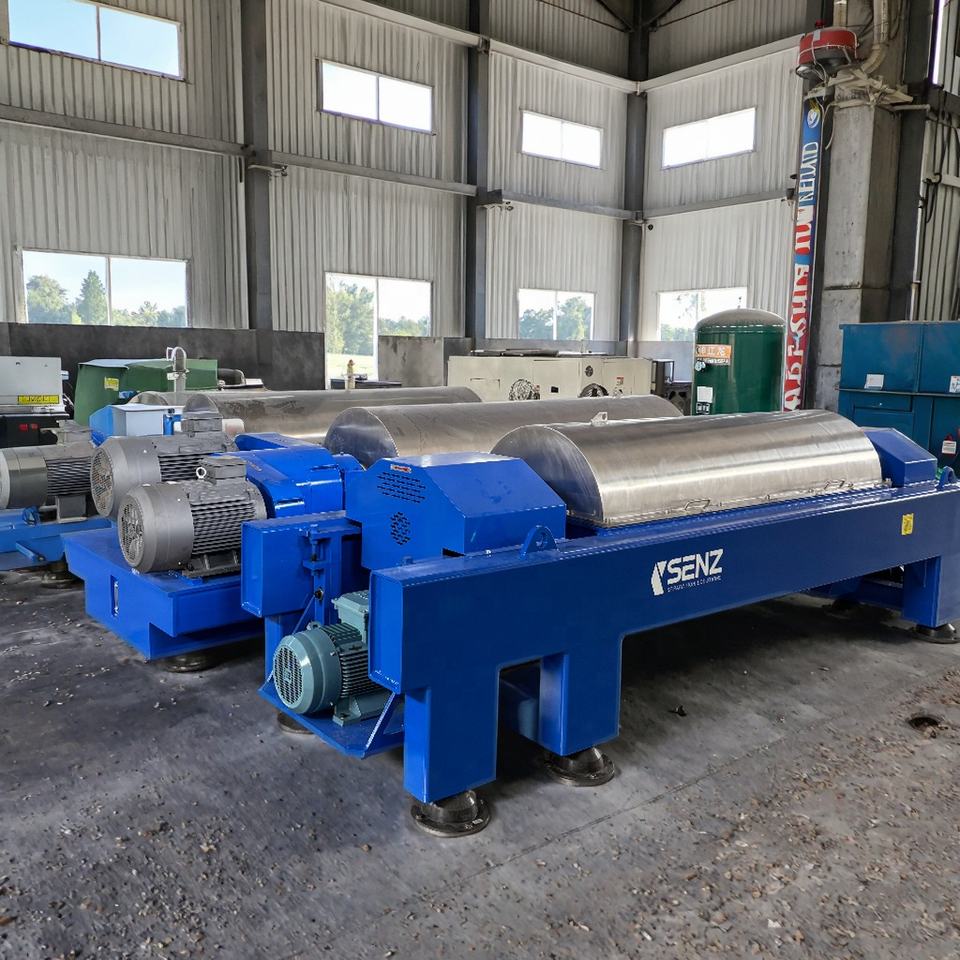
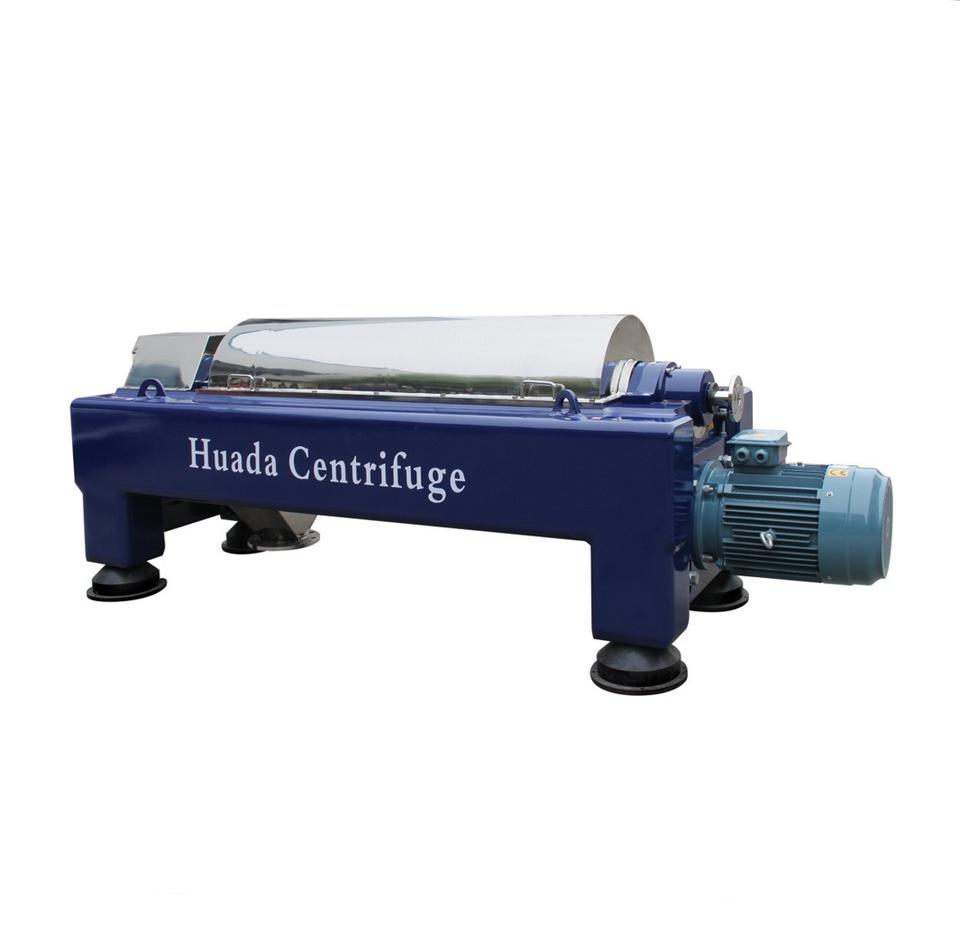
Configurable horizontal decanter centrifuge

Industrial centrifugation

Configurable horizontal decanter centrifuge

LW series · project configuration

Continuously separates suspended solids from liquid, collecting concentrated solids and a clarified liquid stream through distinct outlets. Product enters a rotating horizontal bowl, where centrifugal force deposits the denser particles against the wall. An internal scroll rotates at a differential speed and conveys solids towards discharge while liquid flows to its outlet. Feed rate and the bowl and scroll settings must be established according to viscosity, particle size, solids concentration and the required separation result.

View equipment →
Continuous three-phase decanter centrifuge

Industrial centrifugation

Continuous three-phase decanter centrifuge

LWS series · project-specific three-phase configuration

Continuously separates a mixture containing solids and two immiscible liquids of different densities, collecting each phase through its own outlet. Bowl rotation settles solids against the wall and arranges the liquids in layers. A scroll rotating at a different speed from the bowl conveys solids to discharge while the liquids flow to their respective outlets. A three-phase configuration is selected when both liquid phases must be recovered separately. Throughput, density differences, viscosity and solids content determine sizing and operating adjustments.

View equipment →
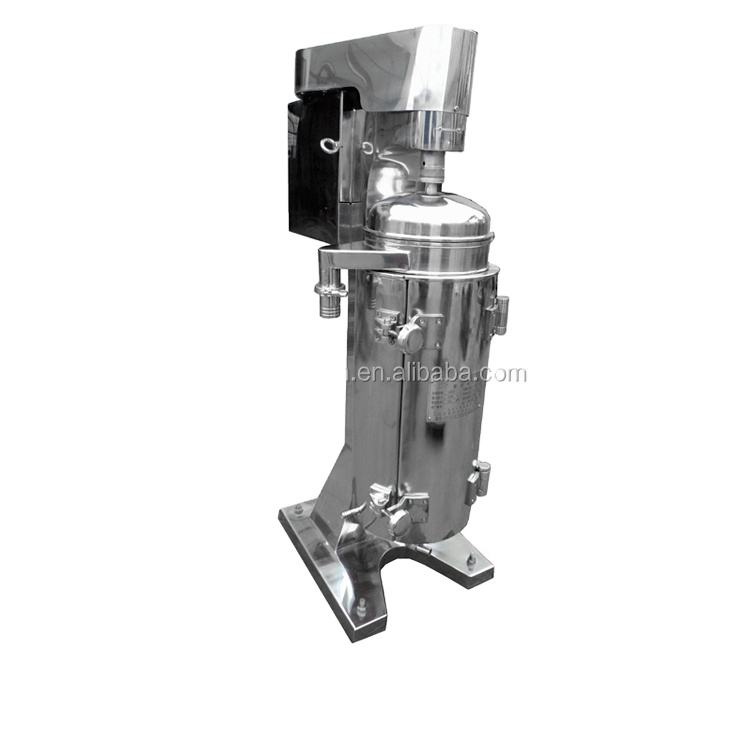
GQ/GF industrial tubular centrifuge

Industrial centrifugation

GQ/GF industrial tubular centrifuge

GQ / GF — example GQ75J

Clarifies liquids containing small quantities of fine particles or separates two immiscible liquids, with the version selected for the duty. In the high-speed tubular bowl, denser components move towards the wall. The GQ version retains solids and discharges clarified liquid; GF allows separate collection of two liquid phases of different densities. Accumulated solids require shutdown for removal. Feed composition, density difference and solids loading must be established to select the appropriate version and cleaning cycle.

View equipment →
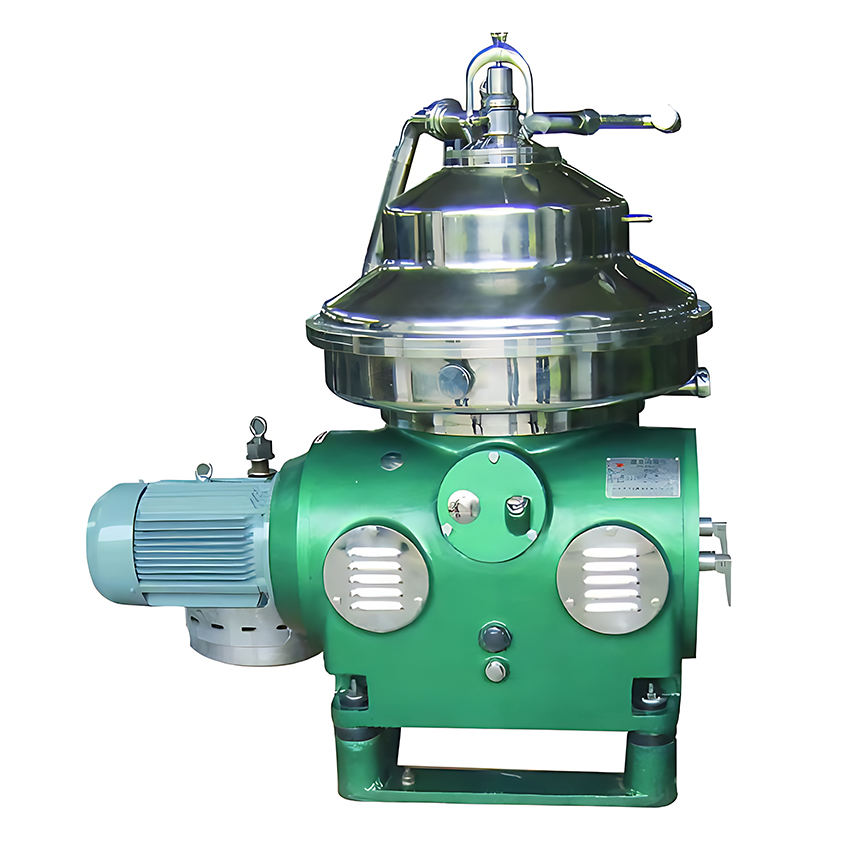
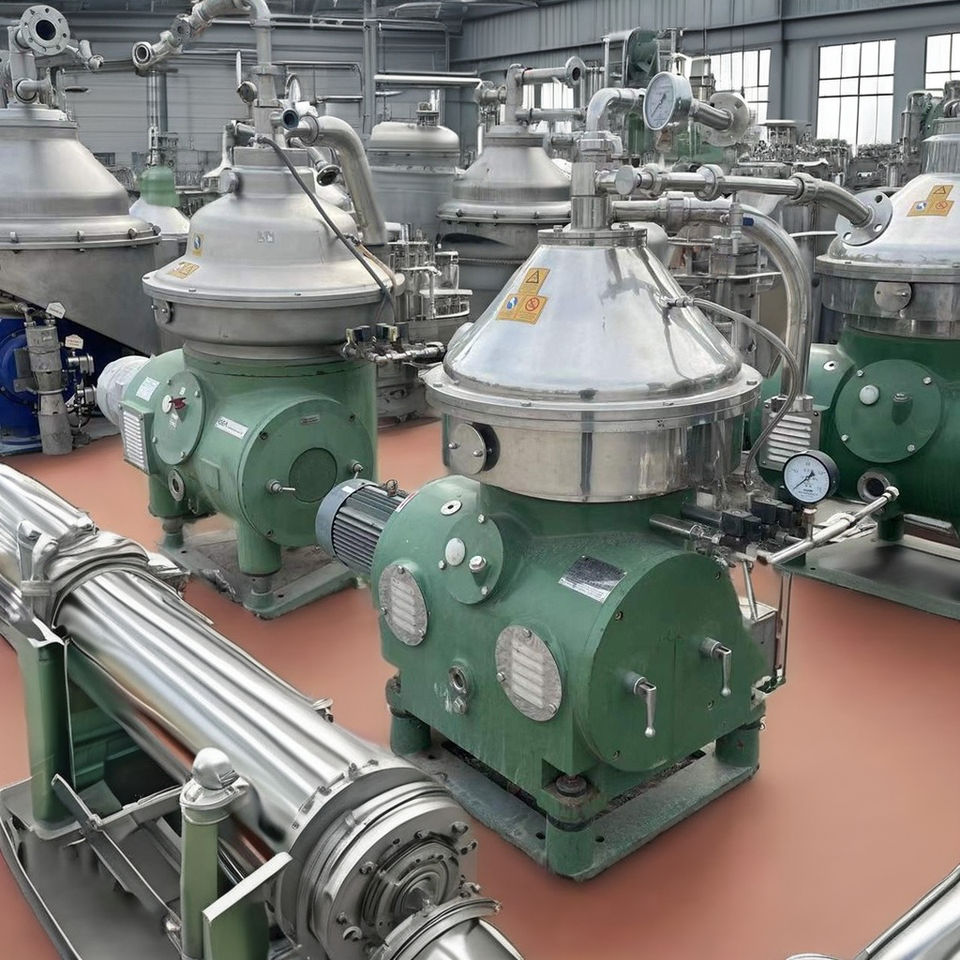
Industrial disc-stack centrifuge

Industrial centrifugation

Industrial disc-stack centrifuge

Disc-stack configuration specified for the application

Clarifies liquids, concentrates a dispersed phase or separates immiscible liquids containing solids, depending on separator configuration. Product enters a rotating bowl containing a stack of discs. The spaces between the discs shorten the separation path, while centrifugal force moves denser components towards the periphery. Liquid phases and solids are collected according to the selected outlet and discharge arrangement. Equipment selection depends on density difference, viscosity, particle size and the solids loading of the feed.

View equipment →
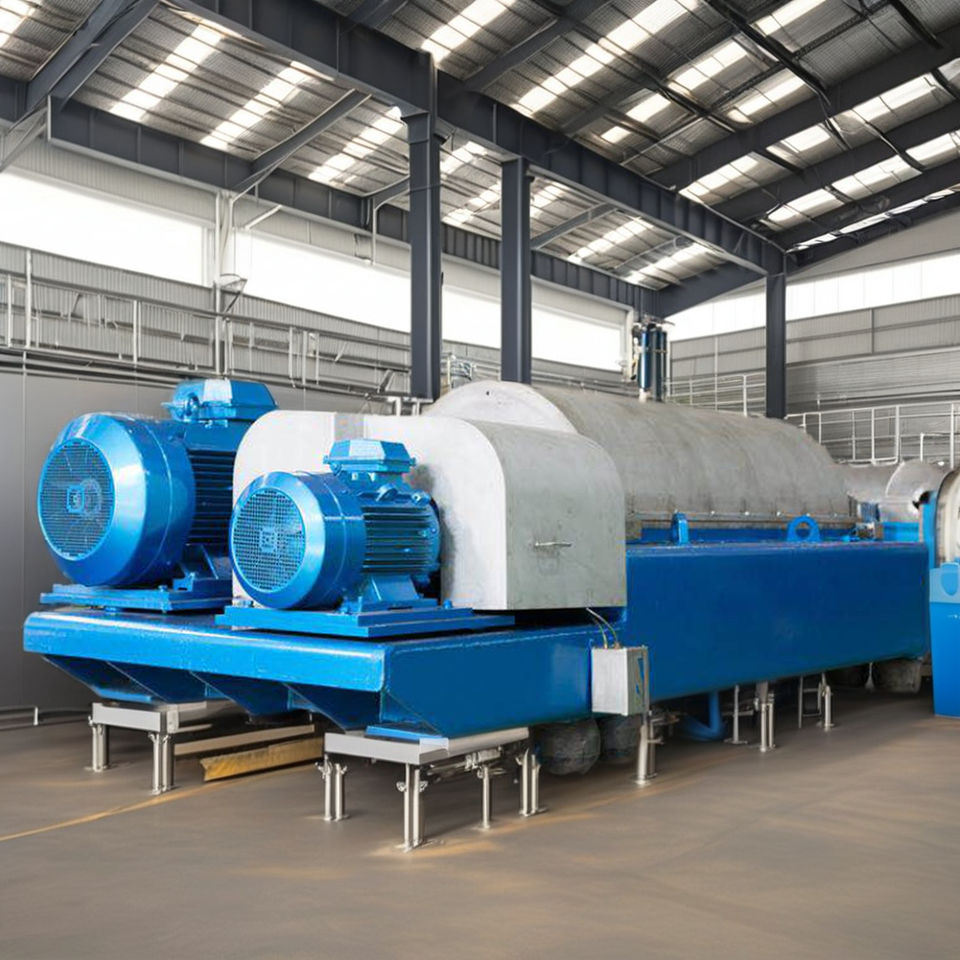
LW-N series decanter centrifuge

Industrial centrifugation

LW-N series decanter centrifuge

LW220N / LW300N / LW355N / LW400N · process-specific configuration

A configurable horizontal decanter for separating solids from liquids by centrifugal sedimentation. Feed enters a rotating bowl; density differences promote solids deposition at the wall, while a differential-speed scroll conveys them to discharge. Separated liquid leaves through its own path. Selection should consider product properties, solids load, flow, abrasiveness and material compatibility. Model, drives, seals and contact components are specified for the chosen application.

View equipment →
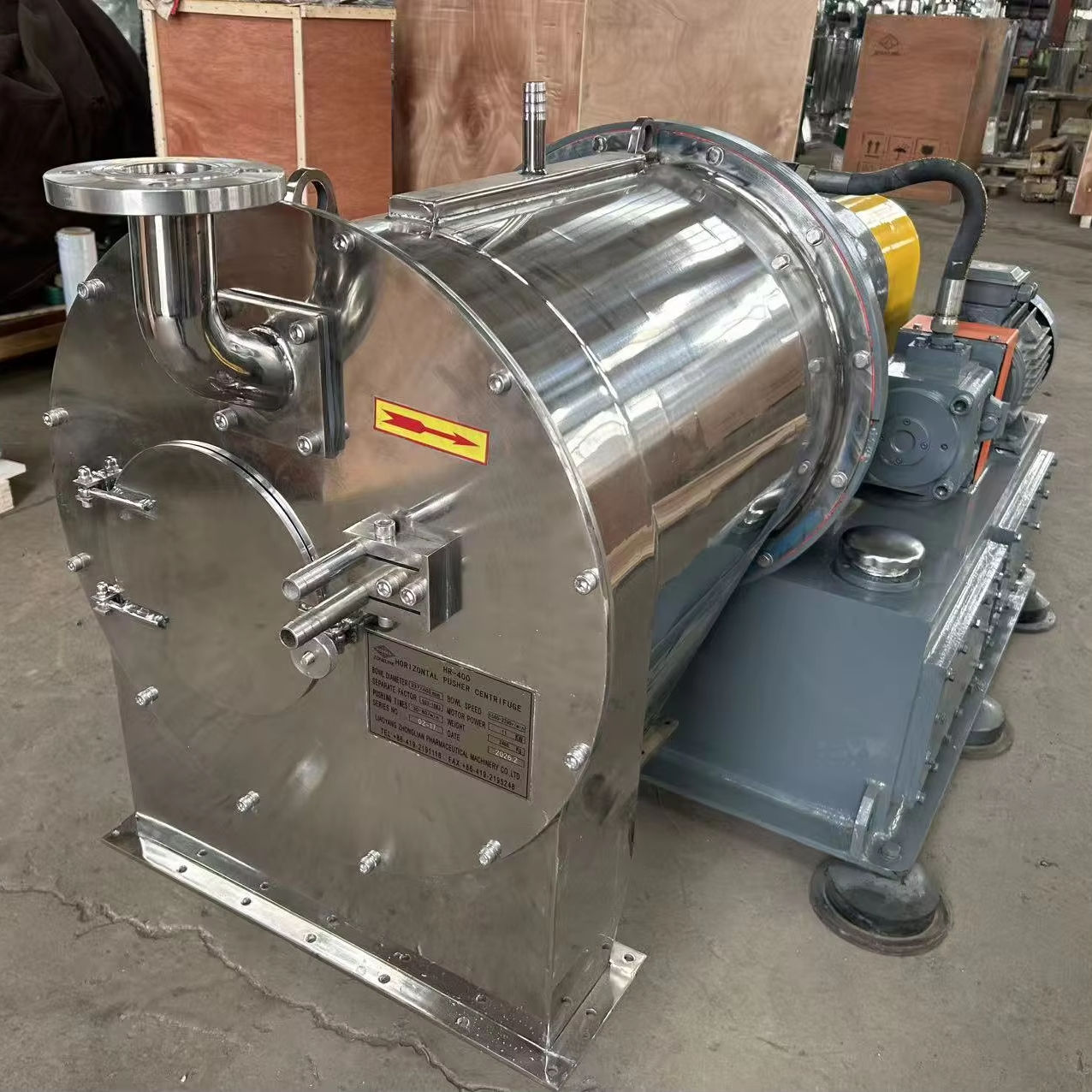
Two-stage horizontal pusher centrifuge

Industrial centrifugation

Two-stage horizontal pusher centrifuge

HR series

Continuously dewaters suspensions containing crystalline or granular solids that form a liquid-permeable cake. Feed enters the rotating basket, where liquid passes through the filtering surface and solids remain behind. A reciprocating pusher advances the cake through the two stages towards the outlet, allowing feeding and discharge to continue during processing. Suitability depends on crystal shape and strength, particle size, solids concentration and drainage characteristics. These factors should be evaluated using the material to be processed.

View equipment →
Pilot-scale disc-stack centrifuge

Pilot-scale centrifugation

Pilot-scale disc-stack centrifuge

SZDH360 · process configuration to be specified

Supports pilot-scale investigation of liquid-product separation before operating conditions are established for a larger process. The rotating bowl contains discs that divide the flow into thin layers, helping components of different densities move apart under centrifugal force. Trials allow clarification or concentration to be assessed while varying feed and speed within the selected configuration. The phases, viscosity and solids content must be characterized, and the collection arrangement confirmed for the purpose of the trial.

View equipment →

Agriculture

18 equipment families
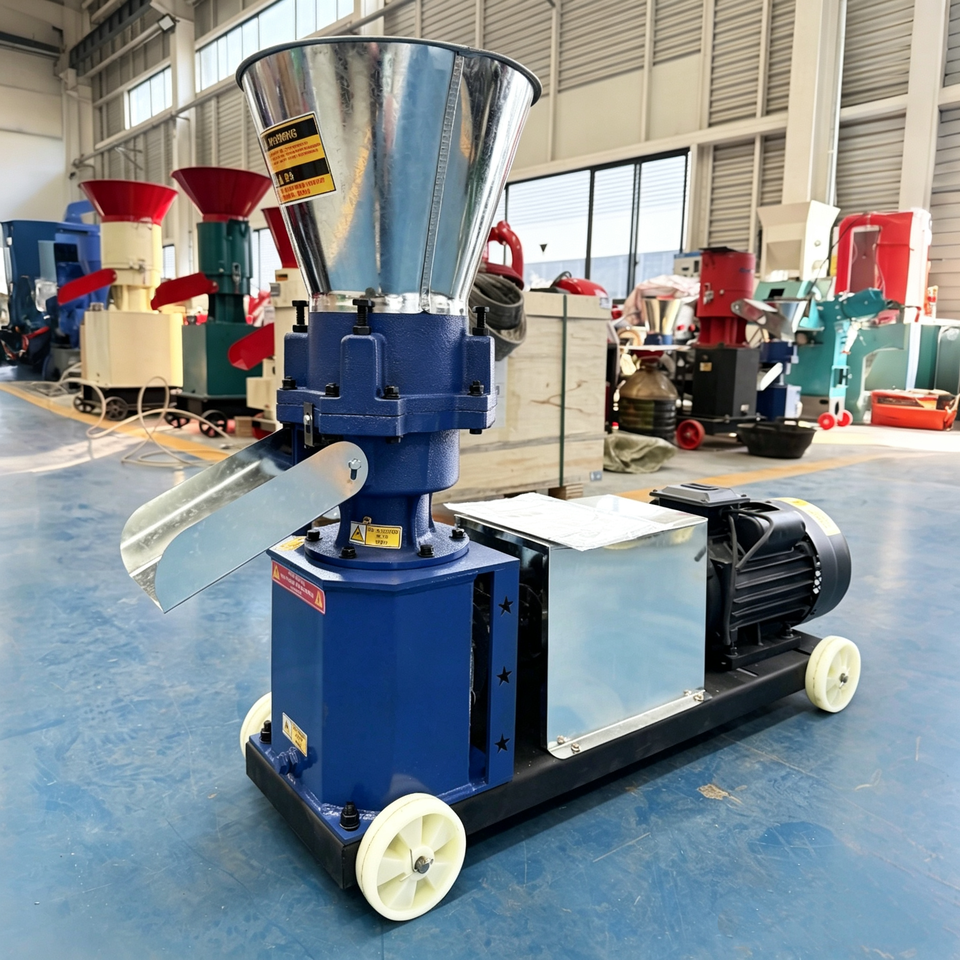
Flat-die feed pellet machine

Animal feed preparation

Flat-die feed pellet machine

9KL-125 · 4 kW · advertised output 50–100 kg/h

A flat-die pellet machine for turning previously ground and prepared animal-feed mixtures into cylindrical pellets. Material enters through the hopper, and the electric motor drives the compression assembly, where two rollers press the mixture through holes in the die. The die determines pellet diameter, and the formed pellets leave through a side discharge chute for collection. The selected configuration has a 4 kW motor and an advertised output of 50–100 kg/h. Actual output depends on formulation, incoming particle size, moisture and the die used. Die-hole selection and feed-mixture preparation should be matched to the intended application.

View equipment →
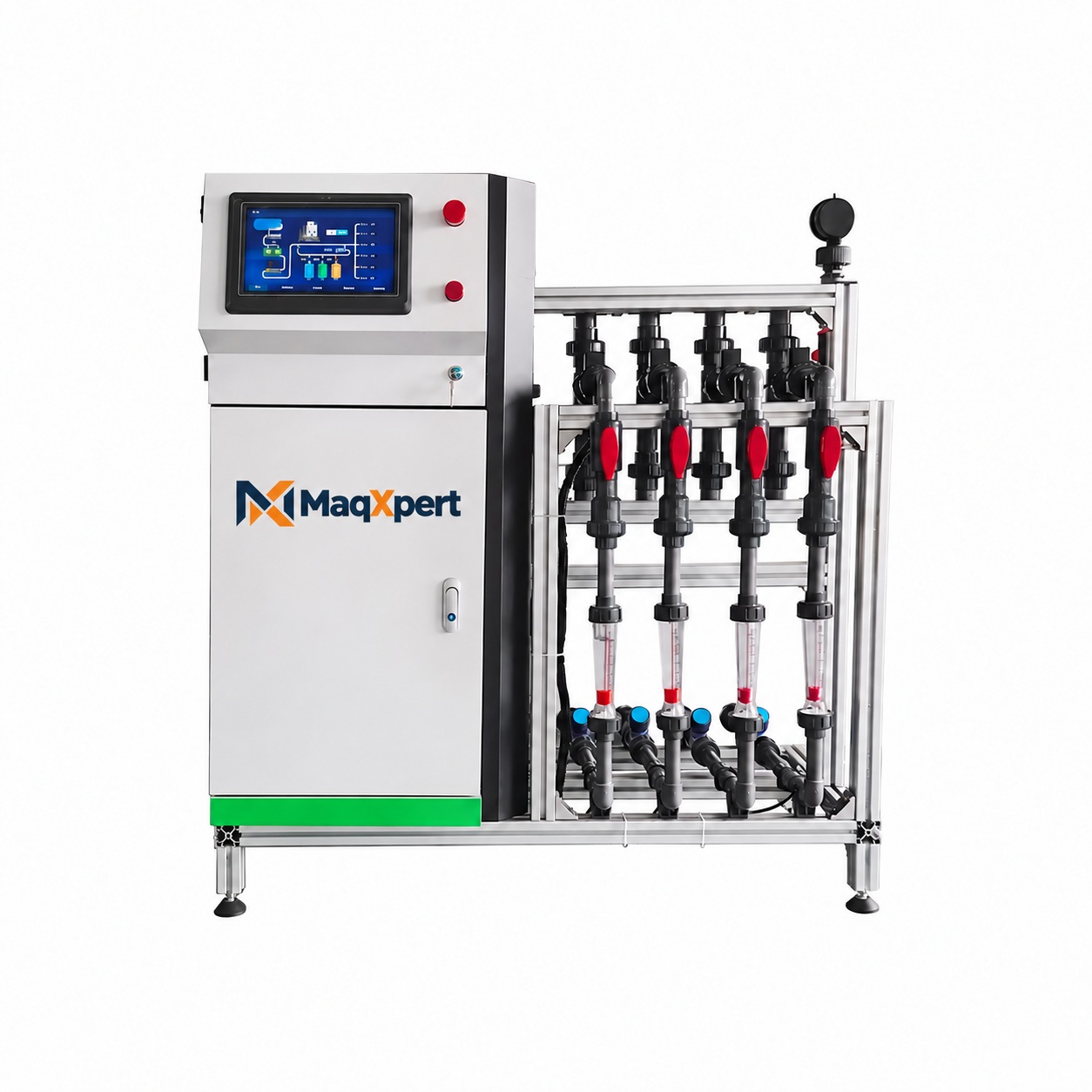
Integrated automatic irrigation and fertigation unit

Automatic irrigation and fertigation

Integrated automatic irrigation and fertigation unit

One- to four-channel configurations

A unit for automating irrigation and the application of fertilizers dissolved in water on an agricultural installation. It combines operational control with fertilizer feed channels to prepare the mixture delivered to a compatible irrigation network. One- to four-channel versions and remote monitoring options are available, depending on the configuration. Configuration should account for the crop, water quality and irrigation network, defining the operating flows, connections and auxiliary equipment required for the installation.

View equipment →
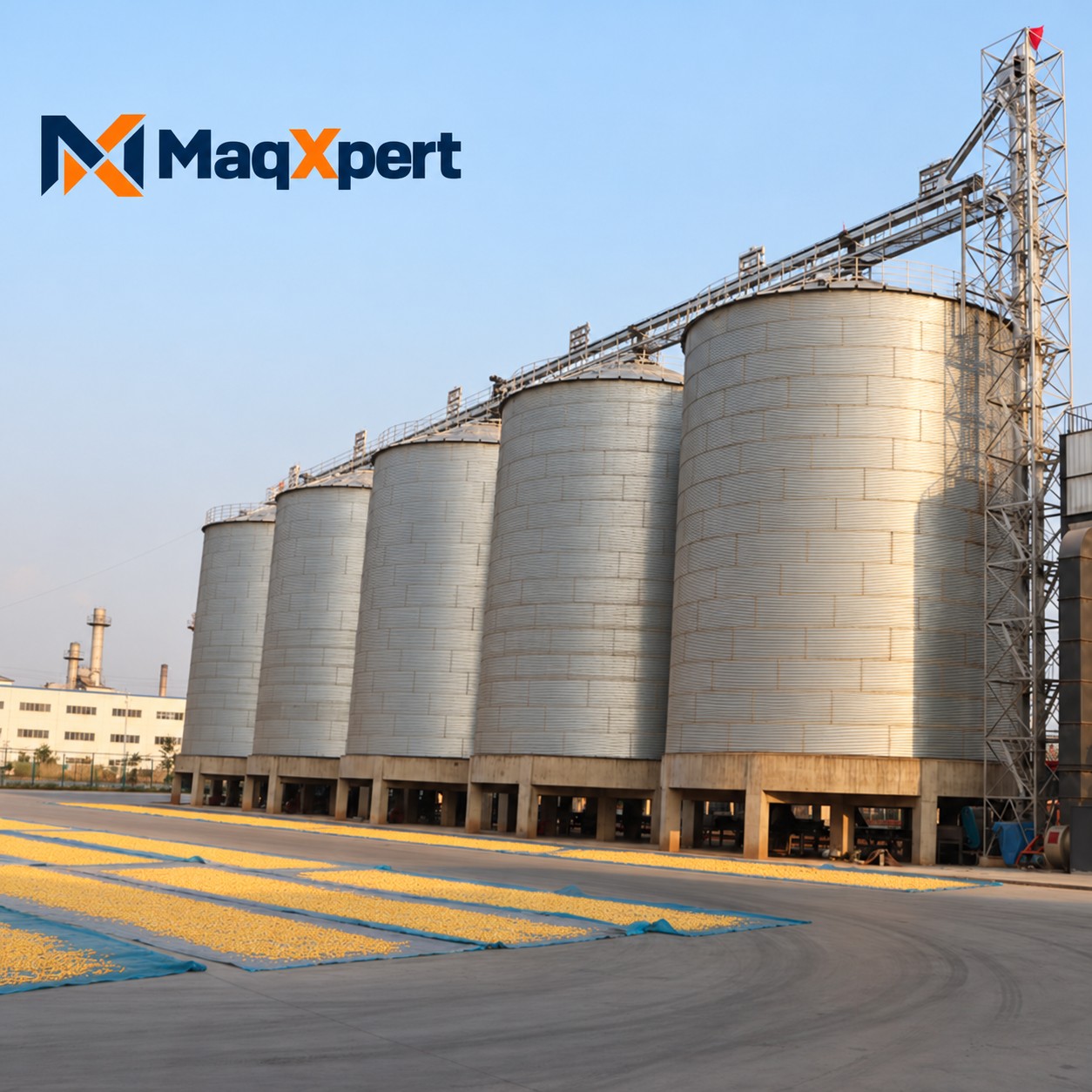
Grain storage silo system

Bulk grain storage

Grain storage silo system

Capacity and layout defined for each project

A steel silo system for storing compatible dry grains in bulk, holding product between receiving and dispatch or the next processing stage. The storage structure uses hot-dip galvanized sheet. Storage capacity by mass depends on the selected configuration, grain bulk density and grain moisture conditions. Selection should consider the product, stock turnover, incoming and outgoing flows and the available site layout. Any integration with conveyors, drying, aeration or monitoring depends on the project and the agreed scope of supply. Dimensions and the storage volume of each silo are confirmed for the chosen configuration and installation.

View equipment →
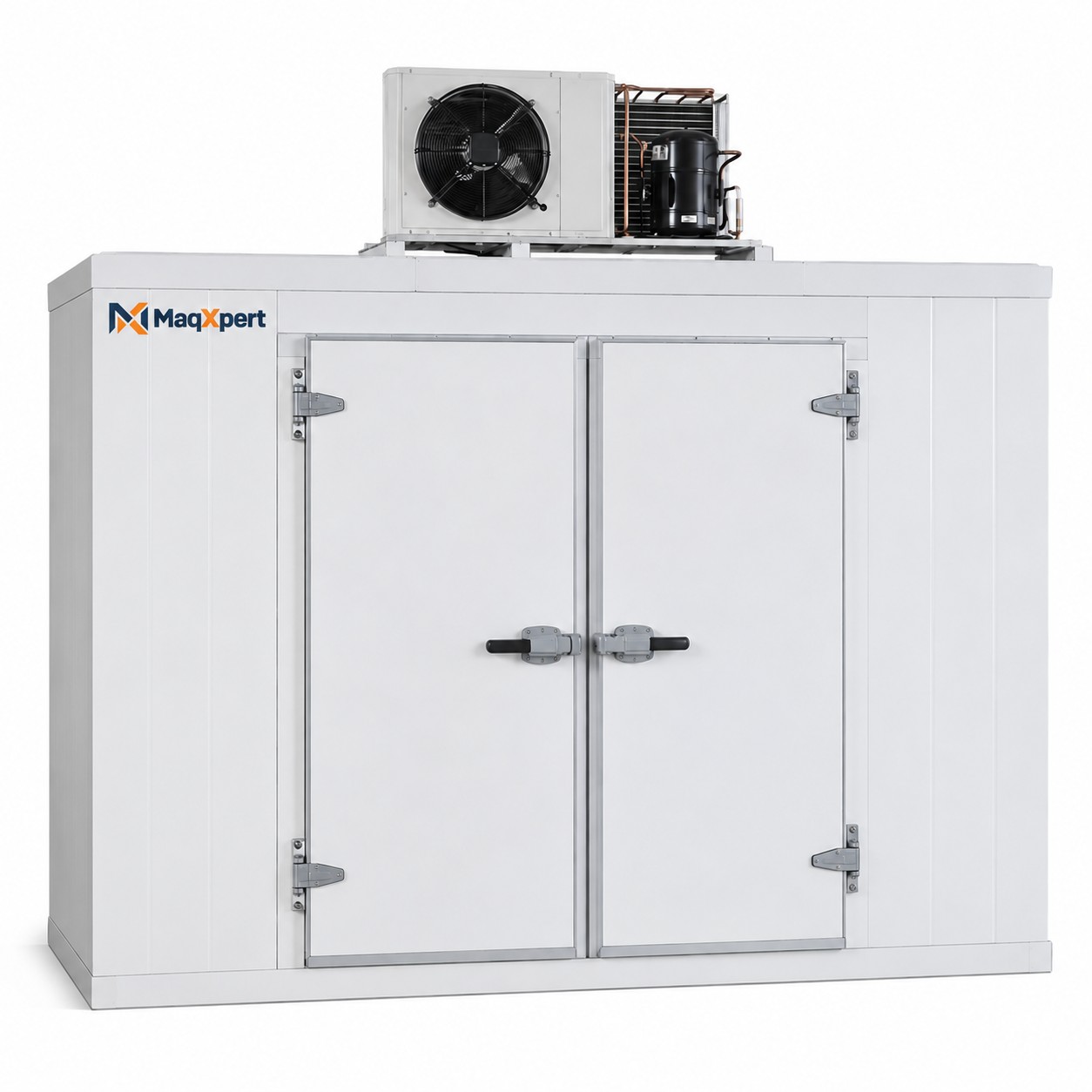
Modular cold room for agricultural produce

Cold storage and cold chain

Modular cold room for agricultural produce

Chilled or frozen storage, configured for each project

A walk-in room for storing agricultural produce and food under cold conditions defined for each application. The enclosure uses polyurethane-insulated sandwich panels joined by cam-lock fasteners and an insulated door. An evaporator removes heat from the room air, while the condensing unit releases that heat outside the enclosure; a control panel manages operation. Chilled storage and storage of frozen products require their own configurations. Product type, incoming product temperature, daily throughput, ambient conditions and door openings determine system sizing. Panel thickness, refrigeration equipment, room dimensions and refrigerant are selected for the project and the country of installation.

View equipment →
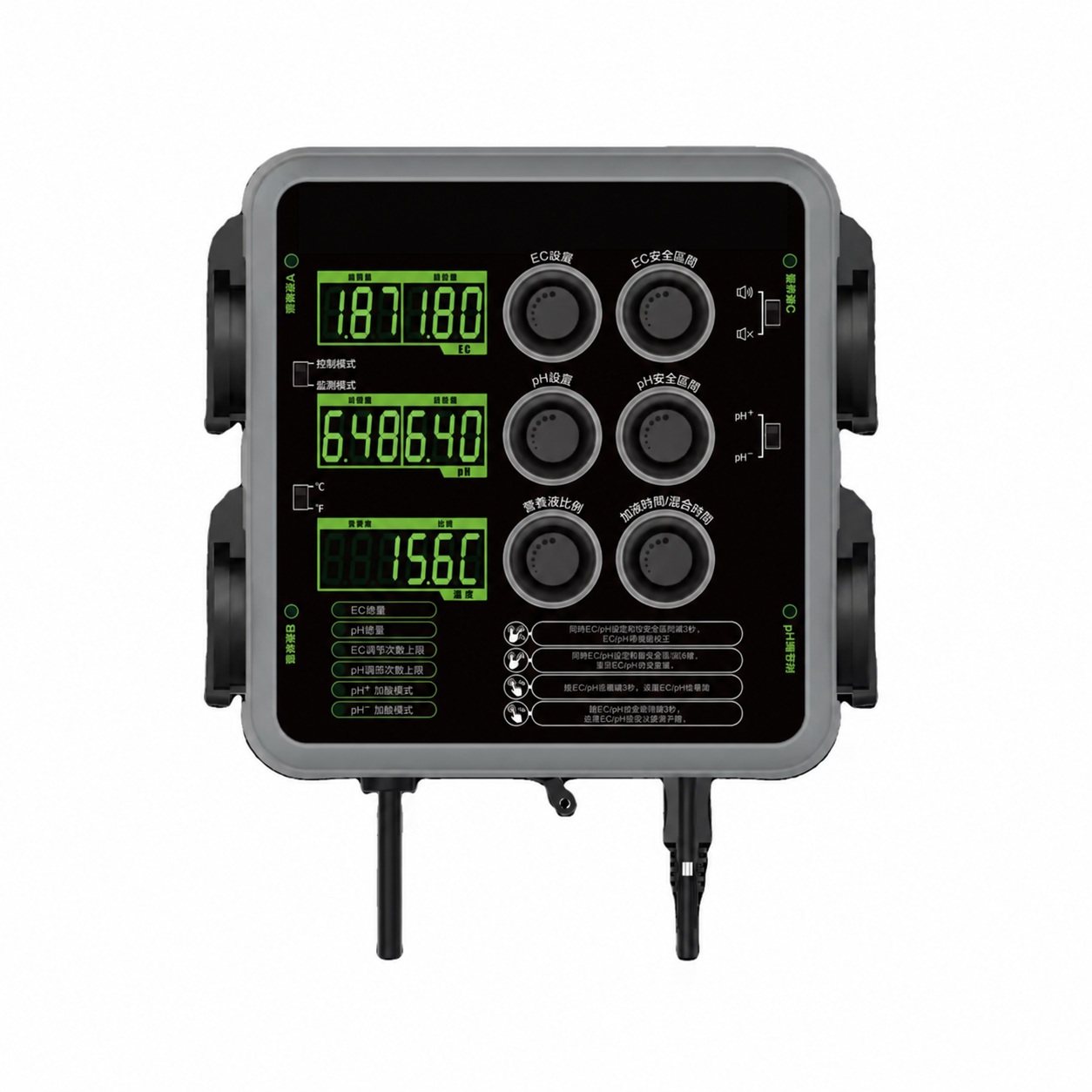
Automatic nutrient dosing system with pH and EC control

Dosing and fertigation

Automatic nutrient dosing system with pH and EC control

Controller with four dosing pumps

A system for preparing and maintaining nutrient solution in a reservoir used for hydroponics or fertigation. Probes measure the solution’s pH, electrical conductivity (EC) and temperature. The controller compares readings with the chosen targets and operates four dosing pumps for three nutrient stock solutions and one pH adjustment solution. Dosing is separated by mixing intervals so readings can stabilize before the next correction. It automates nutrient solution adjustment and integrates with a reservoir, mixing equipment, water supply and irrigation network sized for the installation.

View equipment →
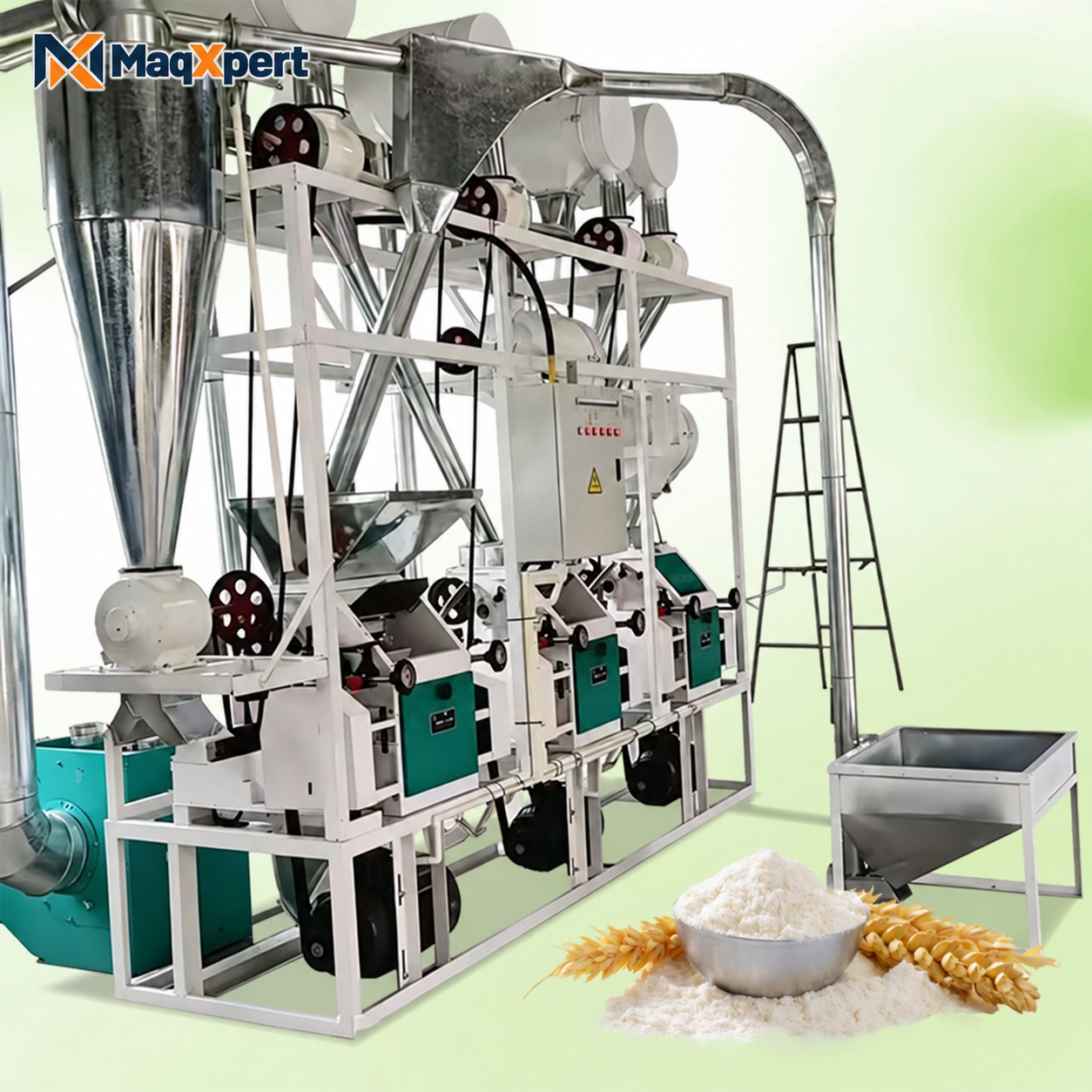
Automatic wheat flour production line

Grain milling and processing

Automatic wheat flour production line

Feeding, cleaning, milling and collection configured for each project

A line for processing wheat and other compatible raw materials into flour, combining feeding, cleaning and milling according to the selected configuration. Cleaning modules prepare the grain for milling, which reduces the material to the required particle size. In configurations with pneumatic conveying, an air stream carries the material and cyclones separate solids for collection. The system can also integrate a packing stage. Sizing should consider grain type and moisture, the required preparation, the intended flour and the installation conditions. Throughput, installed power and space requirements are confirmed for the chosen line configuration.

View equipment →
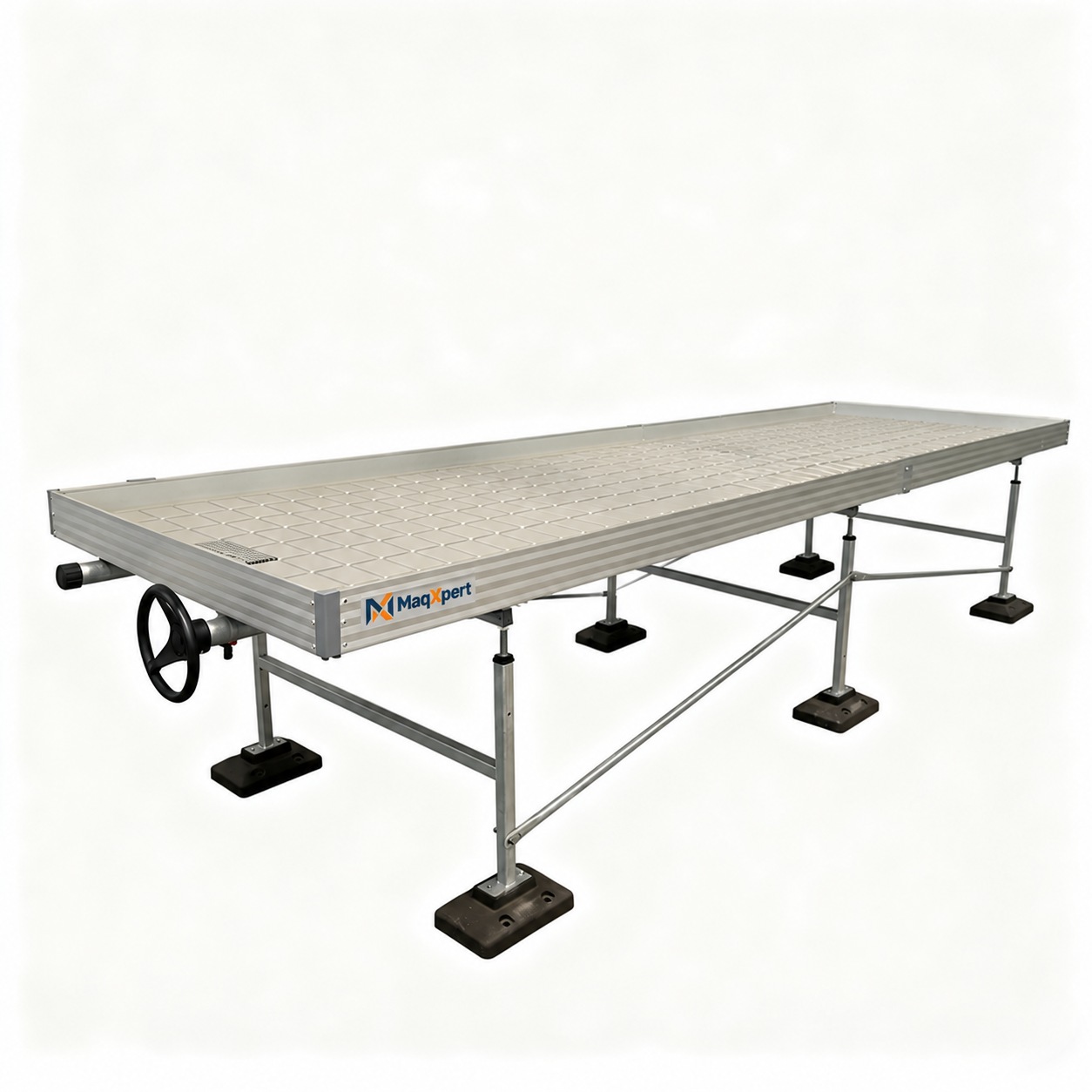
Rolling flood-and-drain growing bench

Greenhouse growing and plant propagation

Rolling flood-and-drain growing bench

3 mm ABS tray; configurable dimensions

A bench for arranging pots and other growing containers in a greenhouse, with a 3 mm ABS tray designed for flood-and-drain irrigation. During an irrigation cycle, water or nutrient solution temporarily rises in the tray and moistens the growing medium through the base of the containers. It is then drained, alternating water supply with a period without flooding. The growing surface moves on rollers so that access to plants and working aisles can be reorganized. Configurable dimensions allow the bench to be adapted to the containers, crop and greenhouse layout. Water supply, return and cycle controls are specified as part of the installation configuration.

View equipment →
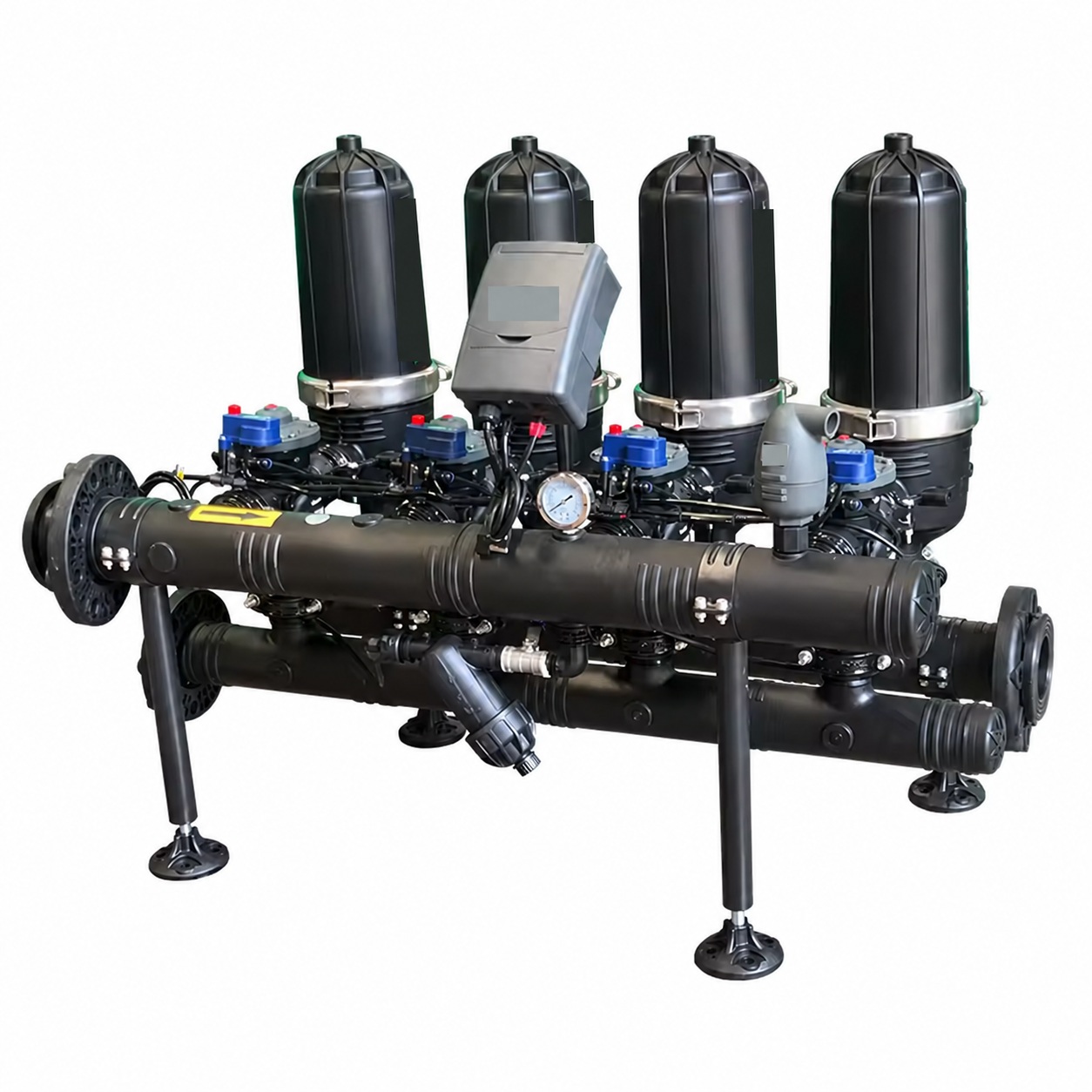
Disc filtration station with automatic backwashing

Irrigation filtration

Disc filtration station with automatic backwashing

Modular configuration for irrigation and fertigation

A filtration station installed in an irrigation network to retain suspended particles before water reaches drippers, microsprinklers and fertigation components. Water passes through stacks of grooved discs that capture solids. When the programmed cleaning condition is reached, backwashing reverses the flow and dislodges accumulated debris for discharge. Cleaning can be triggered by differential pressure or a timer. The station helps protect irrigation equipment and reduce manual cleaning. Filtration grade, operating pressure and station size are selected according to water quality and the requirements of the installation.

View equipment →
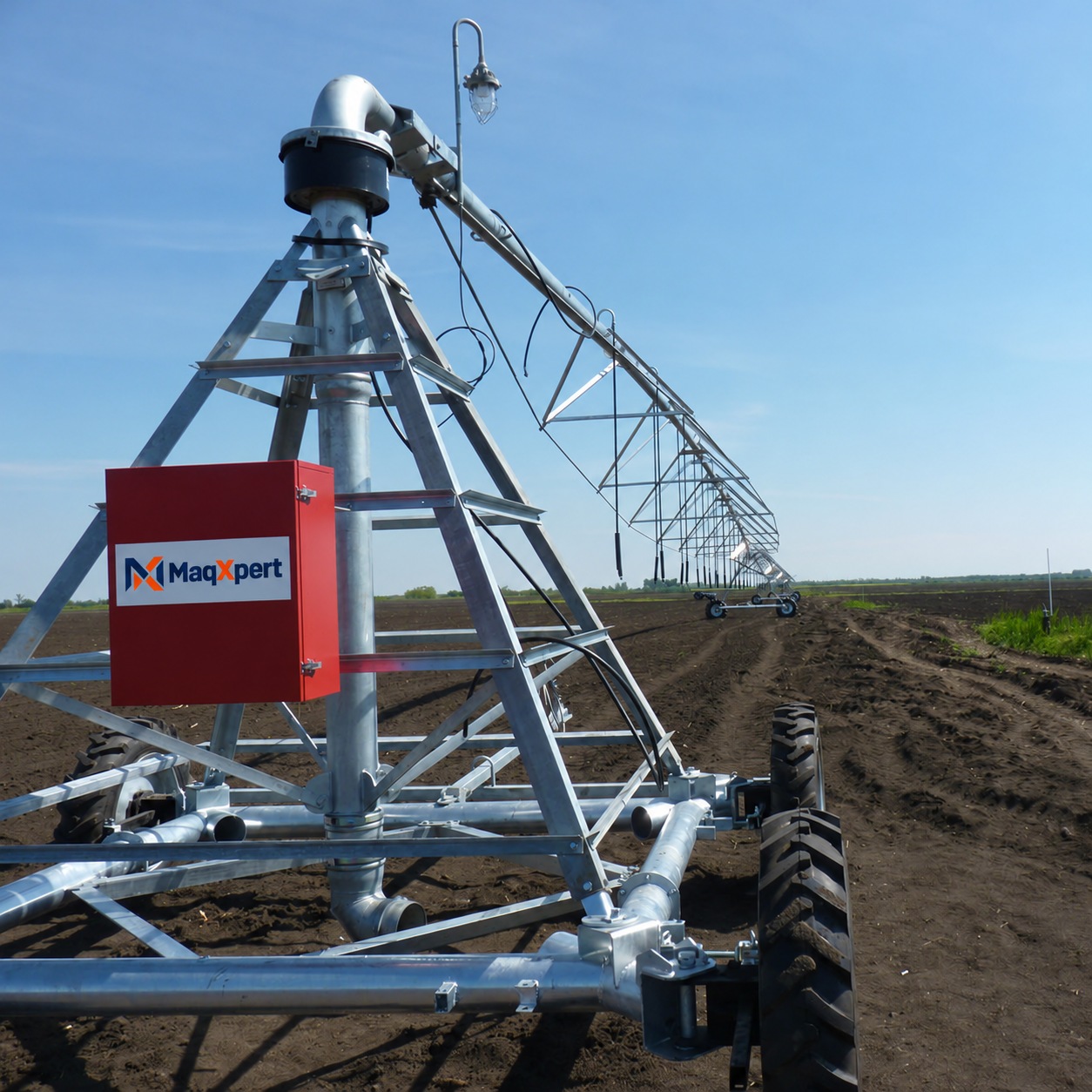
Center-pivot irrigation system for large areas

Large-area irrigation

Center-pivot irrigation system for large areas

Length and coverage sized for each project

A sprinkler irrigation system that distributes water across large agricultural plots using a structure rotating around a central water supply point. The pipe is carried by metal spans and wheeled towers with electric drives; the emitters move with the structure across the field. System design combines plot geometry, the area to be irrigated, available water flow and supply pressure to determine the spans and emitter arrangement. The advertised range covers lengths from 41.1 to 791.2 m and areas from 0.53 to 196.7 hectares across different configurations. These figures describe the available range; each installation requires its own component selection and hydraulic design.

View equipment →
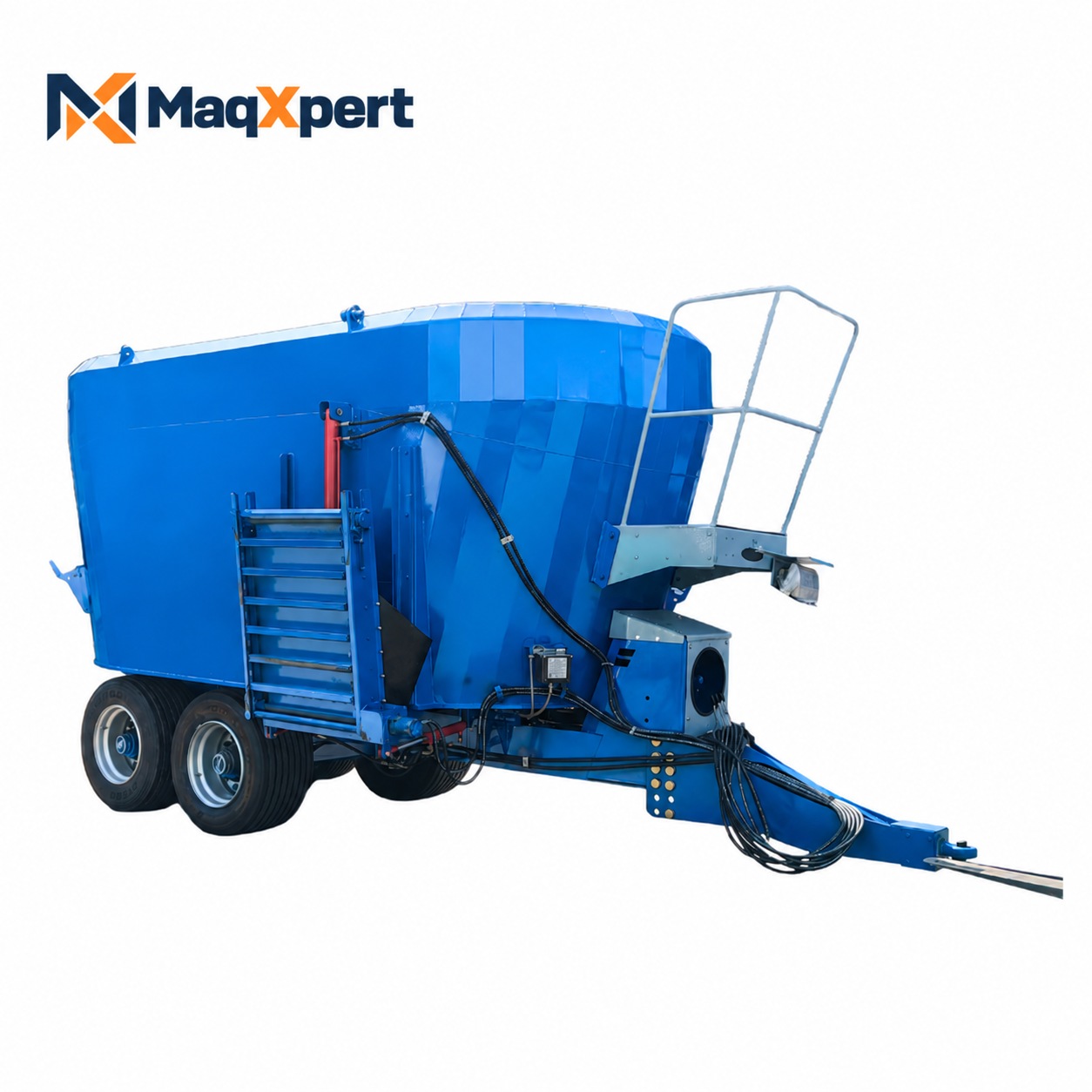
36 m³ TMR feed mixer

Livestock feed preparation

36 m³ TMR feed mixer

Vertical mixing with a weighing system

A vertical mixer for preparing a total mixed ration, or TMR, by combining hay, silage and other fibrous feeds with the remaining ingredients specified in the feed formulation. Augers move the material within the mixing vessel, while knives help reduce and incorporate fibrous material during mixing. A weighing system with four sensors and an LED digital display tracks the quantity added during loading. The proposed configuration has a nominal volume of 36 m³ for preparing larger batches. Batch weight depends on ingredient density and composition; the feed formulation, loading sequence and mixing settings must be established for the intended ration and the materials used.

View equipment →
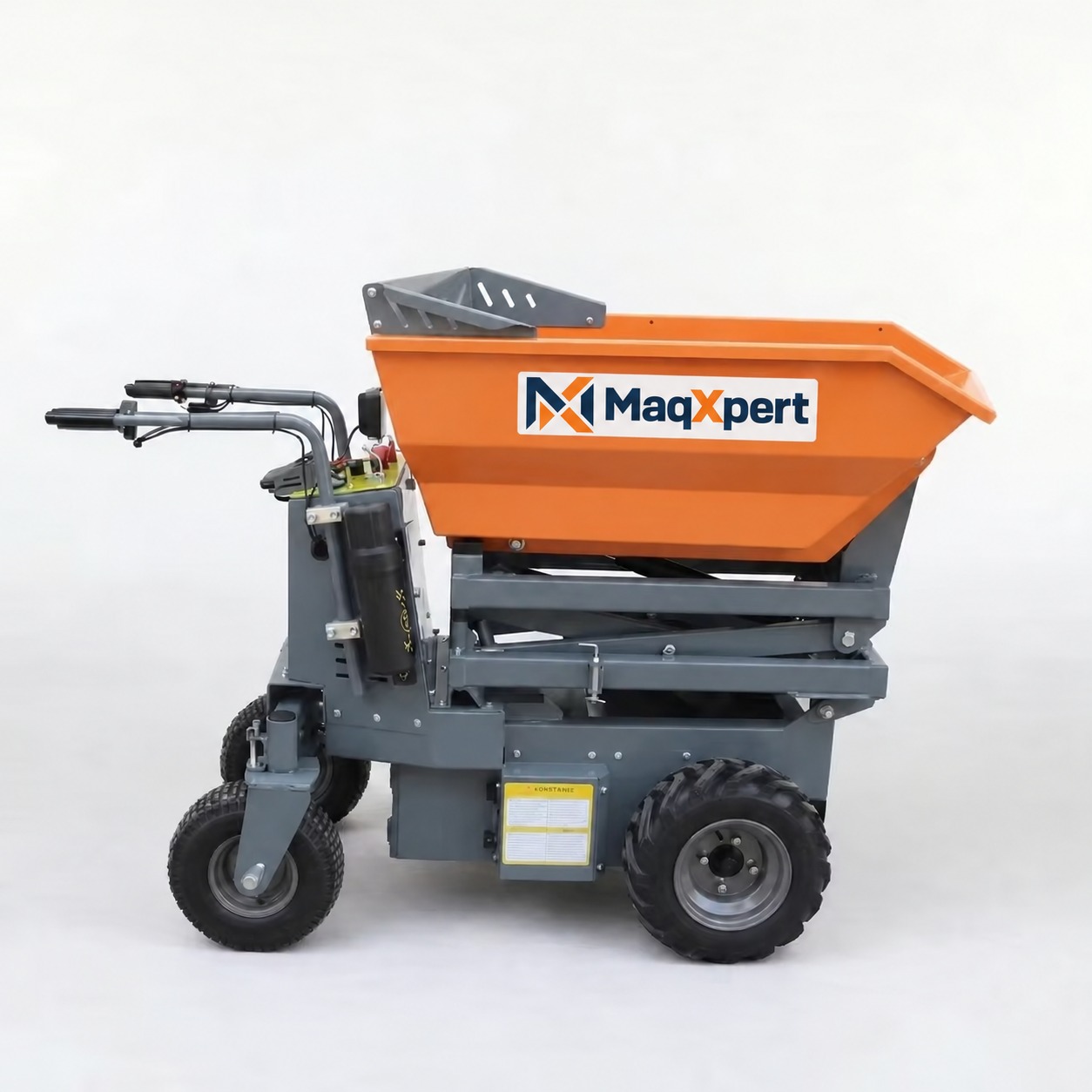
500 kg electric mini dumper with hydraulic lift

Material transport and handling

500 kg electric mini dumper with hydraulic lift

Four wheels; pedestrian operated

A mini dumper for transporting soil, substrates, harvested materials and other loads within an agricultural operation. Electric traction moves the machine on four wheels while a walking operator follows and operates the controls. The load skip has hydraulic lifting and tipping: it can be raised before tilting to release material by gravity, helping transfer loads to a higher receiving point. Rated payload is 500 kg and the declared maximum lift height is 1.4 m. Use must take account of the load’s weight and distribution, together with the conditions along the route.

View equipment →
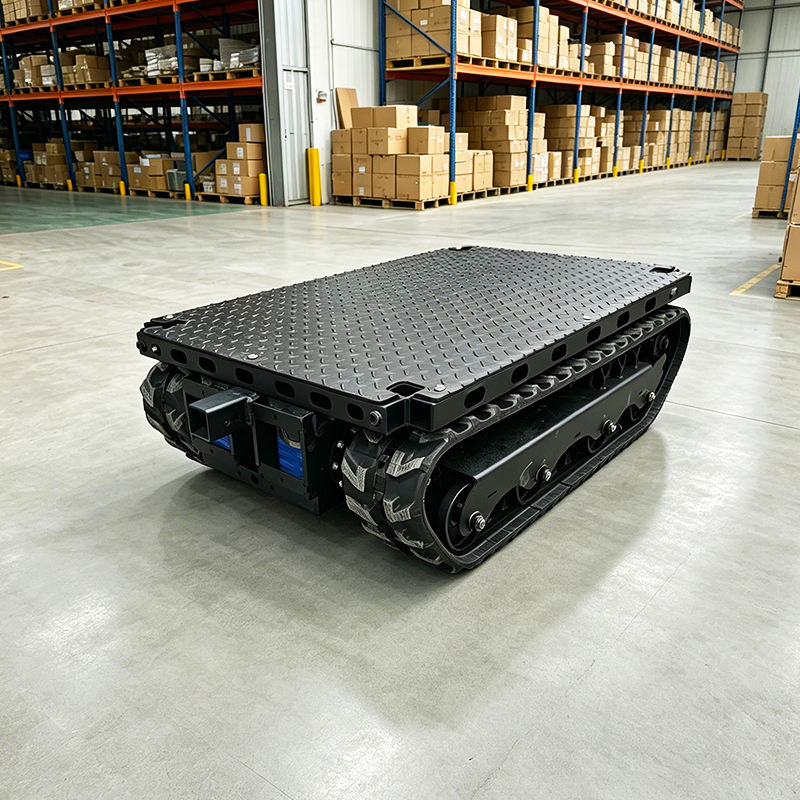
Tracked chassis for robotic integration

Mobility for agricultural and technical platforms

Tracked chassis for robotic integration

Mobile base configured for each project

A tracked mobile base for integrating agricultural robotics platforms, material transport or technical equipment configured for a project. The steel structure provides a surface for mounting loads or working modules, while rubber tracks move the base. Wireless remote control allows travel and manoeuvres to be directed. Integration must define the load, centre of gravity, operating ground, mountings, power supply and control interfaces. Sensors, tools and navigation or automatic operating functions depend on the system being developed. Dimensions, power, battery and operating limits are confirmed for the selected configuration, with the chassis providing the mobility and mechanical support for the integrated equipment.

View equipment →
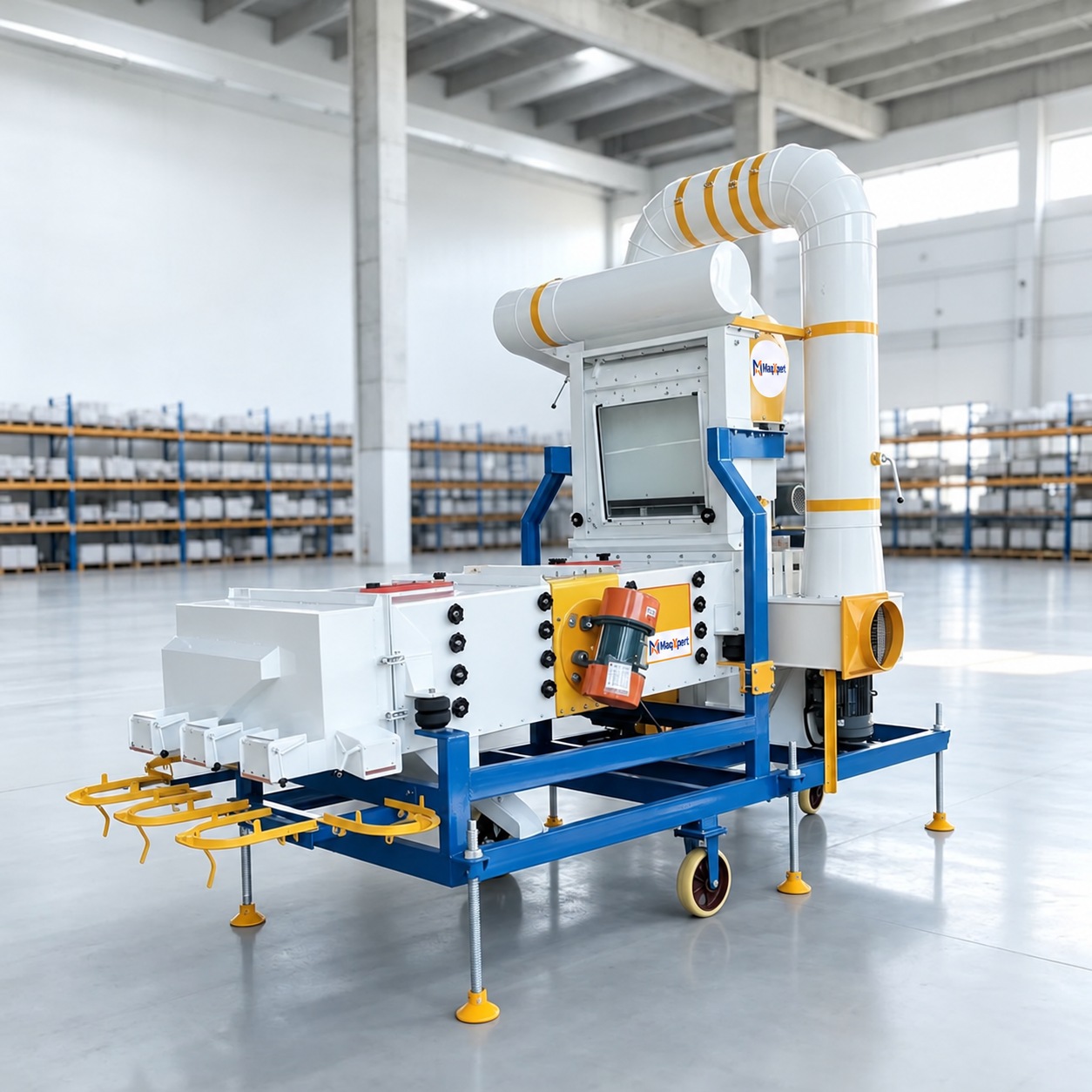
8–10 t/h grain cleaning and grading line

Post-harvest cleaning and grading

8–10 t/h grain cleaning and grading line

Air aspiration and sieving; declared capacity

Equipment for cleaning and grading harvested grain and seeds before subsequent handling or processing. Air aspiration separates light impurities according to their behaviour in the air stream, while sieves separate particles by size. Screen openings and operating settings must be selected for the material, impurity level and fraction to be collected. The advertised throughput is 8 to 10 tonnes per hour and depends on product characteristics and the required separation. The unit has a declared power rating of 10.5 kW and 2,400 × 1,500 mm screens. The selection process is specified for each application, taking account of the incoming grain and the required output fractions.

View equipment →
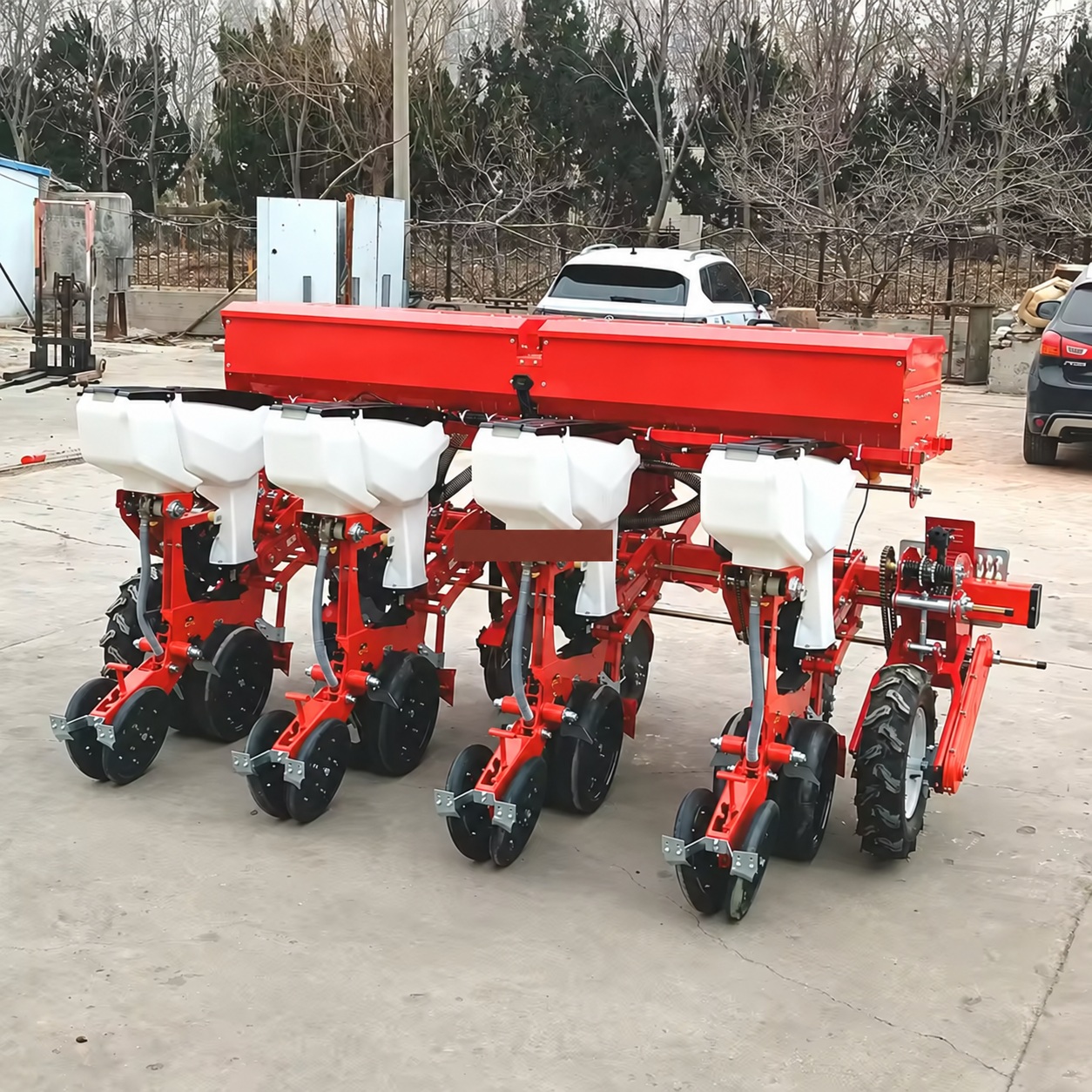
Four-row pneumatic seed drill

Precision seeding

Four-row pneumatic seed drill

Four-row configuration

A tractor-mounted seed drill for placing seeds in four rows, with metering and spacing adjusted to the crop. The pneumatic system uses vacuum to pick up and separate individual seeds on metering discs, then releases them into furrows opened by each row unit. Separate hoppers carry seed and fertilizer; localized fertilizer application depends on the selected configuration. It is intended for mechanized establishment of compatible row crops. Metering discs, sowing depth, seed spacing and row spacing must be selected for the seed, field conditions and available tractor.

View equipment →
15 HP petrol wood chipper

Pruning residue processing

15 HP petrol wood chipper

420 cm³ petrol engine

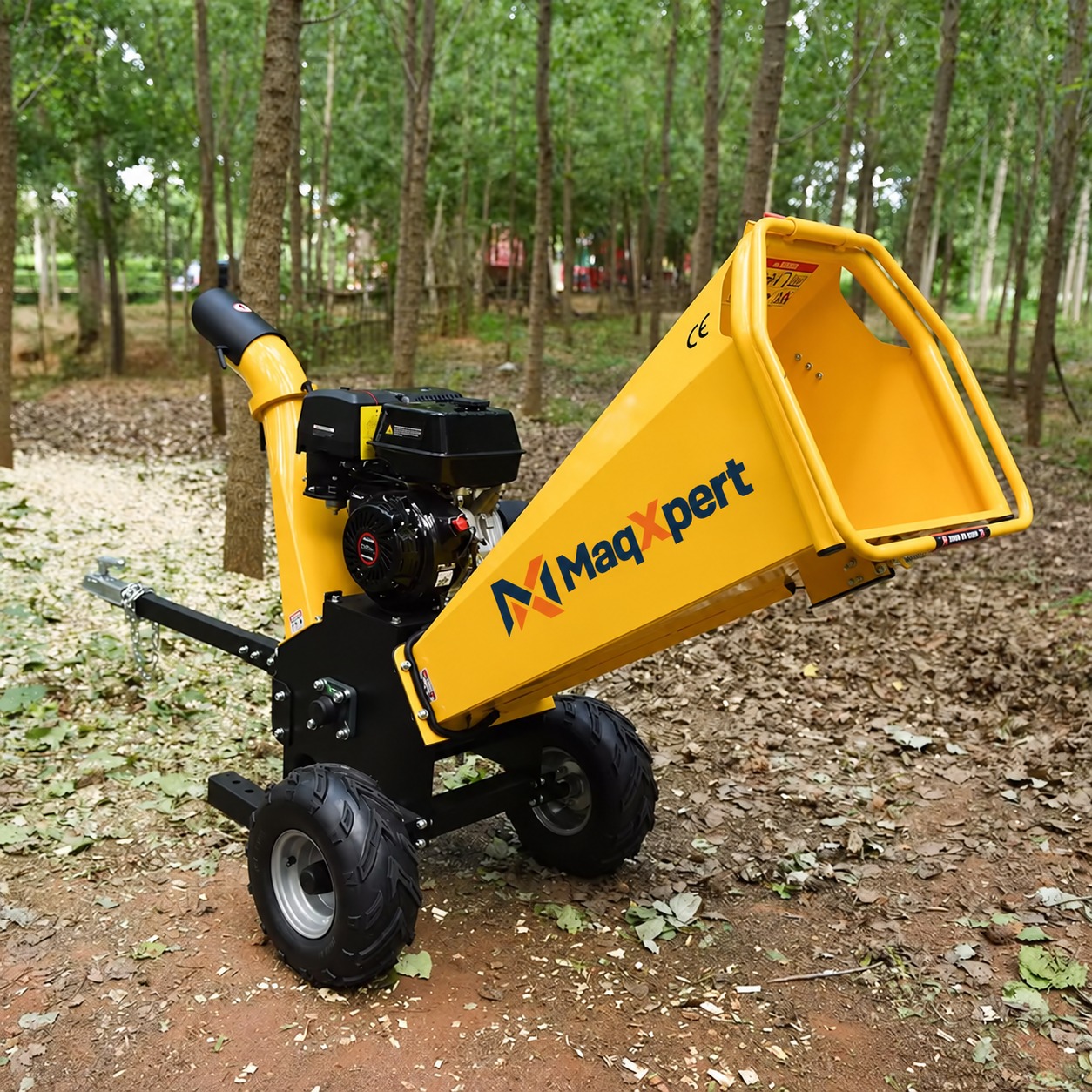
A machine for reducing branches and woody pruning residues to chips, making them easier to collect and prepare for use as mulch or composting material. A petrol engine drives a knife rotor that cuts material introduced through the gravity-feed hopper. Chips leave through an adjustable discharge chute that directs the output. Branch selection must take account of diameter, shape and wood condition; 120 mm is the maximum diameter declared for the machine. The controls include an emergency-stop bar and button. The resulting material consists of wood chips for subsequent handling and use.

View equipment →
6- or 8-row pneumatic planter

Row-crop planting

6- or 8-row pneumatic planter

6- or 8-row configurations

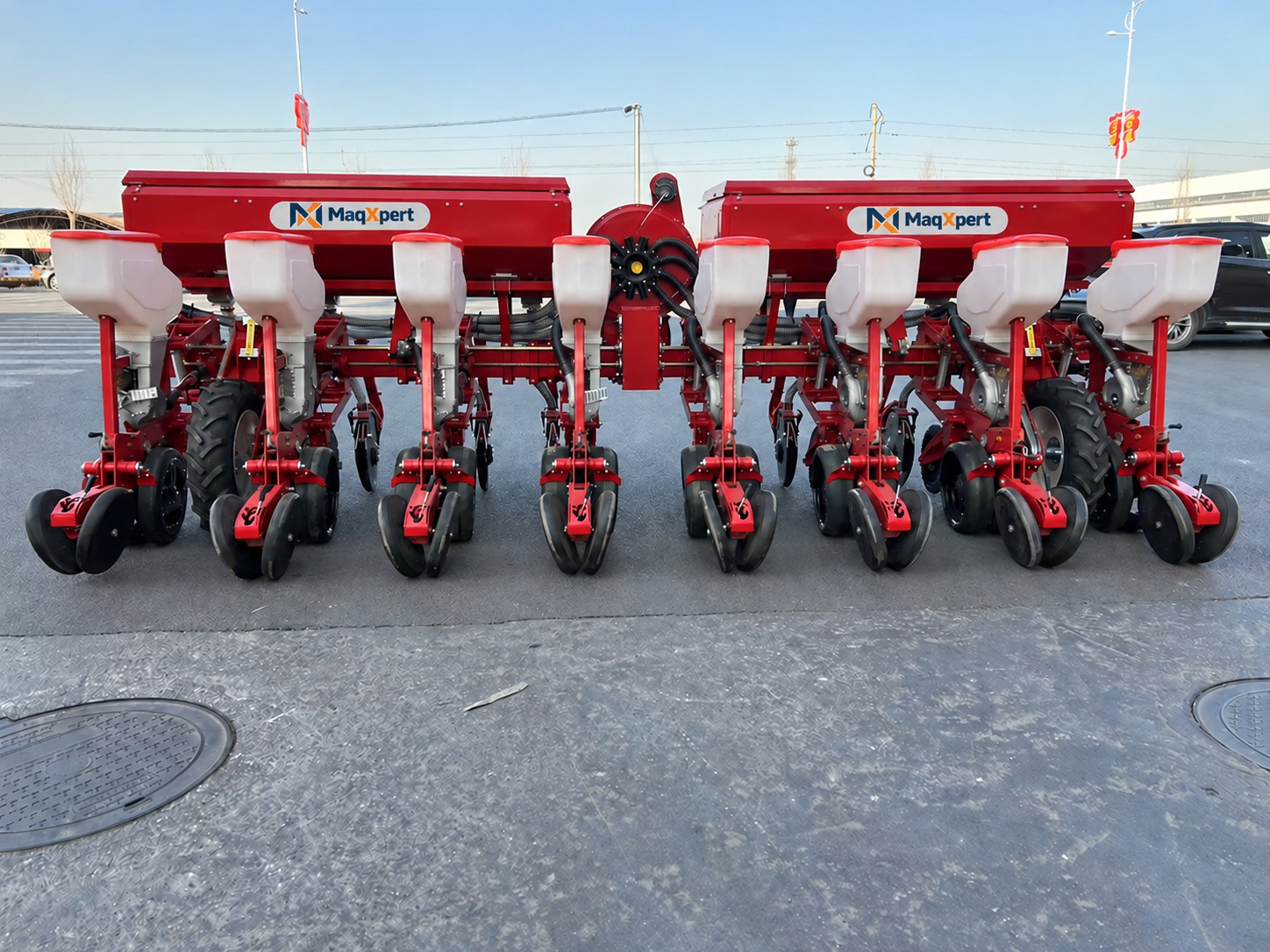
A planter for establishing row crops such as maize with several planting units working at the same time. Its suction-based pneumatic system selects seeds in the metering unit and guides their placement in the soil, allowing distribution to be adjusted to the crop and target plant population. Fertilizer is applied during the same planting pass. Six- and eight-row versions allow the configuration to be selected according to field layout and the available tractor. Selection requires the row spacing, seed type and size, working depth and tractor compatibility to be defined. Metering components and planting settings are chosen for the intended seed and planting plan.

View equipment →
Vertical-tine power harrow for tractor

Seedbed preparation

Vertical-tine power harrow for tractor

1BQ range · configuration selected for the tractor and soil

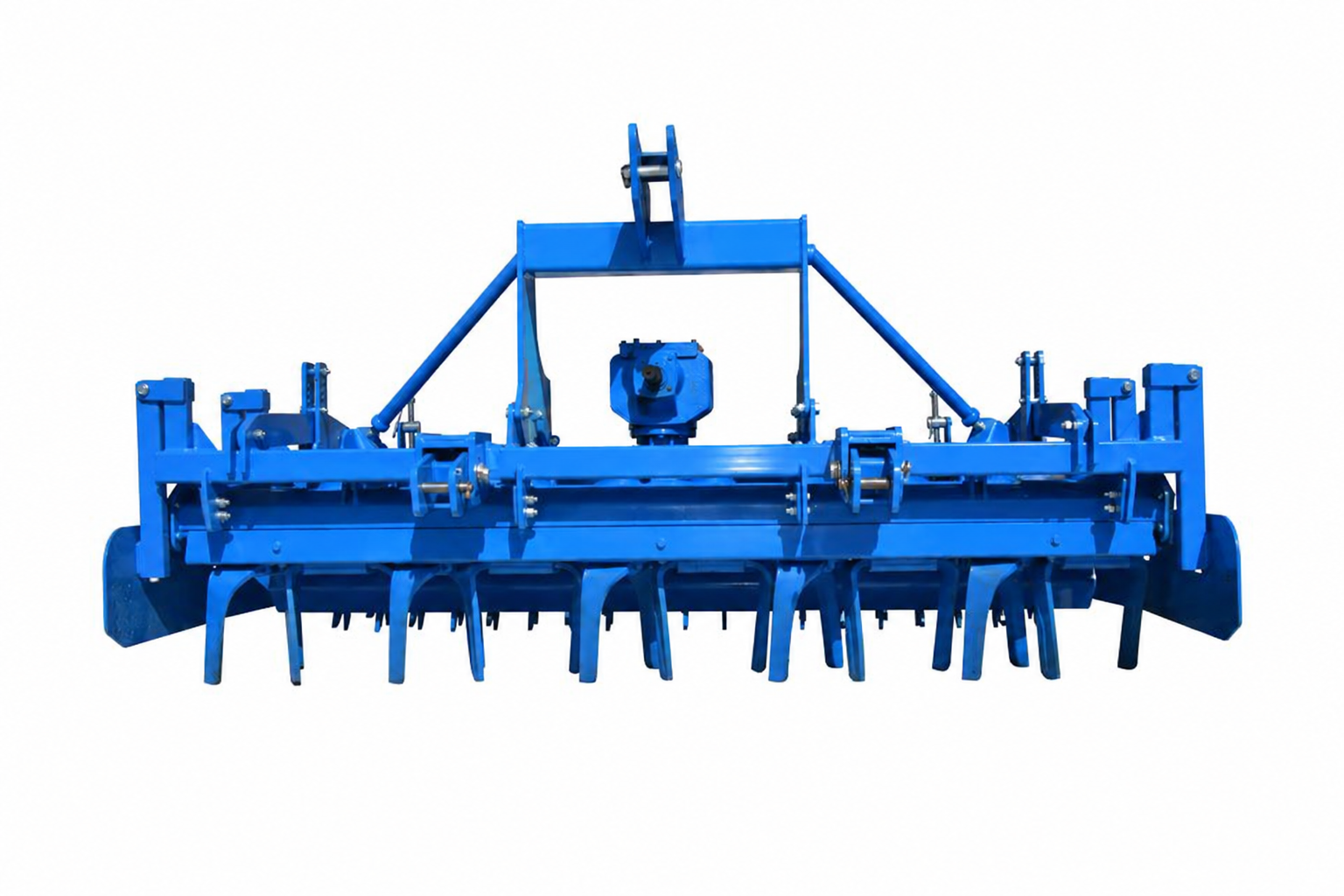
A tractor-driven power harrow for breaking clods and preparing the surface soil layer before sowing. A three-point linkage connects the implement to the tractor, and the power take-off supplies a gearbox that drives rotors on vertical axes. As the machine advances, the tines work the soil sideways, crumbling clods and mixing the cultivated layer. A rear roller follows the tines and helps level and reconsolidate the worked surface. Configuration selection considers soil type, moisture, the condition left by previous cultivation and the available tractor. Working width, power requirement and operating settings are confirmed for the model to be supplied.

View equipment →
Cereal seed drill combined with power harrow

Seedbed preparation and cereal sowing

Cereal seed drill combined with power harrow

2BFG range · model and configuration selected for the application

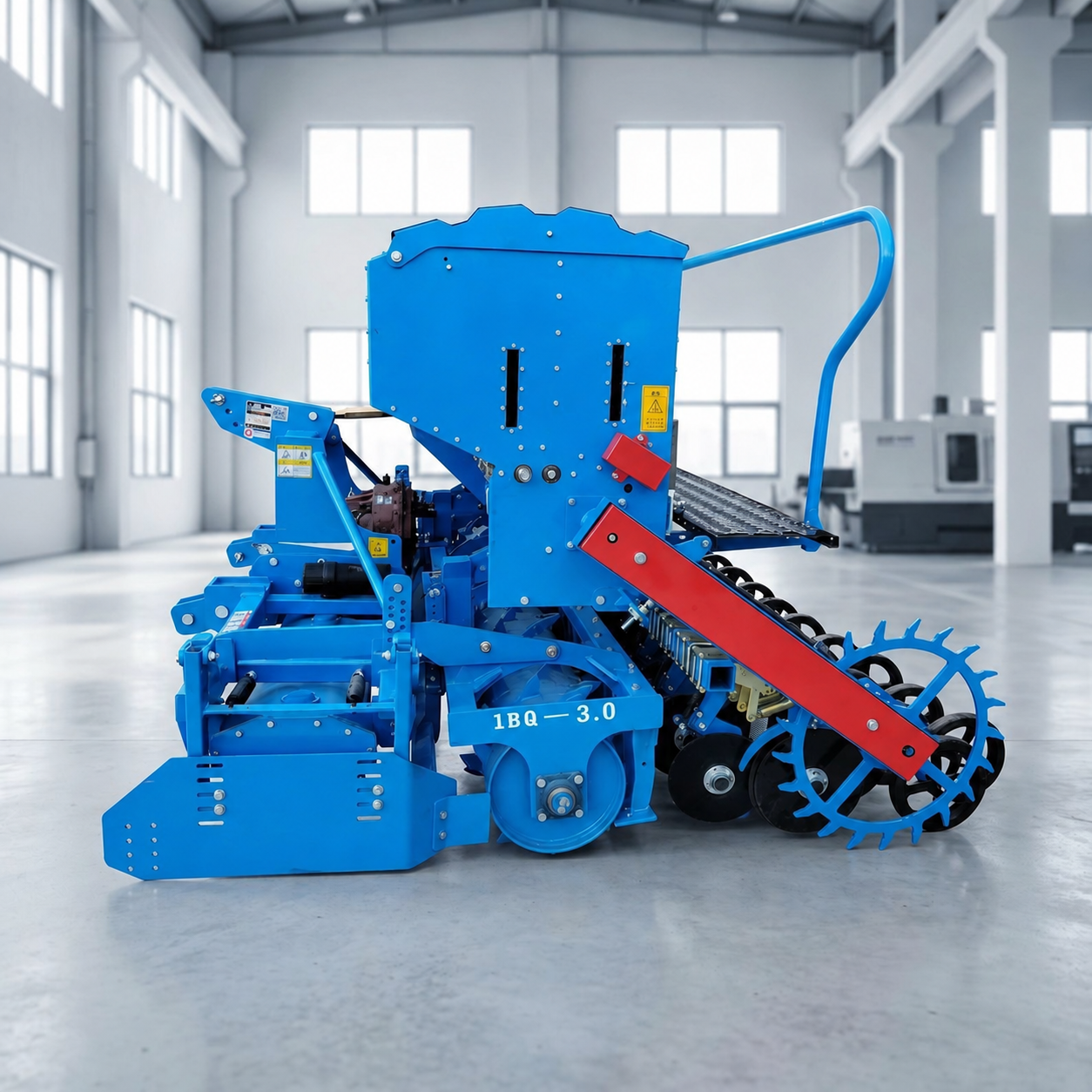
A tractor-mounted combination for seedbed preparation and sowing cereal seed in rows. The tractor PTO drives the vertical-rotor power harrow, whose tines break clods and work the surface soil layer. The harrow’s roller levels the worked surface, while the hopper supplies distributors that guide seed through tubes to the placement elements. In the illustrated configuration, wheels beside the seeding elements and rear covering tines complete the working sequence. Model selection and settings depend on the tractor, soil and seed. Working width, row spacing, seed rate and sowing depth are defined for the assembly to be supplied.

View equipment →

Industrial mixing

3 equipment families
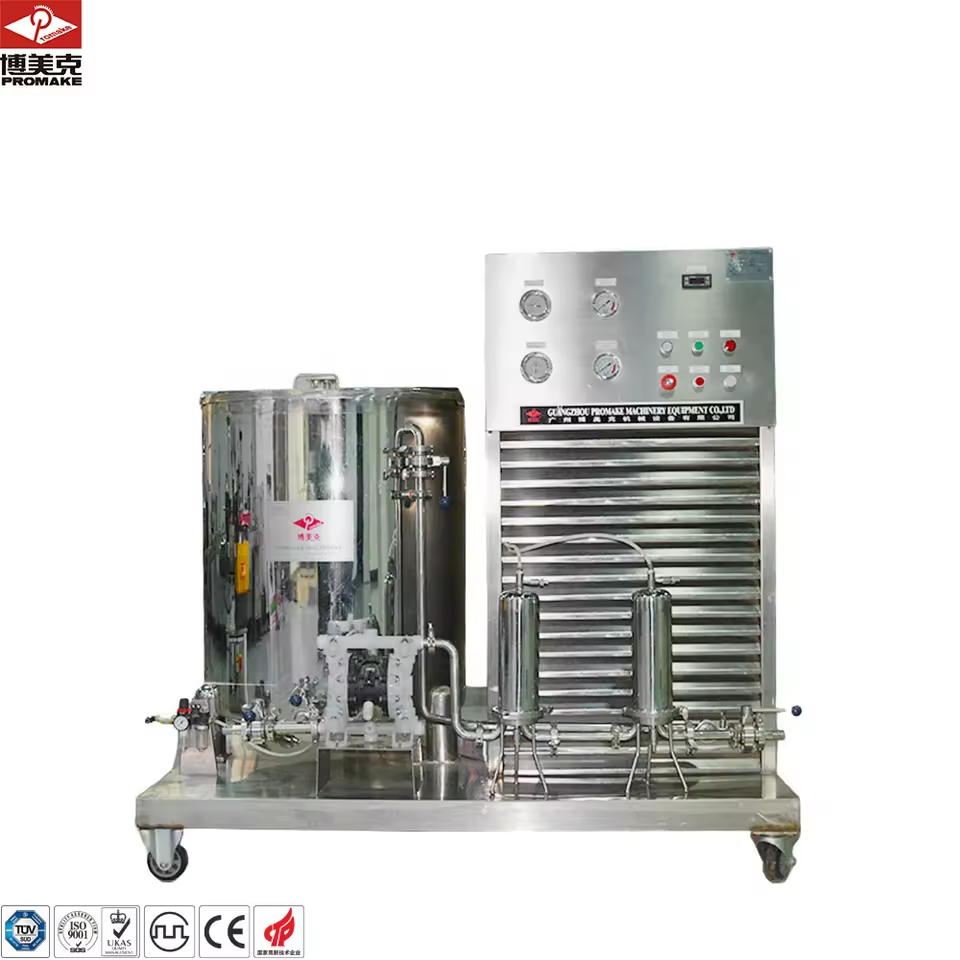
500 L perfume mixing, chilling and filtration unit

Perfume preparation and clarification

500 L perfume mixing, chilling and filtration unit

500 L reference; working volume and configuration defined per project

Unit for batch perfume preparation, combining mixing, chilling and filtration of compatible formulations. Mixing incorporates fragrance components into the base liquid and helps dissolve soluble ingredients. Depending on the formulation, chilling can reveal less-soluble fractions; subsequent filtration retains insoluble particles according to the selected filter medium, helping clarify the preparation. The stated 500 L is a reference volume. Working volume, thermal conditions, filter medium, product-contact materials and transfer circuit are defined for the formulation and installation, so that this preparation stage can be integrated into the intended perfume process.

View equipment →
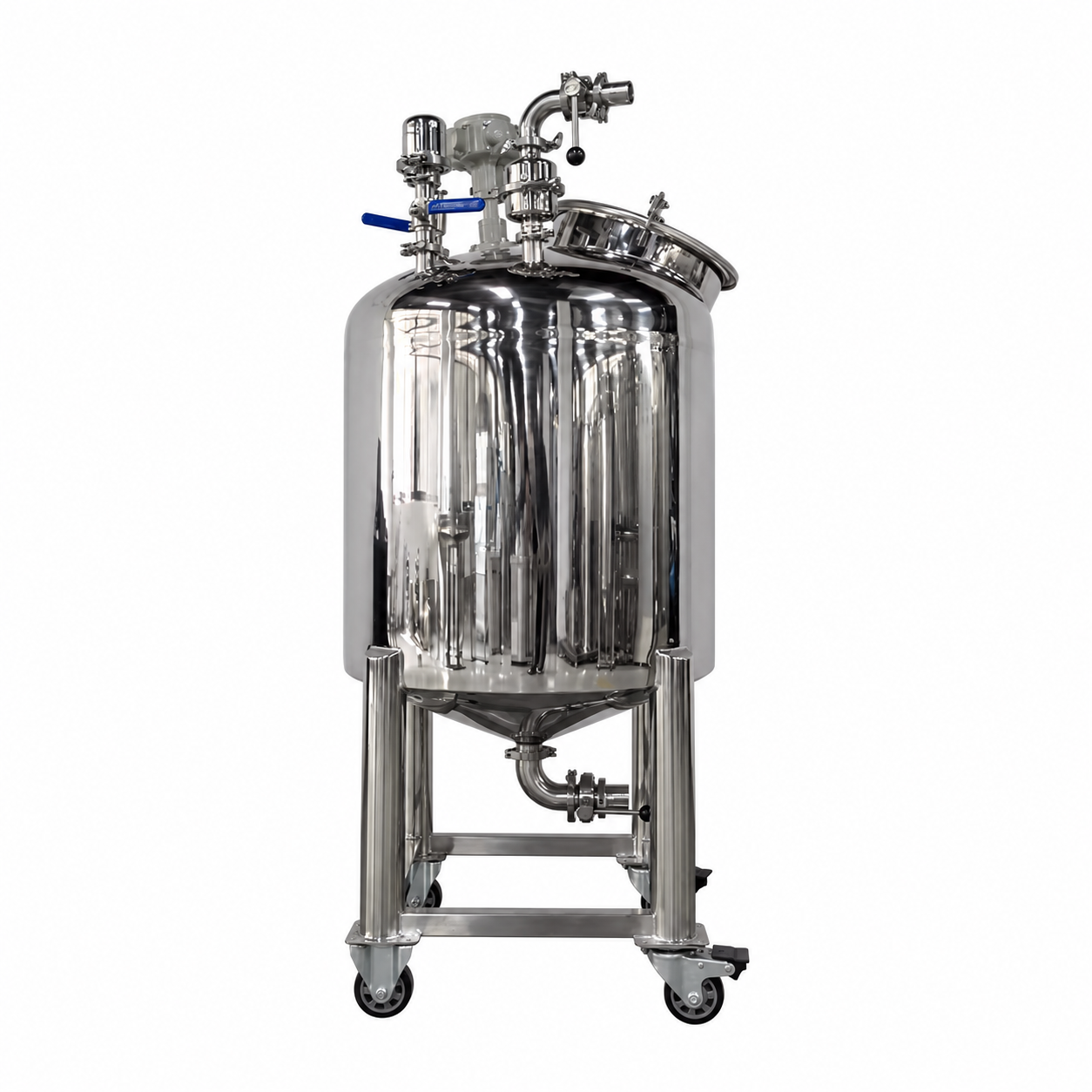
200 L pneumatic perfume mixing tank

Pneumatic liquid mixing

200 L pneumatic perfume mixing tank

200 L nominal volume; air supply and configuration defined per project

SUS304 stainless steel tank for batch preparation of perfumes and cosmetic liquids compatible with the product-contact materials. Compressed air drives the pneumatic motor, which rotates the paddle agitator to move the contents and incorporate the formulation components. The assembly has a vertical layout and a sealed lid. Manual bottom discharge allows the preparation to pass to the next process stage through the transfer circuit selected for the installation. The stated 200 L is nominal volume; working volume, paddle geometry, required air pressure and air consumption are defined for the formulation and configuration.

View equipment →
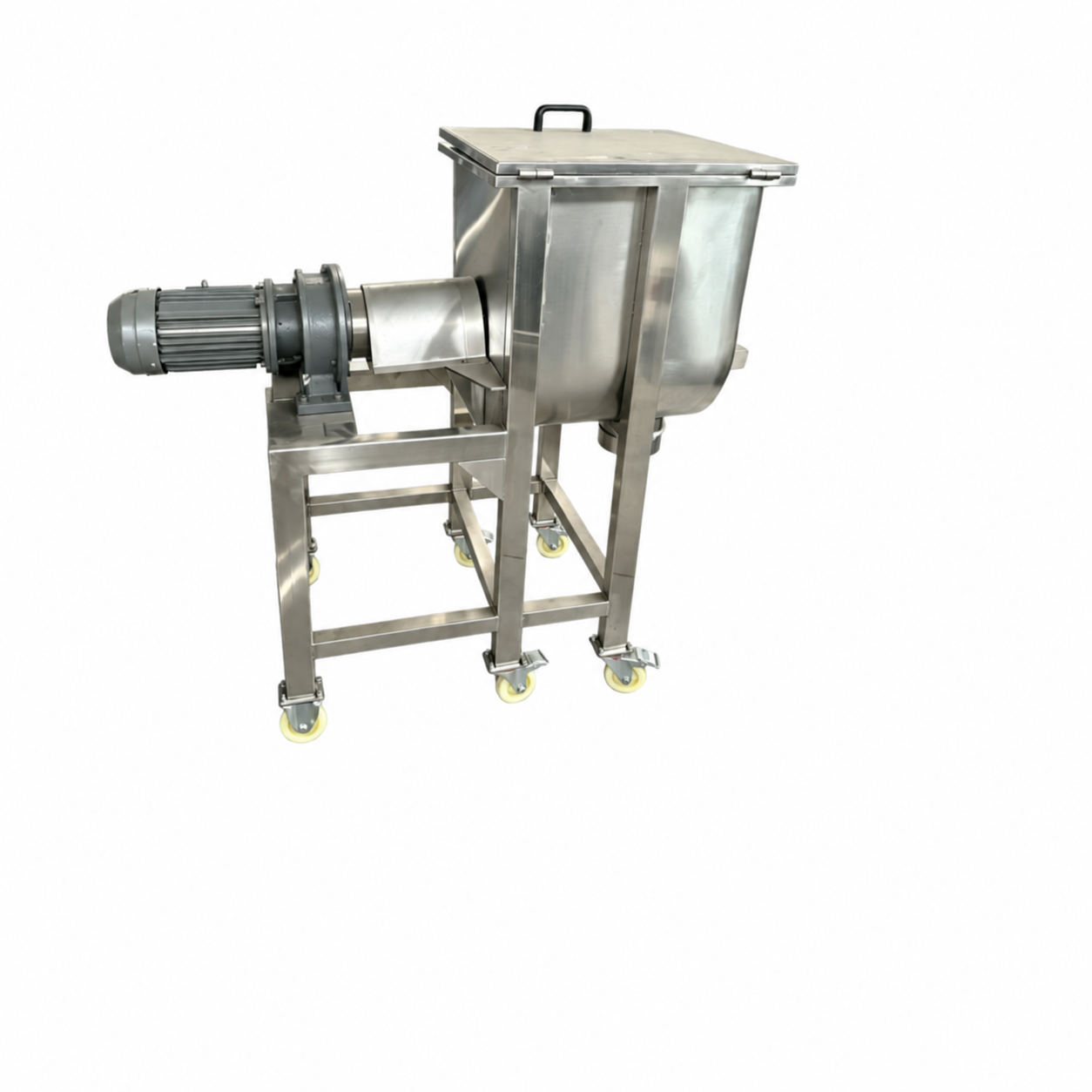
100 L horizontal powder mixer

Powder and dry ingredient mixing

100 L horizontal powder mixer

100 L nominal vessel volume; batch loading defined for the product

A horizontal mixer for preparing batches of compatible powders, granules and dry ingredients loaded through the top opening of the vessel. The helical ribbon agitator moves and redistributes material as it rotates, bringing the formulation ingredients into contact. The mixture is then removed through a lower outlet with manual discharge control. The selected version has a vessel with a nominal volume of 100 L and a stated SUS304 stainless-steel construction. Batch loading must be defined for each product, taking bulk density and working fill into account. Loading order, agitation, cleaning and discharge procedures are established for the recipe and installation.

View equipment →

Extraction

1 equipment family
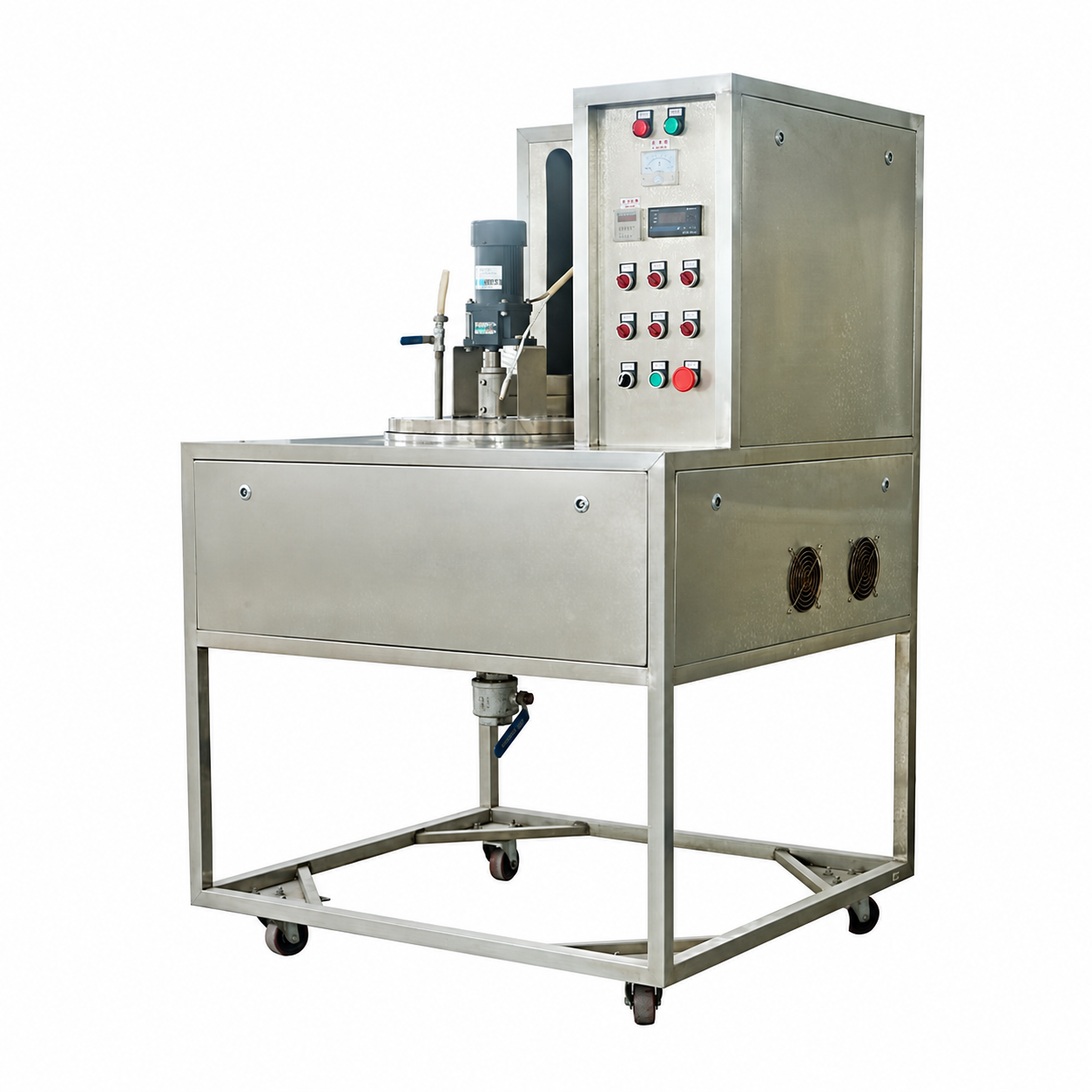
Microwave extractor with 5 L vessel

Microwave-assisted extraction

Microwave extractor with 5 L vessel

HT-WC1.2 · nominal 5 L vessel · 1 kW microwave output

Microwave-assisted extraction equipment with a heated reaction vessel of 5 L nominal volume. In solid–liquid extraction, microwave heating can support the transfer of extractable compounds from solid material into a compatible liquid. The illustrated assembly has a top-mounted drive and shaft, control panel and bottom drain valve on a wheeled frame. Advertised microwave output is 1 kW, with a declared total power of 1.2 kW. Selection of the raw material, extraction liquid and operating conditions depends on the application. The stated 5 L is the nominal vessel volume; the usable charge must be confirmed for the intended process.

View equipment →
Need a different capacity?We size special versions and integrated systems for your process.Request configuration